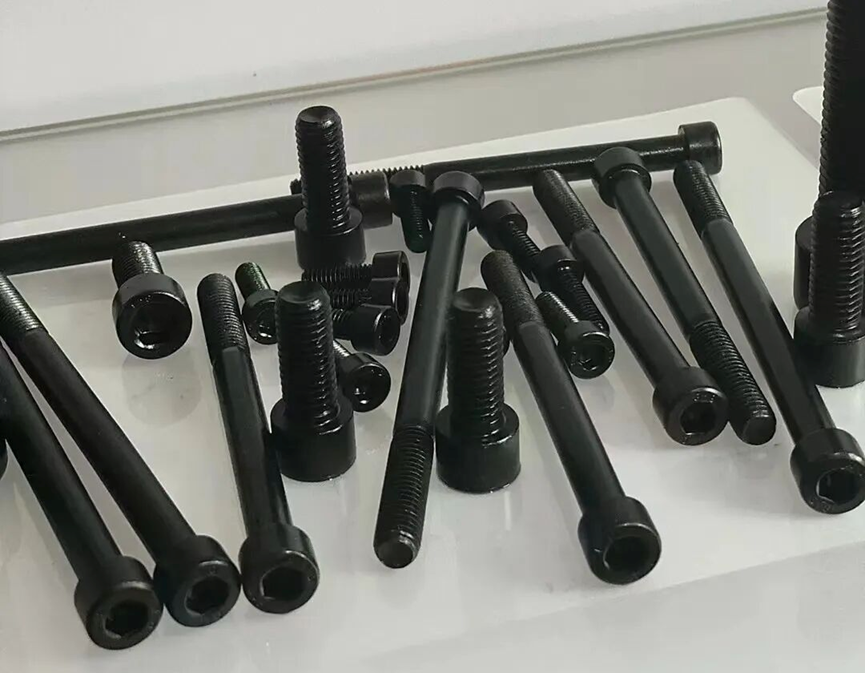
Main Conclusion
Material selection for 10.9‑ and 12.9‑grade hexagon socket cap screws is primarily determined by screw size, load, processing conditions and service environment. Three mainstream alloy‑steel options: 10B21 for small‑size, 40Cr/ML40Cr for medium‑size, SCM435(35CrMo)/SCM440(42CrMo) for medium‑to‑large‑size heavy‑duty fasteners. Each material has distinct strengths, limitations and cost levels; avoid over‑specification and match material to actual working‑conditions.
| Screw Size Range | Recommended Material | Grade | Key Merits | Main Limitations | Typical Application |
|---|---|---|---|---|---|
| Small M1‑M6 | 10B21 boron steel | 10.9 /12.9 | High cold‑forging efficiency, low raw‑material cost | Poor corrosion‑resistance; long‑term max operating temp ≤200 °C | 3C / electronic devices, small‑mechanical‑assembly |
| Medium M6‑M22 | 40Cr / ML40Cr | 10.9 /12.9 | Balanced strength‑toughness, mature domestic heat‑treatment chain | Needs pre‑annealing for cold‑heading; poor weldability | Automotive parts, construction‑machinery hydraulic‑connections |
| Medium‑Large ≥M22 | SCM435(35CrMo) / SCM440(42CrMo) | 10.9 /12.9 | Excellent hardenability, fatigue‑ & high‑/low‑temp‑performance | High raw‑material & heat‑treatment cost; higher machining difficulty | Wind‑power flanges, aerospace‑core fasteners |
Material‑specific details
- 10B21: Low‑carbon boron‑steel; boron improves hardenability. Good cold‑forming, shortens production cycle by 30 %. Must add galvanizing / Dacromet for corrosion‑protection. Strength drops sharply above 300 °C.
- 40Cr / ML40Cr: Classic medium‑carbon chromium‑alloy steel. After quenching‑and‑tempering, delivers balanced tensile, yield and impact performance. Cold‑heading parts require prior annealing softening. Welding demands pre‑heat and post‑weld stress‑relief tempering.
- SCM435 / SCM440 (35CrMo /42CrMo): Cr‑Mo alloy‑steel. Molybdenum suppresses tempered brittleness. Uniform through‑hardening for large cross‑sections; retains high strength at elevated temperature and maintains good impact toughness at‑40 °C. Tool wear is higher during machining.
Practical selection‑decision rules
- Cost‑oriented: Small‑size select 10B21; medium‑size select 40Cr to prevent over‑design and unnecessary expense.
- Harsh working‑conditions: For large‑diameter, high‑temperature, high‑humidity or alternating‑load applications, choose SCM435 / SCM440 for reliability.
- Process‑matching: Prefer 10B21 / ML40Cr for cold‑heading production; for welded assemblies select low‑carbon‑steel such as 10B21 instead of 40‑series alloy‑steel to avoid weld‑cracking risk.
Supplementary services
Suppliers can deliver tensile / impact / hardness test‑reports, custom‑tailored quenching‑tempering cycles, plus multiple surface‑treatment options (galvanizing, nickel‑plating, Dacromet, black‑oxide) achieving 300‑1000‑hour salt‑spray resistance.
Balanced performance and cost solutions from small to large specifications for High-Strength Hexagon Socket Head Cap Screws
I. Core Selection Logic
Based on the screw specification (diameter M1 to M6 is small, M6 to M12 is medium, and above M12 is medium to large), combined with the three key factors of strength requirements, processing technology, and service environment, the following material solutions are recommended:
| Specification Category | Recommended Material | Strength Grade | Core Advantages | Typical Application Scenarios |
| Small Size | 10B21 | Grade 10.9/12.9 | High cold heading efficiency, low cost | Electronic equipment, small mechanical connectors |
| Medium Size | 40Cr / ML40Cr | Grade 10.9/12.9 | Balanced comprehensive mechanical properties, mature process | Automotive parts, main connections of industrial equipment |
| Medium & Large Size | SCM435 (35CrMo) / SCM440 (42CrMo) | Grade 10.9/12.9 | Ultra-high strength, fatigue resistance, high temperature resistance | Heavy machinery, key aerospace components |
II. Analysis of Materials by Specification and Comparison of Advantages and Disadvantages
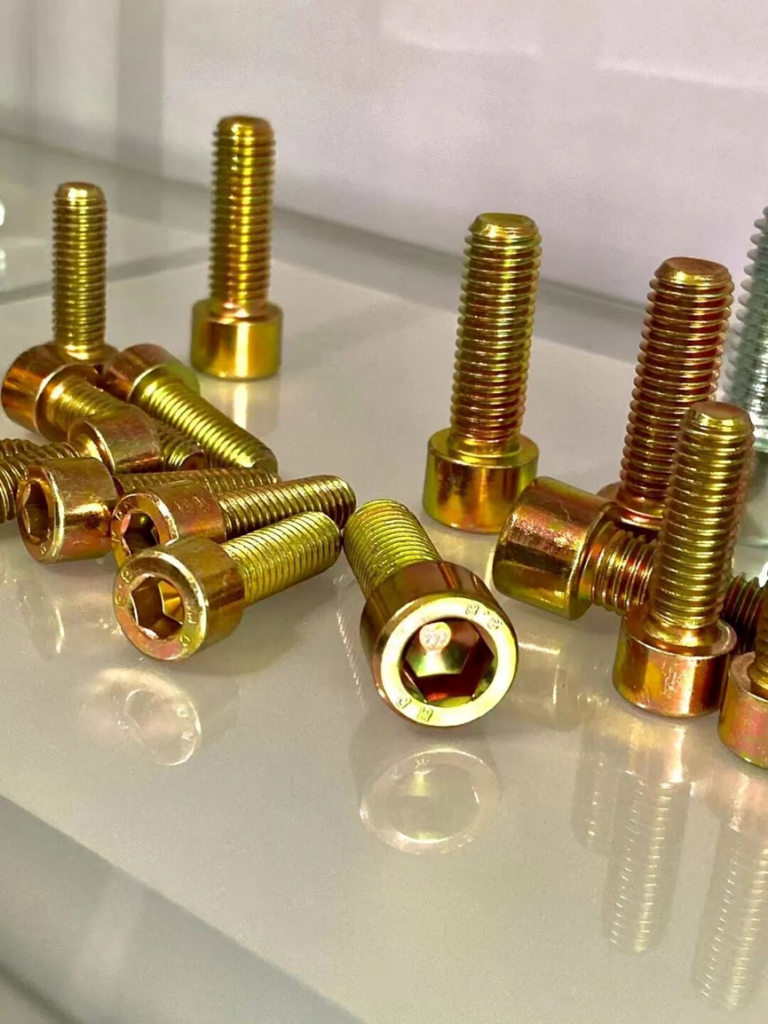
Small-sized Screws (M1 – M6): 10B21 – The King of Cost-effectiveness in Cold Forging
- Material Characteristics
American standard boron steel, low carbon (0.18% – 0.23% C) with boron (≥0.0008% B), boron element enhances hardenability, meeting high strength requirements without high alloy.
- Core Advantages
✅ Maximized Processing Efficiency: Excellent cold forging formability, direct cold forging at room temperature, eliminating the annealing process, reducing production cycle by 30%.
✅ Preferred for Cost Control: Raw material cost is 20% – 30% lower than alloy steel, suitable for production in millions of units.
✅ Stable Performance: After quenching and tempering, tensile strength ≥1040MPa, meeting the lower limit of 12.9 grade strength, with better toughness (elongation ≥12%) than similar carbon steel.
- Application Limitations
⚠️ Weak corrosion resistance: Requires additional surface treatment such as galvanizing (Zn) or Dacromet, increasing costs by 5% – 10%.
⚠️ Sensitive to high temperatures: Long-term operating temperature is recommended to be ≤ 200℃. Strength significantly decreases when exceeding 300℃.
- Typical Applications
Automotive seat adjustment bolts, precision hex socket screws for 3C products.
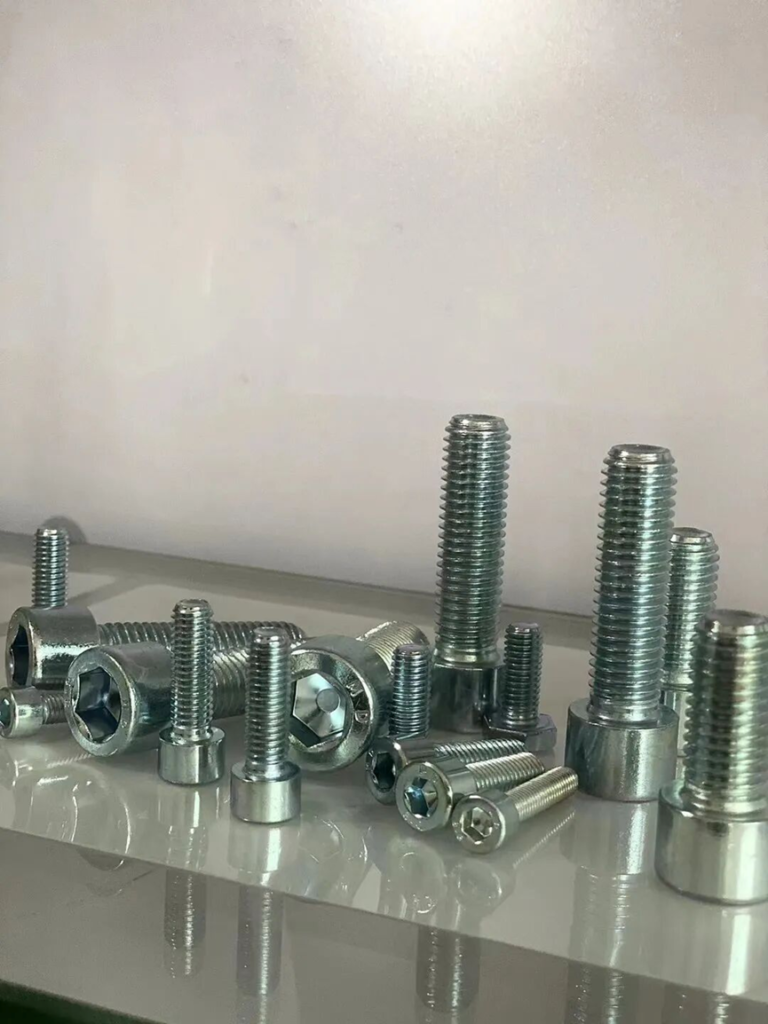
Medium-sized screws (M6 – M22): 40Cr/ML40Cr – A versatile option with mature processing technology.
- Material Characteristics
Medium carbon alloy structural steel (0.37% – 0.44% C, 0.8% – 1.1% Cr), the most widely used high-strength fastener material in China, setting a benchmark for cost-performance and performance balance.
- Core Advantages
✅ Balanced performance: After quenching and tempering, tensile strength ≥ 1080MPa, yield strength ≥ 930MPa, and impact energy absorption ≥ 47J, achieving a balance between strength and toughness.
✅ Mature processing: The domestic heat treatment industrial chain is well-established, with stable parameters for quenching temperature (850℃ oil quenching) and tempering temperature (520℃ water tempering), and a defect rate of less than 0.5%.
✅ Strong adaptability to surface treatment: Supports various protective treatments such as carburizing (surface hardness 55 – 60HRC) and nickel plating (salt spray test ≥ 500h).
- Application Limitations
⚠️ Cold heading requires pre-treatment: For higher carbon content (>0.35%), annealing softening is necessary before cold heading (hardness ≤ 207HB), adding 1-2 extra processes. ⚠️ Poor weldability: Preheating to 200°C is required before welding, and stress relief tempering is needed after welding, making it unsuitable for welded assemblies.
- Typical Applications
Engine cylinder head bolts, connection screws for hydraulic systems in construction machinery
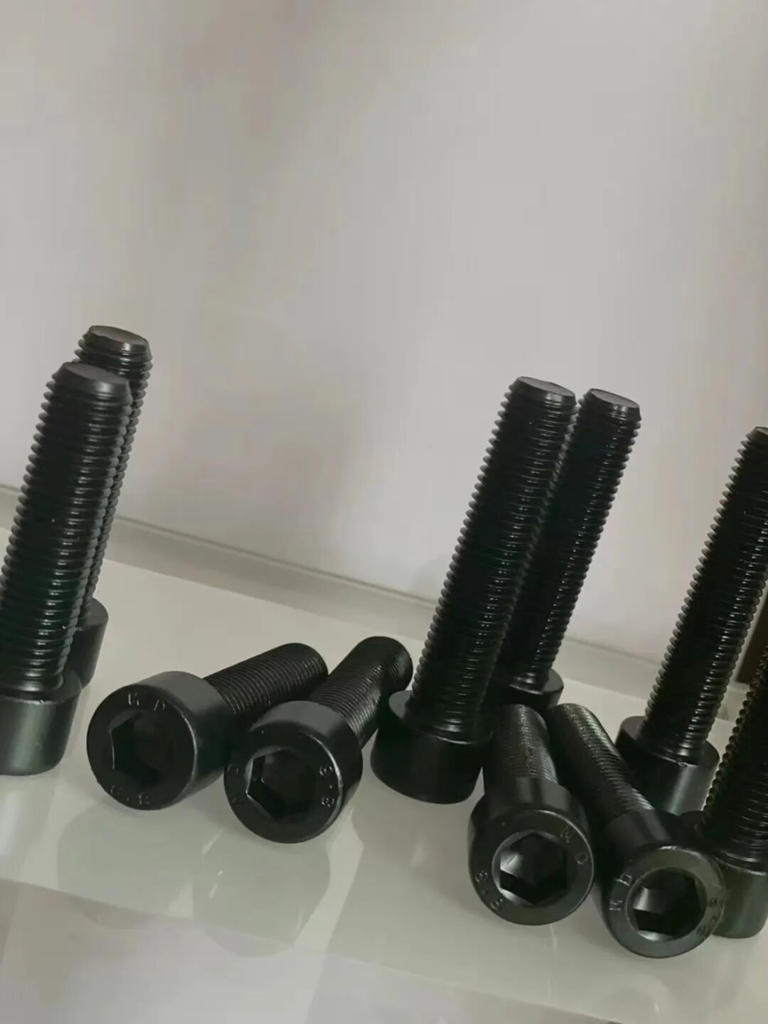
- Medium to large-sized screws (M22 and above): SCM435/SCM440 – The ultimate solution for high-load scenarios
- Material Characteristics
Japanese chromium-molybdenum alloy steel (SCM435 corresponds to 35CrMo, SCM440 corresponds to 42CrMo), containing 0.9%-1.2% Cr + 0.15%-0.3% Mo, with quenchability far exceeding that of ordinary carbon steel, allowing for uniform hardening of large cross-section parts.
- Core Advantages
✅ Superb Load-Bearing Capacity: After quenching and tempering, the tensile strength is ≥1220MPa (12.9 grade standard ≥1220MPa), the yield strength is ≥1080MPa, and the fatigue life is 25% longer than that of 40Cr.
✅ High Temperature Resistance: The strength retention rate at 500℃ is over 80%, superior to 40Cr (strength drops by 40% at 500℃), making it suitable for high-temperature zones in engines.
✅ Low Tempered Brittleness: Molybdenum element suppresses tempered brittleness, and the impact toughness at low temperatures (-40℃) is still ≥63J, meeting the stringent requirements of aerospace environments.
- Application Limitations
⚠️ High Cost Barrier: The raw material price is 1.5-2 times that of 40Cr, and high-precision temperature control equipment is required for heat treatment, increasing processing costs by 40%.
⚠️ High Processing Difficulty: High hardness (30-35HRC), requiring the use of hard alloy (YG8/YT15) tools, and the cutting efficiency is 20% lower than that of 40Cr.
- Typical Cases
Wind turbine equipment flange bolts, core fasteners for aviation engines
III. Selection Decision Reference
1. Cost-Priority Scenarios: Select 10B21 for small-sized screws and 40Cr for medium-sized ones to avoid overdesign and cost waste.
2. Harsh Environment Scenarios: For medium to large-sized specifications or high-temperature/high-humidity/alternating load scenarios, prioritize SCM435/SCM440 to ensure reliability.
3. Process Matching: For cold heading, choose 10B21/ML40Cr; for welding, select low-carbon steel (such as pre-treated 10B21) to avoid the risk of hard welding cracks in the 40Cr series.
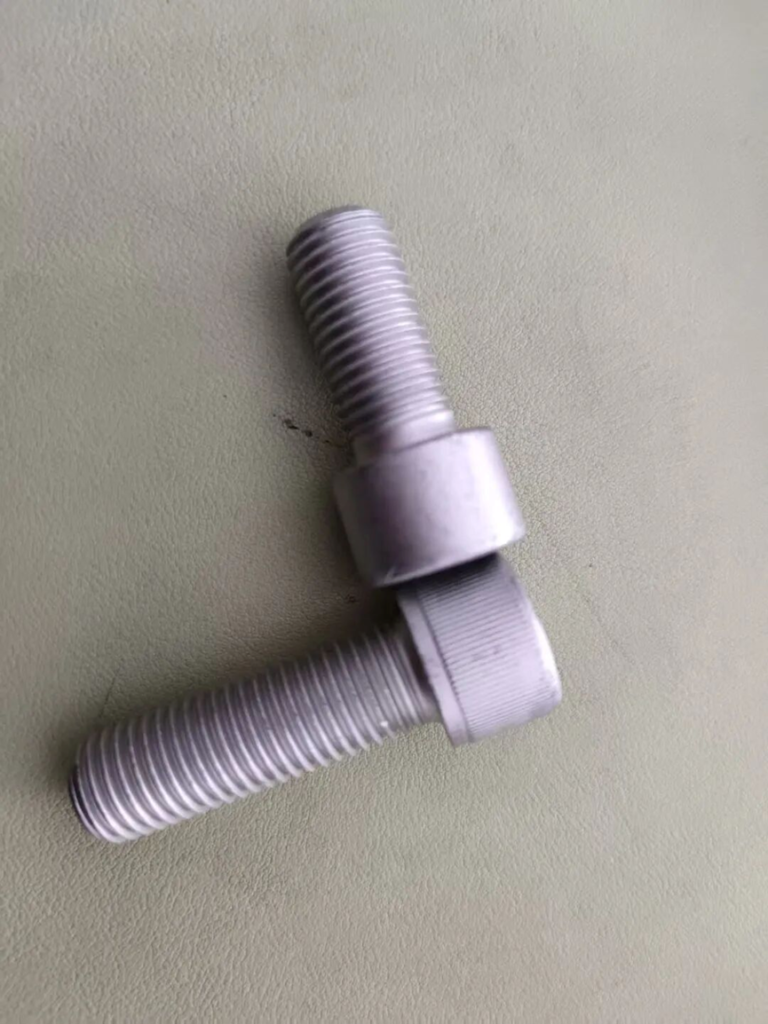
IV. Extended Services
• Provide material performance test reports (tensile / impact / hardness tests)
• Support customized heat treatment processes (adjust quenching temperature and tempering time according to specifications)
• Offer surface treatment solutions (galvanizing / nickel plating / Dacromet / blackening, salt spray test 300-1000 hours available)
FAQ
Q: What materials are commonly used for 10.9 /12.9 hexagon socket head cap screws by size?
A: Use 10B21 boron‑steel for small‑size M1‑M6. 40Cr / ML40Cr fits medium M6‑M22 screws. SCM435 / SCM440 (35CrMo/42CrMo) apply to medium‑large sizes above M22 for heavy‑load service.
Q: What are the pros and limitations of 10B21 boron steel socket head cap screws?
A: 10B21 features good cold‑forging performance and lower raw‑material cost. Its drawbacks include weak corrosion resistance and maximum long‑term working temperature limited to ≤200℃, requiring extra surface anti‑corrosion treatments.
Q: When should I choose SCM435 / SCM440 alloy steel for socket head cap screws?
A: Pick SCM435/SCM440 for M22‑and‑above large‑size, high‑load, high‑temperature or low‑temperature alternating‑load applications. It delivers superior fatigue and heat resistance yet comes with higher raw‑material and machining costs.
HKTL Fastener supplies grade 10.9 /12.9 hexagon socket head cap screws in 10B21, 40Cr, SCM435 and SCM440 for diversified industrial load‑bearing connections.
If you are looking for quality screws, please visit us here https://hktl-fastener.com/screws/.