Principal Findings
Screw materials are grouped into four major categories: carbon‑steel, stainless‑steel, alloy‑steel, and non‑ferrous‑metals. Each has distinct mechanical performance, corrosion‑resistance and cost. A four‑step selection workflow (evaluate environment, calculate load, check special requirements, control cost) helps avoid over‑specification or under‑specification for practical engineering projects.
| Material Category | Representative Grades | Core Features | Typical Application |
|---|---|---|---|
| Carbon‑steel | 4.8 / 8.8 /10.9 /12.9 | Low‑cost; strength controlled by carbon‑content & heat‑treatment; requires surface anti‑corrosion | Furniture, auto chassis, wind‑power towers, mining machinery |
| Stainless‑steel | A2‑304, A4‑316 | Intrinsic corrosion‑resistance from Cr‑Ni passivation‑film; A4 adds molybdenum for chloride‑resistance; higher price | Outdoor household, coastal / marine, chemical equipment |
| Alloy‑steel | 40CrMo etc. | ≥8.8 grade; superior fatigue‑performance; stable mechanical‑property across wide temperature range | Heavy‑truck, bridge, machine‑tool, aero‑engine components |
| Non‑ferrous‑metal | Brass‑Cu, 6061‑Al, TC4‑Ti | Special properties: conductivity, light‑weight, high‑temp‑resistance; relatively low‑strength, high‑cost | Electrical terminals, drone frames, aerospace high‑temp assemblies |
1 Carbon‑steel screws
Strength‑grade definitions:
- 4.8: light‑load for furniture & home appliances
- 8.8: medium‑load for automotive & general machinery
- 10.9 /12.9: heavy‑load for pressure‑vessels, mining equipment.
Surface‑treatment options:
- Electro‑galvanizing: 48‑72 h salt‑spray, indoor dry‑use
- Hot‑dip galvanizing: 200‑500 h salt‑spray, outdoor steel‑structures
- Dacromet: >1000 h salt‑spray, marine / chemical‑corrosion environments
- Blackening: poor corrosion‑resistance, for internal machine parts with anti‑rust‑oil.
2 Stainless‑steel screws
- A2 (304): 18 %Cr‑8 %Ni; copes with ordinary moisture & mild‑corrosion; risk of pitting corrosion under heavy salt‑fog.
- A4 (316): adds 2‑3 % molybdenum; chloride‑resistance greatly improved, salt‑spray up to 1000 h; suitable for seashore, ship‑deck, chemical‑tank.
Common misconceptions: Stainless steel is not rust‑proof forever. Magnetism cannot judge material quality; rely on material test‑reports.
3 Alloy‑steel screws
Alloying elements (Mn, Cr, Mo); strength ≥ 8.8 after quenching‑and‑tempering. Fatigue‑life 2‑3 times higher than plain carbon‑steel. Stable performance over ‑50 ℃ ~300 ℃. Used for heavy‑duty dynamic‑load critical‑connections; batch material‑inspection reports are essential.
4 Non‑ferrous‑metal screws
- Brass(H62 copper): excellent conductivity, non‑magnetic; low tensile‑strength; for electrical terminals.
- 6061 aluminium alloy: lightweight; low hardness, easy thread‑stripping; torque must be limited; for drone and aluminium‑window structures.
- TC4 titanium alloy: high‑strength, half‑the weight of steel, heat‑resistant; very expensive; aerospace high‑temperature parts; special lubricant prevents thread‑seizing.
Four‑step material‑selection methodology
- Environment: Dry‑indoor → carbon‑steel; humid/mild‑corrosion →304; coastal/salt‑fog →316; high‑temp / severe‑corrosion → titanium or special‑alloy‑steel.
- Load: ≤500 N →4.8 carbon‑steel; 500‑2000 N →8.8 carbon‑steel or 304; ≥2000 N / dynamic‑vibration →10.9 /12.9 alloy‑steel.
- Special‑requirements: conductivity‑need →copper; lightweight →aluminium; high‑temperature →titanium; food‑medical →food‑grade stainless‑steel.
- Cost control: Use carbon‑steel for bulk ordinary‑scenarios; upgrade only when corrosion‑resistance or high‑strength is truly required, avoid over‑engineering.
PART 1. Carbon steel screws: The cost-effective main force in the industry

Carbon steel screws are made of iron as the base material, with a carbon content ranging from 0.25% to 0.6%, supplemented by small amounts of manganese, silicon, and other elements. They dominate over 60% of the global screw market due to their low cost, ease of processing, and high strength, earning the title of “king of cost performance” in the fastener industry.
Their core feature is that their performance varies with the carbon content, and their application scope is clearly defined by strength grades. However, they need surface treatment to make up for their poor corrosion resistance. The specific parameters and applications are as follows:
• 4.8 grade: Carbon content ≤ 0.4%, tensile strength ≥ 400 MPa, yield strength ≥ 320 MPa. They are suitable for non-load-bearing or light-load scenarios such as furniture, lamps, and household appliances, and are the most common basic type in daily use.
• 8.8 grade: Carbon content 0.5% to 0.6%, after quenching and tempering, tensile strength ≥ 800 MPa, yield strength ≥ 640 MPa. They are widely used in automotive chassis, general mechanical assembly, and other medium-load applications.
• 10.9 grade: Carbon content 0.8% to 1.0%, after quenching and tempering, tensile strength ≥ 1040 MPa, yield strength ≥ 940 MPa. They are suitable for long-term load-bearing scenarios such as wind turbine towers and pressure vessels.
• 12.9 grade: Carbon content 0.9% to 1.1%, tensile strength ≥ 1220 MPa, yield strength ≥ 1100 MPa. They are specialized for extreme conditions and are used in heavy-load environments such as aircraft parts and mining machinery.
Surface treatment and corrosion resistance improvement The fatal shortcoming of carbon steel is its susceptibility to oxidation and rusting. In an environment with humidity over 60%, untreated screws may develop rust spots within 24 hours. The mainstream surface treatment processes and their effects are as follows:
• Electro-galvanizing: Salt spray resistance of 48 to 72 hours, suitable for indoor dry environments (such as electronic equipment).
• Hot-dip galvanizing: Zinc layer thickness ≥ 85 μm, salt spray resistance of 200 to 500 hours, suitable for outdoor humid environments (such as steel structures and bridges).
• Dacromet: Salt spray resistance of over 1000 hours, suitable for highly corrosive scenarios such as marine engineering and chemical equipment.
• Blackening treatment: Low corrosion resistance, requires oil coating for use, suitable for short-term rust prevention of mechanical internal components.
PART 2. Stainless steel screws: Corrosion-resistant environmental adaptors
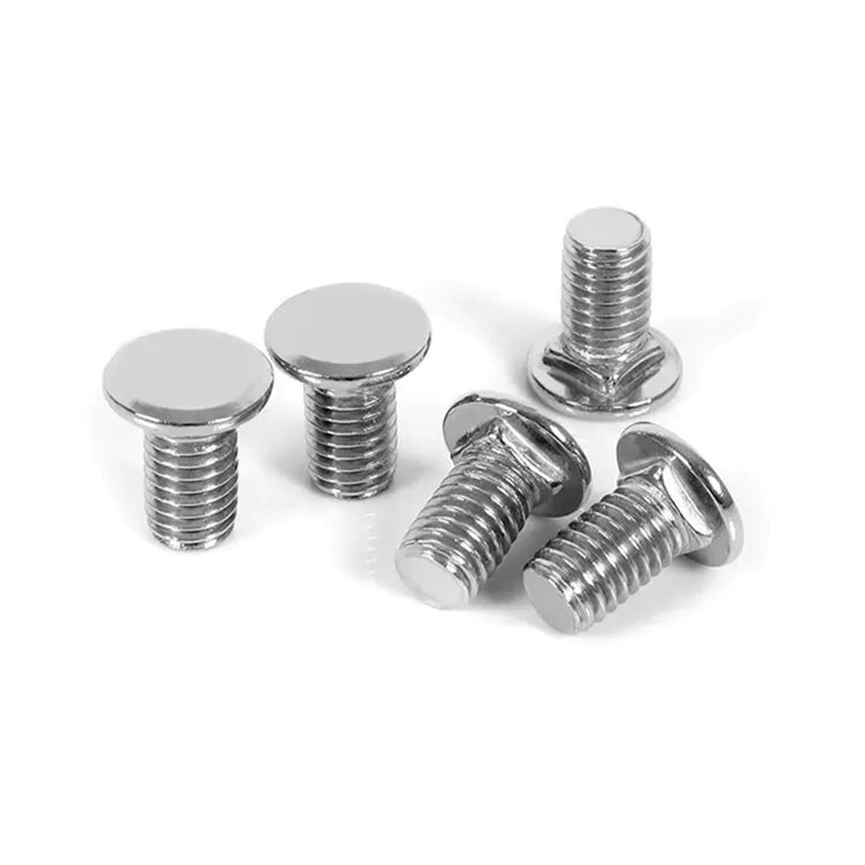
Stainless steel screws achieve natural rust resistance by adding elements such as chromium (≥18%) and nickel (≥8%) to form a surface passivation film, allowing them to adapt to harsh environments such as moisture, acids, and alkalis without complex surface treatments.
The mainstream models are divided into A2 (304 stainless steel) and A4 (316 stainless steel), with the performance difference mainly due to the addition of molybdenum. The price is about 2.5 to 3 times that of carbon steel screws. Core models and performance differences
• A2 (304 stainless steel): Contains 18% chromium + 8% nickel, with a tensile strength of about 520 MPa and a yield strength of ≥205 MPa. It can withstand daily moisture and mild acid and alkali environments and is the preferred choice for outdoor and household applications. Commonly used in balcony railings, kitchen sinks, and outdoor furniture fixation. Note that it may experience pitting corrosion in high salt spray environments.
• A4 (316 stainless steel): Adds 2% to 3% molybdenum on the basis of 304, increasing its resistance to chloride corrosion by more than three times, with salt spray resistance up to 1000 hours. It is suitable for applications such as ship decks, chemical storage tanks, and photovoltaic brackets in coastal areas with strong corrosion.
Purchasing and usage misunderstandings
• Misunderstanding 1: “Stainless steel never rusts.” In fact, 304 stainless steel may still experience pitting corrosion in high humidity and high salt environments, and 316 stainless steel cannot withstand long-term erosion by strong oxidants.
• Misunderstanding 2: Relying on magnetism to identify quality. High-quality 304/316 stainless steel is usually non-magnetic or weakly magnetic. If the magnetic attraction is strong, it may be “stainless iron” without nickel, with significantly reduced corrosion resistance. It is recommended to confirm the material composition through a third-party test report to avoid purchasing inferior products.
PART 3. Alloy steel screws: High-strength performers in extreme conditions

Alloy steel screws are based on carbon steel and incorporate alloy elements such as manganese, chromium, and molybdenum. After quenching and tempering heat treatment, their strength grades are generally above 8.8, with the highest reaching 12.9. Their fatigue resistance is two to three times that of carbon steel, enabling them to withstand long-term high-frequency vibrations and extreme temperature fluctuations.
They are core components in heavy equipment and high-end manufacturing. Taking the commonly used 40CrMo alloy steel as an example, its strength variation rate is only 5% in the temperature range from -50°C to 300°C, far exceeding that of carbon steel (which may experience strength reduction with a 20°C temperature fluctuation).
The core advantages are threefold: first, high strength, with the tensile strength of 12.9 grade alloy steel being ≥1200MPa, making it a viable alternative to stainless steel in heavy-duty applications; second, high toughness, capable of absorbing impact loads and preventing brittle fractures; third, wide temperature range adaptability, suitable for extreme temperature environments such as high-temperature kilns and wind turbine main shafts.
Application scenarios include heavy truck chassis, steel structure bridge connections, machine tool spindle fixation, and aircraft engine components. Due to their use in critical load-bearing areas, quality control is of utmost importance.
Reputable manufacturers provide inspection reports for each batch of products, indicating the content of alloy elements (such as chromium 0.8%~1.1%, molybdenum 0.15%~0.25%), and verify performance through 100,000-cycle fatigue tests to prevent the industry’s chaos of “passing off carbon steel as alloy steel”.
PART 4. Non-ferrous metal screws: Exclusive solutions for special scenarios

Non-ferrous metal screws (such as copper, aluminum, titanium alloy, etc.) have lower strength than steel screws, but they possess special properties such as electrical conductivity, light weight, and high-temperature resistance, making them suitable for scenarios where conventional steel screws cannot meet the requirements. They belong to the category of “niche but irreplaceable” and have a wide range of prices.
• Copper bolts (mainly H62 brass): They have five times the electrical conductivity of carbon steel and are non-magnetic, making them suitable for electrical equipment terminals and medical device casings that require electrical conductivity and magnetic resistance. However, their tensile strength is only 200-300 MPa, and they cannot bear weight. When installing, copper washers should be used to avoid corrosion from contact with different metals.
• Aluminum bolts (6061 aluminum alloy): They weigh only one-third of carbon steel and are resistant to weak acid corrosion, making them suitable for applications such as drone frames and aluminum alloy window and door joints that require lightweight. However, they have low hardness (HB about 95) and are prone to stripping. When installing, the tightening torque should be controlled (suggested ≤ 15 N・m).
• Titanium alloy bolts (TC4): They have a tensile strength close to that of alloy steel (≥ 860 MPa), weigh only half as much as steel, and can withstand temperatures above 300°C, making them ideal for aerospace and high-temperature furnaces. However, they are extremely expensive, about ten times the price of stainless steel, and require special lubricants to prevent seizing at high temperatures.
PART 5. Scientific Selection Guide: Four Steps to Determine the Material of Screws
The selection of screw materials should balance performance, cost and service life, and follow the core “four-step method” of “considering the environment, calculating the load, checking the requirements, and controlling the cost”:
1. Consider the environment: Choose carbon steel for dry indoor environments; 304 stainless steel for humid or slightly corrosive environments; 316 stainless steel for coastal, chemical, or high-salt fog environments; titanium alloy or special alloy steel for high-temperature (>200℃) or highly corrosive environments.
2. Calculate the load: Select 4.8 grade carbon steel for light loads (≤500N); 8.8 grade carbon steel or 304 stainless steel for medium loads (500~2000N); 10.9/12.9 grade alloy steel for heavy loads (≥2000N) or dynamic loads.
3. Check special requirements: Choose copper bolts for electrical conductivity or anti-magnetic properties; aluminum bolts for lightweight; titanium alloy for high-temperature resistance; 304/316 stainless steel for food or medical scenarios (ensuring compliance with food-grade standards).
4. Control cost: Prioritize carbon steel for bulk and conventional scenarios; choose stainless steel when corrosion resistance is essential and cannot be replaced; use alloy steel/titanium alloy only when high strength is required and there is no alternative, to avoid over-specification and waste.
FAQ
Q: What do the carbon steel strength grades 4.8, 8.8, 10.9 and 12.9 mean, and which one do I need?
A: The grades indicate tensile and yield strength. 4.8 (tensile ≥400MPa) suits light loads like furniture and household appliances; 8.8 (≥800MPa) is for medium loads such as automotive chassis and general machinery; 10.9 (≥1040MPa) is for long-term load-bearing applications like wind turbine towers and pressure vessels; 12.9 (≥1220MPa) is for extreme heavy-load conditions such as aircraft parts and mining machinery. All carbon steel screws need surface treatment to prevent rust.
Q: What is the difference between A2 (304) and A4 (316) stainless steel screws, and do they ever rust?
A: A2 (304) contains 18% chromium and 8% nickel, with tensile strength of about 520MPa — suitable for outdoor, humid and mildly corrosive environments. A4 (316) adds 2–3% molybdenum, increasing chloride corrosion resistance by more than three times, with salt spray resistance up to 1000 hours — for ship decks, chemical tanks and coastal installations. Note that 304 can still pit in high-salt environments, and neither resists strong oxidants indefinitely.
Q: How do I choose the right screw material for my application?
A: Follow four steps. Consider the environment: carbon steel for dry indoor, 304 for humid/mildly corrosive, 316 for coastal/chemical, titanium or special alloy for high-temperature (>200°C). Calculate the load: 4.8 grade for light loads (≤500N), 8.8 or 304 for medium (500–2000N), 10.9/12.9 alloy for heavy (≥2000N). Check special requirements: copper for conductivity, aluminum for lightweight, titanium for high-temperature. Then control cost: use carbon steel for bulk needs and upgrade only where necessary.
HKTL Fastener supplies screws in carbon steel, stainless steel, alloy steel and non-ferrous materials, guiding you from environment and load to special requirements and cost to select the exact grade that fits your application.
If you are looking for quality screws, please visit us here https://hktl-fastener.com/screws/.