
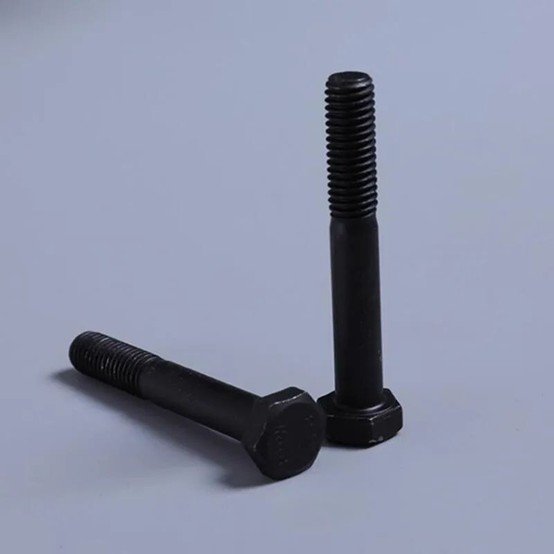
In addition to the high-temperature alkaline blackening and room-temperature blackening processes for fasteners, a new blackening process for fasteners has emerged in recent years, which is the blackening process using residual heat of fasteners.
Blackening treatment for fasteners using residual heat
It can be said that the heat treatment blackening of fasteners overcomes some of the shortcomings of alkaline blackening and room-temperature blackening, such as energy conservation, no pollution, and a simple blackening process that does not require cleaning.
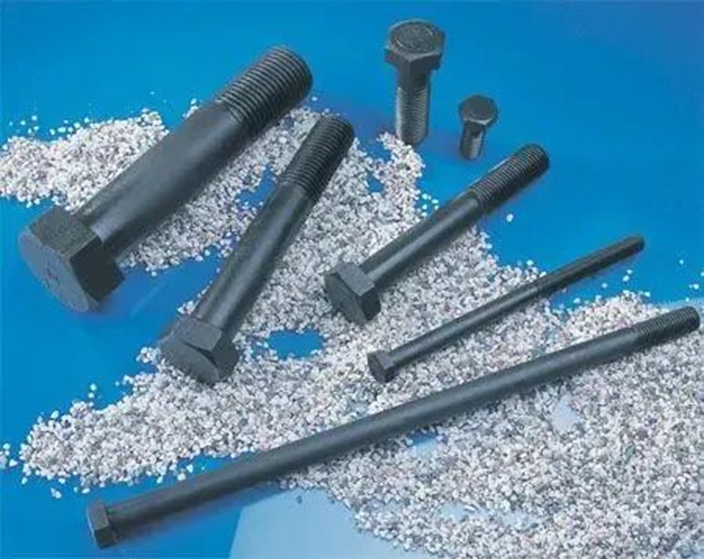
However, there is a prerequisite for the heat treatment blackening of fasteners, which is that the fasteners must have residual heat and a certain temperature (160℃ – 500℃). The composition of the blackening solution is mostly soluble resins or emulsion resins, colorants, solvents and additives, etc.
The process flow is generally tempering (heating the workpiece) – blackening (immersing in the blackening solution for 10 to 30 seconds and then removing) – drying (such as residual heat drying, natural drying, or heating and drying are all acceptable).
The principle of heat-activated blackening of fasteners is that when fasteners with residual heat come into contact with the blackening solution, the organic film-forming substances in the solution condense and deposit on the surface of the steel fasteners according to the principle of thermal reaction, forming an organic polymer composite protective film containing colored substances and other functional substances. Through the adhesion and sealing effect of the film, the anti-corrosion function is achieved.
The advantages of blackening fasteners with residual heat are as follows:
Blackening with residual heat after tempering is energy-saving; the film of organic composite materials has good anti-rust performance; the automated production line is easy to operate and ensures stable blackening quality; there is no need for a cleaning process, which saves water and has no emissions, causing no pollution to the environment; it is applicable to various steels, including carbon steel and alloy steel; any fasteners that need tempering after quenching can be treated with residual heat blackening.
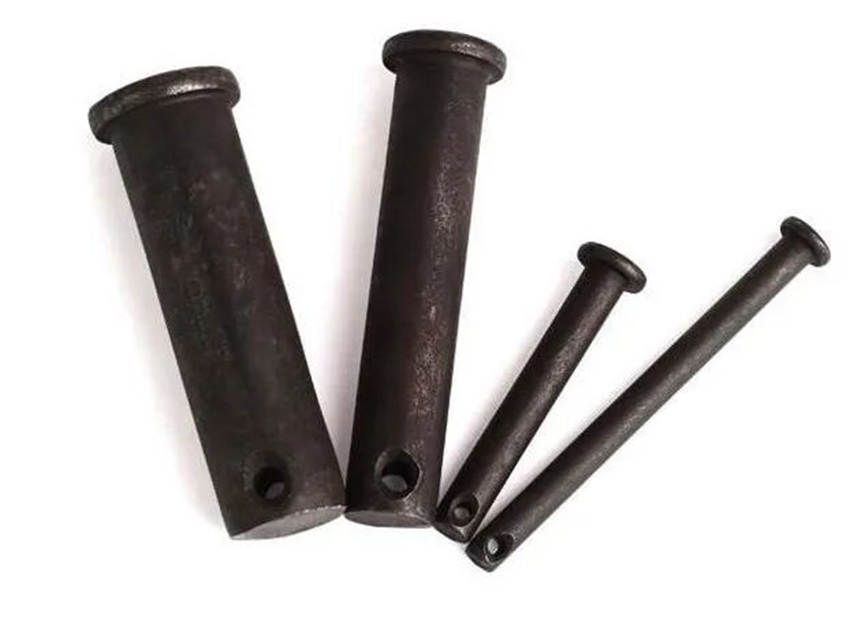
Although it has many advantages, the blackening treatment of fasteners by residual heat also has its drawbacks. For instance, the fasteners must be at a certain temperature; those that cannot be heated cannot be treated with this blackening method. Insufficient heat and low temperature of the fasteners will affect the blackening effect.
The coating formed by residual heat blackening may affect the dimensions of the fasteners. Moreover, the blackening film produced by this method is less wear-resistant.
When choosing the blackening treatment process for fasteners, one should select based on the characteristics of different blackening processes.
If you are looking for quality fasteners, please visit us here https://hktl-fastener.com/.