Surface treatment refers to the formation of a surface layer with certain or multiple special properties on the material surface through physical or chemical methods.
Surface modification technology
Surface treatment can enhance the performance of products in terms of appearance, texture, function, and other aspects. Now, let’s take a look at the surface modification techniques of metal surface treatment processes with the author and learn about the operation steps together.
01 Surface hardening
Surface hardening refers to a heat treatment method that does not change the chemical composition and core structure of steel, but rapidly heats the surface to austenitize and then quenches it to strengthen the surface of the part.

The main methods of surface hardening include flame hardening and induction heating. Common heat sources include oxygen-acetylene or oxygen-propane flames, etc.
02 Laser surface strengthening
Laser surface strengthening involves focusing a laser beam onto the surface of a workpiece, heating the extremely thin surface layer of the workpiece to a temperature above the phase transformation temperature or melting point in an extremely short period of time, and then rapidly cooling it to harden and strengthen the surface of the workpiece.

Laser surface strengthening can be classified into laser phase transformation strengthening treatment, laser surface alloying treatment, and laser cladding treatment, etc.
Laser surface strengthening has a small heat-affected zone, causes little deformation, and is easy to operate. It is mainly used for local strengthening of parts such as blanking dies, crankshafts, cams, camshafts, splined shafts, precision instrument guide rails, high-speed steel cutting tools, gears, and cylinder liners of internal combustion engines.
03 Shot Peening
Shot peening is a technique that involves spraying a large number of high-speed moving shot particles onto the surface of a part, similar to countless small hammers striking the metal surface, causing a certain degree of plastic deformation in the surface and subsurface layers of the part to achieve strengthening.

Function: Enhance the mechanical strength of parts, as well as their wear resistance, fatigue resistance, and corrosion resistance; used for surface matting and removing oxide scale; eliminate residual stress in cast, forged, and welded parts, etc.
04 Rolling
Rolling is a surface treatment process carried out at room temperature, where hard rollers or wheels are pressed against the rotating surface of a workpiece and moved along the generatrix direction, causing plastic deformation and hardening of the workpiece surface to achieve an accurate, smooth, and strengthened surface or a surface with specific patterns.
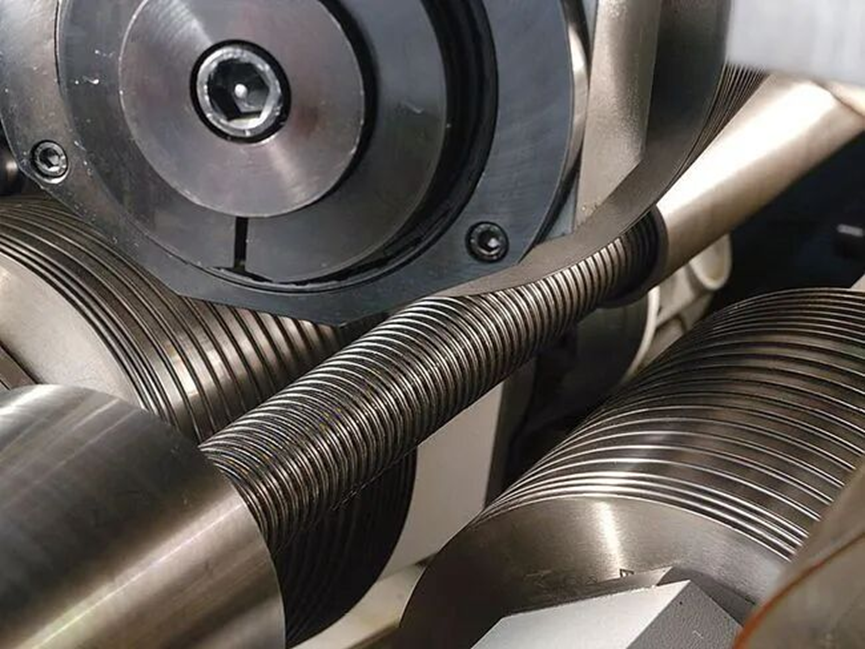
Application: Parts with relatively simple shapes such as cylindrical surfaces, conical surfaces, and planes.
05 Drawing
Drawing, also known as wire drawing, is a surface treatment method in which metal is forced to pass through a die under external force, resulting in the compression of the metal’s cross-sectional area and obtaining the required cross-sectional shape and size.

Drawing can be made into several types such as straight grain, random grain, wavy grain and spiral grain according to the decorative requirements.
06 Polishing
Polishing is a finishing process for modifying the surface of parts. Generally, it can only achieve a smooth surface and cannot improve or even maintain the original machining accuracy. Depending on the pre-processing conditions, the Ra value after polishing can reach 1.6 to 0.008 μm. It is generally divided into mechanical polishing and chemical polishing.

If you are looking for quality fasteners, please visit us here https://hktl-fastener.com/.