
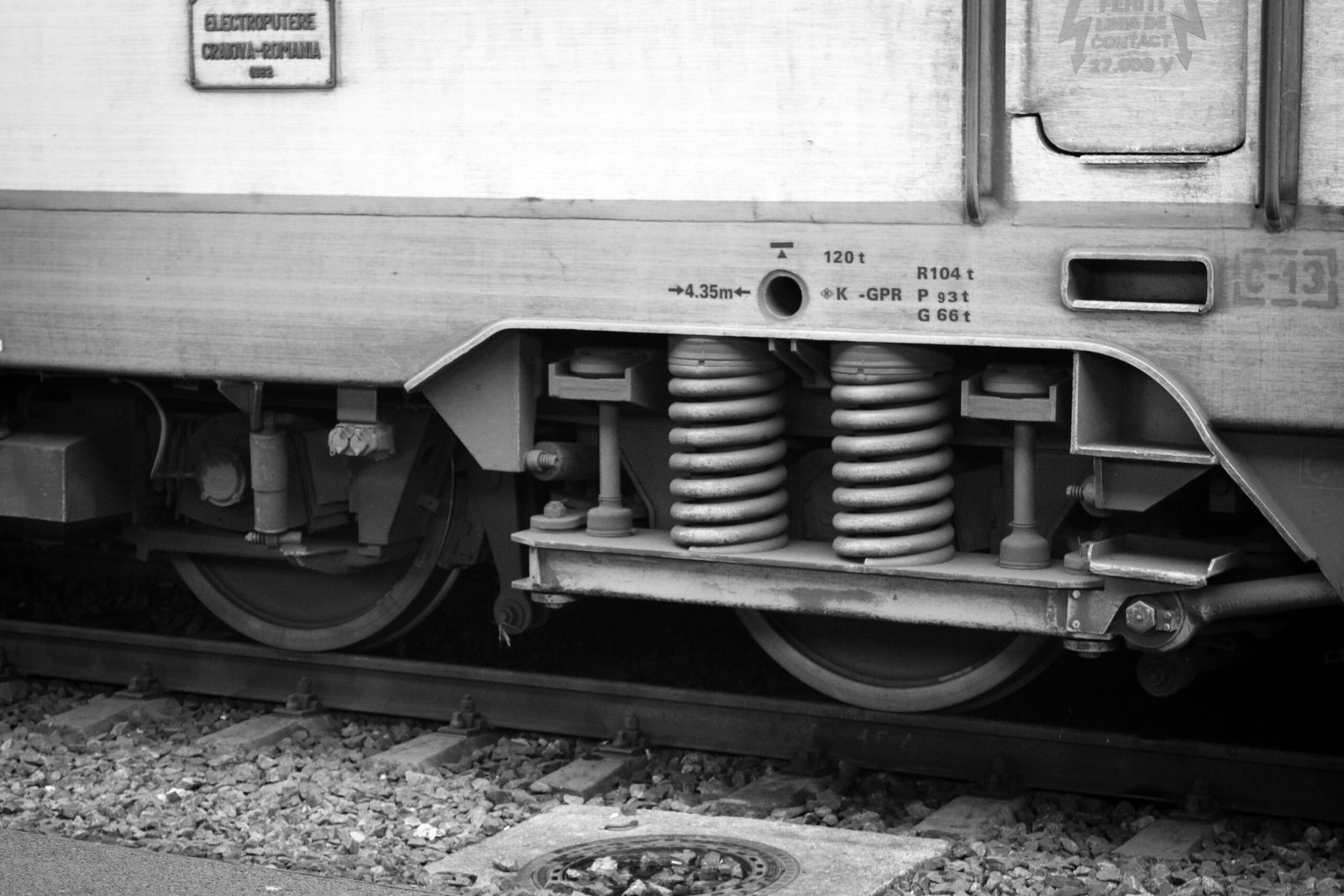
Against the backdrop of the continuous expansion of rail transit construction into coastal, plateau and cold regions, the reliability of fasteners in extreme environments has become a focus of industry attention.
The climatic conditions of high cold, high humidity and high salt pose higher demands on material stability and surface protection, and traditional selection methods are no longer sufficient to meet the long-term operation requirements.
The actual impact of extreme environments on rail transit fasteners
During the operation of engineering projects, climatic factors have a long-term impact on the performance of fasteners.
Extremely cold environments can lead to a decrease in material toughness, especially at sub-zero temperatures. If the fasteners have not undergone low-temperature impact toughness tests, there is a risk of brittle fracture. High humidity environments accelerate the oxidation process of metals and increase the corrosion rate. Chloride ions in high-salt environments continuously damage the surface coating and base material.
Therefore, during the selection stage, the following must be considered simultaneously:
• Low-temperature impact toughness indicators
• Long-term salt spray corrosion verification data
• The retention rate of mechanical properties of different materials in humid environments
The superimposed effect of the environment determines that the selection must be more systematic rather than based on a single indicator.
Industry standards and test bases become the foundation for selection
The corrosion resistance of rail transit fasteners in high-salt environments is usually verified according to the ISO 9227 salt spray test method issued by the International Organization for Standardization. This standard simulates long-term corrosion conditions through an artificial salt spray environment, providing a unified test path for evaluating coating quality and anti-corrosion capabilities.
In actual engineering, some coastal lines have higher requirements for salt spray test times, with some projects requiring no red rust to appear after more than 1000 hours. In addition to corrosion tests, the mechanical properties of materials must also meet the internal standards of the railway industry, such as tensile strength, shear strength, and fatigue life, to ensure structural stability under the frequent loads of trains.
Trends in Surface Treatment Technologies
In recent years, anti-corrosion technologies have shown an upgrading trend. Traditional hot-dip galvanizing is still widely used, but its protection period is limited in high-salt environments. In industry practice, zinc-nickel alloy coatings and high-weathering coating systems are increasingly applied.
Relevant technical data indicates that zinc-nickel alloys have significantly longer anti-corrosion durations in salt spray tests and are more suitable for coastal track projects. When selecting, it is recommended to evaluate the following simultaneously:
– Whether the coating thickness meets the engineering grade requirements
– Whether there is a third-party salt spray test report
– Whether the bonding strength between the substrate and the coating is considered
The anti-corrosion ability not only depends on the type of coating but also on the overall process control level.
Material Selection and Structural Adaptation Strategies
In low-temperature regions, materials need to have good low-temperature impact resistance. Alloy steel can increase strength after proper heat treatment, but low-temperature brittleness must be avoided. In high-humidity and high-salt areas, the application ratio of stainless steel (such as 316 series) has increased.
Although the cost is higher, its reliability over a long service life is better. Engineering practice shows that in complex environmental track lines, material selection and anti-corrosion technologies should be combined and matched rather than upgraded singly.
The selection of fasteners for rail transit in high-altitude, high-humidity and high-salt environments must be comprehensively evaluated from four aspects: material performance, surface anti-corrosion technology, standard testing system and engineering environment data. Only by establishing a full-process technical system can long-term safe operation be truly achieved.
If you are looking for quality fasteners, please visit us here https://hktl-fastener.com/.