Direct Answer
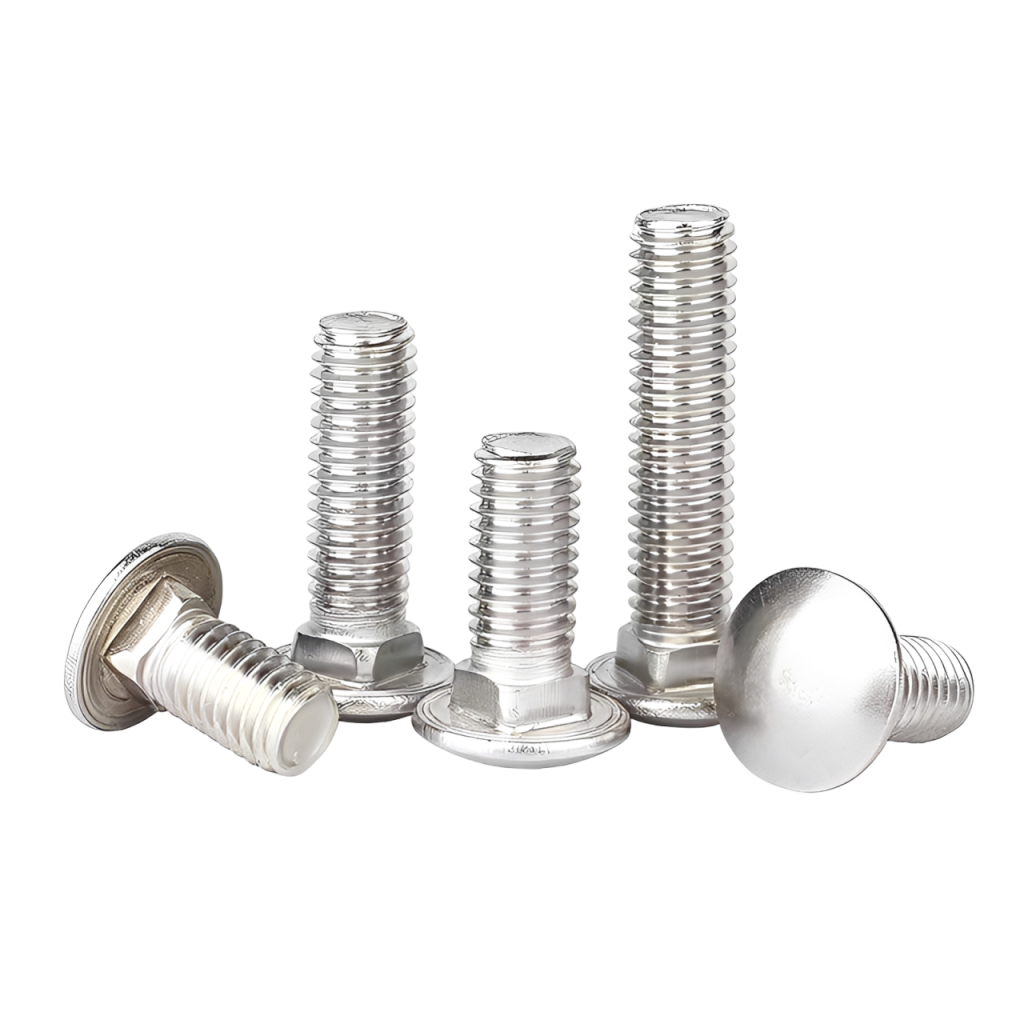
Specify steel coach bolts by treating the connection as a system: bolt diameter, grip length, material strength, coating, washer size, hole fit, and tightening method must work together. A coach bolt—also called a carriage bolt—has a rounded head and usually a square neck that resists rotation during installation. It is especially useful where a smooth exposed head is needed and the timber or connected member must not rotate while the nut is tightened.
This guide explains how to select coach bolts for timber-to-steel, timber-to-timber, and light structural connections, with emphasis on practical specification, corrosion protection, and installation control.
The Core Selection Principle
A coach bolt performs well when the square neck is properly seated, the shank fills the hole without excessive clearance, and the nut side has enough bearing area to clamp the joint without crushing the material. Select the bolt by grip length first, then confirm diameter, strength, coating, and washer arrangement. Do not choose length solely by the total thickness of the materials; the bolt must provide enough grip for the joint while leaving sufficient thread for the nut.
Where Coach Bolts Are Used
Coach bolts are commonly used in:
- Timber-to-steel brackets and plates.
- Fence rails, gate frames, and outdoor structures.
- Timber framing and structural connections.
- Playground equipment and park furniture.
- Agricultural equipment and trailers.
- Solar mounting structures with timber elements.
- Machinery guards and fabricated assemblies.
- Utility poles, crossarms, and outdoor infrastructure.
The rounded head provides a finished appearance and reduces snagging. The square neck seats into a square hole or embeds into timber, preventing the bolt from turning while the nut is tightened.
Coach Bolt Anatomy
| Component | Function | Specification Point |
| Domed head | Provides bearing surface and finished appearance | Head diameter and height |
| Square neck | Prevents rotation during tightening | Neck size and seating method |
| Plain shank | Forms the grip length through the joint | Diameter and unthreaded length |
| Threaded section | Engages the nut | Thread standard, length, and fit |
| Nut | Develops clamping force | Grade, thread, and washer requirement |
| Washer | Distributes load and protects surface | Diameter, thickness, and material |
The grip length is the unthreaded portion that passes through the connected materials. In a well-specified connection, the threaded portion should begin close to the nut side rather than crossing the shear plane where avoidable.
Diameter and Strength Selection
Bolt diameter affects shear capacity, bearing capacity, spacing requirements, and installation torque.
| Diameter | Typical Use | Selection Consideration |
| M6 / 1/4 in. | Light brackets, furniture, small fabrications | Limited load capacity; check bearing stress |
| M8 / 5/16 in. | General timber-to-metal connections | Common for fencing, frames, and light structures |
| M10 / 3/8 in. | Structural timber connections and equipment mounts | Better load capacity; verify hole and washer size |
| M12 / 1/2 in. | Heavier timber and steel connections | Requires adequate edge and end distances |
| M16 / 5/8 in. and above | Heavy structural or infrastructure use | Engineer-designed connections recommended |
Strength requirements depend on whether the bolt is mild steel, high-tensile steel, stainless steel, or a grade-specific product. For structural connections, do not substitute a visually similar bolt without checking the specified grade, mechanical properties, and applicable design standard.
Length and Grip Length
The most common installation problem is incorrect bolt length.
To determine length:
- Measure the total thickness of the connected members.
- Add washer thickness on both sides where used.
- Add nut thickness.
- Add sufficient thread projection beyond the nut.
- Confirm that the square neck can seat correctly.
- Check that the threaded section does not unnecessarily cross the shear plane.
A bolt that is too short may not fully engage the nut. One that is too long may protrude dangerously, interfere with equipment, or place threads in the shear plane.
Timber-to-Steel Connections
In a timber-to-steel connection, the coach bolt usually passes through timber and a steel plate or bracket, with the nut and washer on the steel side.
Key checks:
- Hole diameter in the steel plate.
- Hole diameter in the timber.
- Bolt diameter and square-neck seating.
- Washer diameter on both sides.
- Steel plate thickness and bearing capacity.
- Timber species, density, and moisture condition.
- Edge distance, end distance, and spacing.
- Load direction: shear, tension, or combined.
For structural timber connections, follow the relevant timber-engineering standard and have the connection designed or reviewed by a qualified engineer.
Hole Fit and Installation
A coach bolt needs a hole that allows insertion but does not leave excessive clearance.
| Hole Condition | Effect | Practical Guidance |
| Too tight | Difficult installation, timber splitting | Drill to the specified clearance |
| Correct clearance | Smooth insertion and proper bearing | Follow project specification |
| Too loose | Movement, reduced shear performance | Avoid oversized field-drilled holes |
| Square neck not seated | Bolt rotates during tightening | Use square hole or ensure neck embeds in timber |
| Poor alignment | Bent bolt or damaged threads | Align members before drilling |
For timber, drill rather than force the bolt. Forcing a coach bolt through dense timber can split the member, damage fibers, or make future disassembly difficult.
Coating and Corrosion Protection
Outdoor timber connections are particularly vulnerable to moisture, treatment chemicals, and coating damage.
| Environment | Recommended Protection | Notes |
| Dry indoor | Zinc-plated or black oxide | Lowest-cost option for protected service |
| General outdoor | Hot-dip galvanized | Strong barrier protection for many exterior uses |
| Coastal or marine | Stainless steel or engineered protection | Consider chloride exposure and material compatibility |
| Treated timber | Hot-dip galvanized or stainless steel | Some preservatives can accelerate corrosion |
| High-moisture exterior | Hot-dip galvanized or stainless steel | Drainage and maintenance access matter |
For pressure-treated timber, confirm compatibility between the timber treatment and the fastener coating. Copper-based preservatives, moisture, and salt exposure can be aggressive toward some coatings.
Washers and Nuts
Use washers on both sides where the connected material is soft, thin, or likely to be crushed.
Recommended arrangement:
- Timber side: washer if the timber is soft, treated, or prone to local crushing.
- Steel side: washer under the nut to distribute load.
- Nut: matched thread and appropriate strength class.
- Locking device: only where vibration, movement, or safety requirements justify it.
For structural applications, do not add washers or locking devices without checking whether they alter the connection geometry or torque requirement.
Tightening and Inspection
Tighten coach bolts evenly until the joint is snug and the connected members are drawn together. Avoid excessive torque, especially in timber, where over-tightening can crush fibers or deform the steel plate.
Inspection points:
- Square neck is fully seated.
- Head and washer bear fully on the surface.
- Nut is fully engaged.
- Thread projection is adequate but not excessive.
- No visible timber splitting or steel deformation.
- Coating is intact around the head, shank, and nut.
- Bolt is straight and aligned with the hole.
- Joint members are properly drawn together.
For outdoor structures, inspect periodically for corrosion, timber shrinkage, loosening, and coating damage.
Common Specification Mistakes
Selecting by Head Appearance Only
A rounded head does not define mechanical performance. Two coach bolts with similar heads may differ greatly in material, strength, thread, and coating.
Ignoring the Square Neck
If the square neck cannot seat properly, the bolt may spin during tightening. This can damage the coating, prevent proper torque, or make installation impossible.
Using the Wrong Coating for Treated Timber
Some timber preservatives and wet-service conditions can degrade coatings. Specify hot-dip galvanizing or stainless steel where the exposure demands it.
Overlooking Edge and End Distances
Timber can split when bolts are placed too close to edges or ends. Follow the applicable design standard and maintain adequate spacing.
Assuming All Coach Bolts Are Structural
General-purpose coach bolts may be suitable for fencing or furniture but not for engineered structural connections. Use only products and grades approved for the intended load condition.
Procurement Specification Template
A clear purchase description should include:
- Product name: steel coach bolt / carriage bolt.
- Diameter and thread: for example, M10 x 1.5 or 3/8-16 UNC.
- Length and grip length.
- Material and strength requirement.
- Coating: zinc-plated, hot-dip galvanized, stainless, or other.
- Head style and square-neck requirement.
- Nut and washer specification.
- Quantity and packaging.
- Applicable standard.
- Certificates and traceability requirements.
- Sample approval requirement.
For example: M10 x 100 steel coach bolt, hot-dip galvanized, square neck, with M10 hot-dip galvanized nut and washer; quantity 1,500 sets; mill certificate and coating report required.
FAQ
What is a steel coach bolt?
A steel coach bolt, often called a carriage bolt, is a fastener with a domed head and usually a square neck beneath the head. The square neck helps prevent rotation while the nut is tightened.
Can coach bolts be used in structural timber connections?
Yes, but only when the bolt grade, diameter, spacing, edge distance, coating, and installation method meet the applicable structural design requirements. Do not treat every coach bolt as a structural fastener.
Should I use washers with coach bolts?
Use washers where the material is soft, thin, or prone to local crushing. A washer under the nut is common in timber-to-steel connections to distribute the clamping load.
What coating is best for outdoor coach bolts?
Hot-dip galvanizing is a common choice for general outdoor exposure. For coastal, marine, or highly corrosive environments, stainless steel or an engineered protection system may be more suitable.
Why does my coach bolt keep spinning?
The square neck may not be seated in a square hole or sufficiently embedded in timber. Check the neck seating, hole alignment, and whether the correct bolt style has been used.
Can I use stainless coach bolts with treated timber?
Stainless steel can be suitable, but compatibility depends on the timber treatment, moisture, and service environment. Confirm the alloy and treatment compatibility before specifying.
Final Recommendation
Specify steel coach bolts as complete connection packages, not as individual rounded-head bolts. Define diameter, grip length, strength, coating, square-neck seating, washer arrangement, and tightening method. For outdoor or treated-timber service, prioritize hot-dip galvanized or stainless options and verify compatibility with the timber treatment.
A reliable coach-bolt connection depends as much on hole preparation, washer support, and installation discipline as it does on the bolt itself.
Discuss Your Fastener Fequirement
If you are evaluating a fastener for an industrial project, prepare the drawing, material requirement, quantity, operating environment and target delivery schedule before contacting a supplier. HKTL-Fastener can be invited to review the inquiry details and confirm whether the requested item falls within its verified product scope. Please share the drawing and relevant specification for a quotation discussion; final design suitability should remain with the responsible engineering team.