
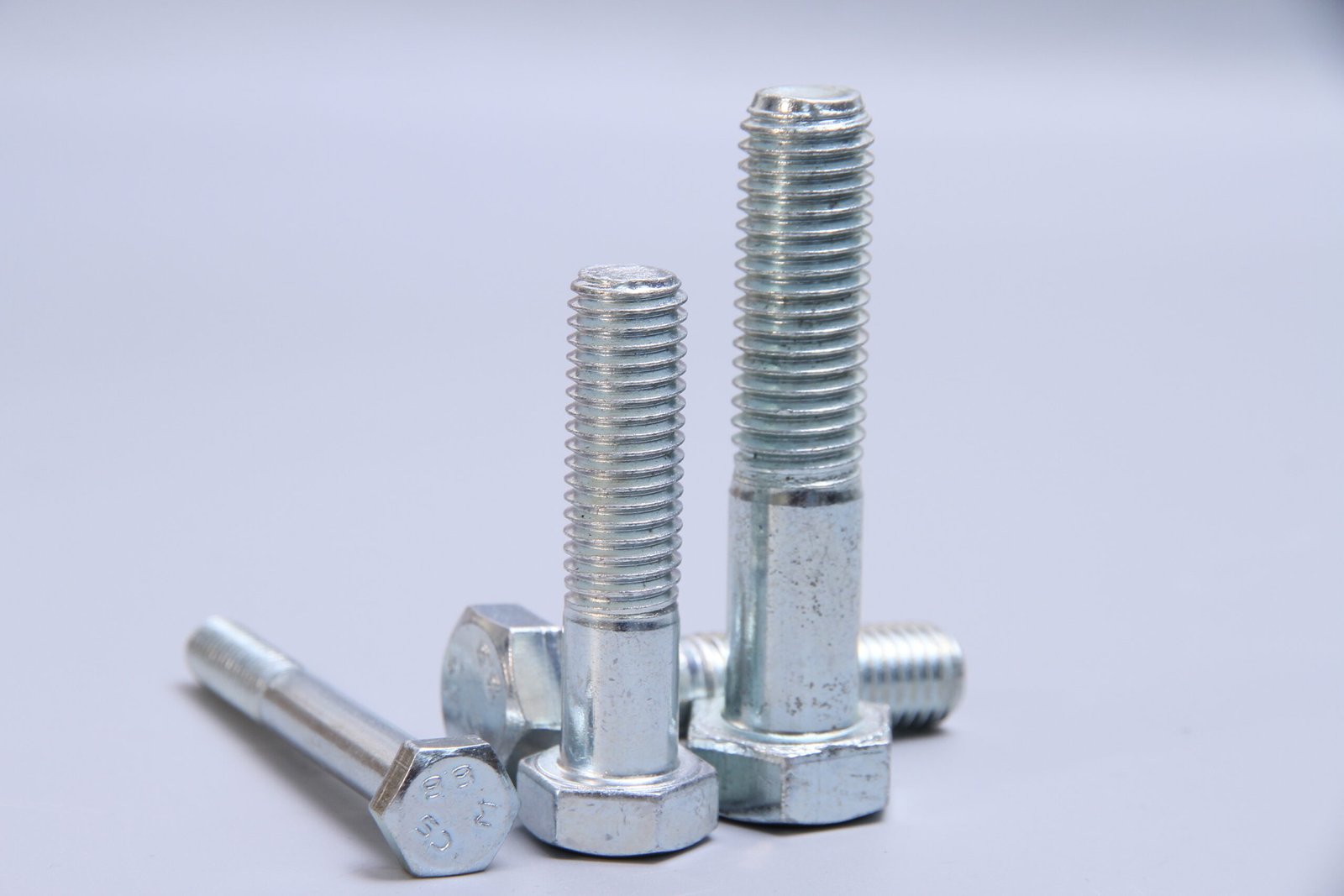
The “8.8 grade” refers to the performance level of the bolt: the nominal tensile strength reaches 800 MPa, and the yield strength is 640 MPa. That is, each square millimeter of the bolt’s cross-section can withstand a pulling force of 80 kilograms. This high-strength characteristic makes it an essential component for critical connections that require stability. To effectively choose the right fasteners, it is crucial to know how to Select 8.8 Grade Bolts and their applications in various environments.
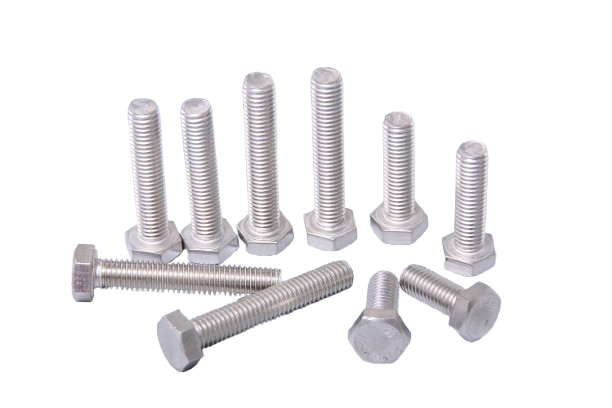
1. The “Golden Standard” for Selecting 8.8 Grade Hexagon Bolts
Understanding how to Select 8.8 Grade Bolts can significantly impact the reliability of your projects and should not be overlooked.
When choosing 8.8 grade hexagonal bolts, one should not merely focus on the price. Multiple key indicators need to be considered comprehensively to ensure that they meet the requirements of the application scenario:
2. Material and Performance Verification
8.8 grade bolts are usually made of medium carbon steel (35#, 45#) or low alloy steel and undergo quenching and tempering treatment. High-quality bolts should have complete quality certificates and raw material proofs. For important application scenarios, it is recommended that suppliers provide mechanical property test reports to verify whether their tensile strength and yield strength meet the standards.
3. Verification of Standard Specifications
For international procurement, it is necessary to confirm compliance with the ISO 898-1 standard. This standard requires a hardness of 250-320HV for the 8.8 grade bolts in Vickers hardness and 22-32HRC in Rockwell hardness.
In addition to the strength requirements, grade 8.8 bolts also need to meet several quality indicators: the height of the undecarbonized layer of the thread should be no less than 1/2H1, the depth of the complete decarbonization layer should not exceed 0.015mm, and the stress should be maintained at 580-600 MPa, with the elongation after fracture not less than 12%.
The product grade of the bolts is also very crucial: Grade A is used for bolts with a diameter of 1.6 – 24mm and a length of ≤ 150mm; Grade B is used for larger-sized or longer bolts. When purchasing, it is necessary to select based on actual needs.
4. Surface Treatment Options
Choose the appropriate surface treatment based on the usage environment:
Blackening: Provides general rust prevention capabilities, suitable for dry indoor environments;
Galvanization: Offers excellent resistance to atmospheric corrosion and is suitable for most indoor and outdoor environments.
Hot-dip galvanizing: Provides a thicker zinc coating, suitable for harsh corrosive environments;
Dacromet: Offers excellent corrosion resistance, no risk of hydrogen embrittlement, suitable for high-strength bolts.
5. Dimension accuracy check
The focus of inspection is on the thread accuracy (typically with a 6g tolerance), the width and thickness of the head, and the diameter tolerance of the rod section. For critical applications, it is recommended to conduct random checks using tools such as calipers and gauge blocks to ensure that the installation fit is correct.
6. Installation and Usage Specifications
When installing and using high-strength bolts, it is necessary to follow the relevant installation guidelines and usage instructions to ensure that the bolts are correctly installed, pre-tightened, and locked. Avoiding improper installation is crucial to prevent performance degradation or safety incidents. Use calibrated torque tools and operate according to the recommended tightening torque:
M8 bolt: The tightening torque is approximately 20 – 25 N·m.
M10 bolt: The tightening torque is approximately 40 – 50 N·m.
M12 bolt: The tightening torque is approximately 70 – 85 N·m.
M16 bolt: The tightening torque is approximately 180 – 210 N·m.
M20 bolt: The tightening torque is approximately 350 – 400 N·m
These values are for reference only. In actual applications, factors such as the friction coefficient of the thread and the pre-tightening force of the bolt need to be taken into consideration. A too small torque may cause the connection to loosen, while an excessively large torque may cause the bolt to yield or break.
If you are looking for 8.8 grade bolts for your project, please visit us here https://hktl-fastener.com/bolts-and-nuts/.