
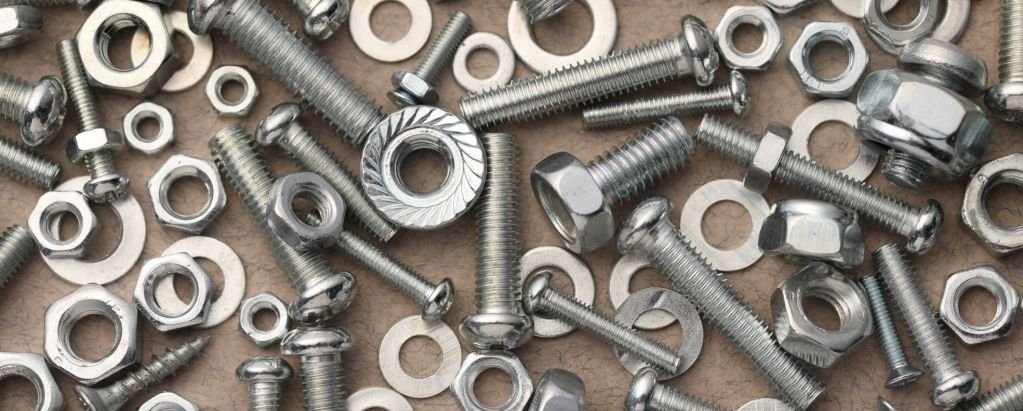
In modern equipment, bolts are more often working under variable loads. For instance, a certain type of cylinder head bolt in an internal combustion engine operates in a harsh environment of repeated tension, and the structure does not allow for an increase in bolt size. Therefore, it is necessary to enhance its strength and tensile fatigue resistance, which means that there are higher requirements for the tensile fatigue life of such bolts.
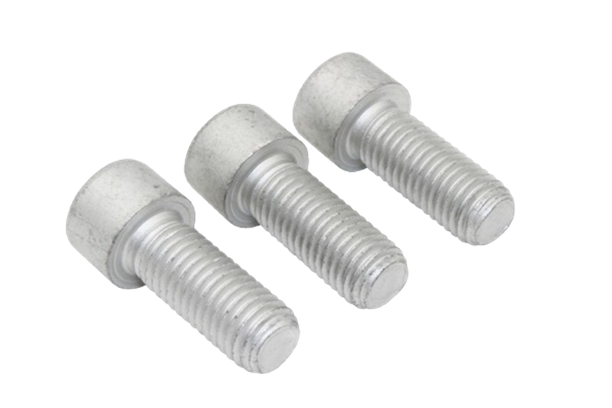
1. Fatigue Specifications for Threaded Fasteners
Due to the diversity of users, the usage environments of fasteners vary. Therefore, it is necessary to standardize the environment to establish and select life indicators, and the most crucial environmental condition is the load.
1.1 Load Conditions
Here, the load conditions refer to the maximum and minimum load values applied to the bolt during fatigue testing. Currently, both ISO standards and Chinese regulations stipulate that for bolts with σb ≥ 1200 MPa, the maximum load value is set at 46% – K value (load factor) of the bolt’s minimum tensile failure load.
The standard values of the minimum breaking load for bolts of different diameters are specified in the regulations. These values serve as the acceptance criteria for static tensile strength and also as the load basis for fatigue tests (the maximum load for fatigue tensile test = minimum tensile load × load factor K). For instance, for alloy steel countersunk bolts, the K value is taken as 0.46.
The minimum load in the fatigue tensile test is determined by the load ratio R. R = minimum load / maximum load, R = 0.1.
1.2 Life Index
Under the above-mentioned load regulations, there is a unified life index. That is, in the samples specified by the standard, the minimum number of cycles shall not be less than 4.5 × 10^4 times. For samples exceeding 13 × 10^4 times, only 13 × 10^4 times shall be counted for the average value.
2. Fatigue life of threaded fasteners under tensile loading
2.1 Selection of bolt material and heat treatment
According to relevant Chinese standards (e.g., GB/T3098.1 – 2000), fatigue performance requirements are only imposed on bolts with σb ≥ 1200 MPa. (Lin: The main reason for imposing fatigue performance requirements on high-strength steels is that while their strength increases, their plastic reserve in material properties is significantly inferior to that of medium and low-strength steels.)
It is obviously inappropriate to compare this requirement with nickel-based alloys and titanium alloys that have higher strength and good plasticity reserves, such as 40CrNiMo and 30CrMnSi. If higher-strength alloy steel materials are selected, such as the American INCONEL718 alloy, which can have a strength of over 1,600 MPa, when fatigue tests are conducted under general load specifications, it will have a very high life value. Take M6 bolts as an example.
As per the fatigue test load, it is 11.01 kN and the static tensile failure load is 23.93 kN. However, the actual static tensile failure load of INCONEL718 alloy can reach up to 35 kN. If the fatigue test is still conducted with 11.01 kN as Pmax, it only accounts for 31% of the static tensile failure load, and the life value will naturally be higher.
But for high-strength materials like 30CrMnSiNi, which have extremely high notch sensitivity, the life value during tensile fatigue tests is very low, and they are fundamentally not suitable for use as threaded parts with tensile fatigue requirements.
Although the static tensile failure load of some materials can be similar to that of alloy steels such as 30CrMnSi, when fatigue life tests are conducted at the same load level, the fatigue life values do not meet the specification requirements, such as titanium alloy Ti6Al4V.
To make the fatigue life values of titanium alloys consistent with those of alloy steels like 30CrMnSi, the load level must be reduced to 40% (i.e., K value is taken as 40%). For other types of titanium alloys (such as Ti21523), K should be reduced to 36%. (Lin: This statement also has issues: Generally, for titanium alloy bolts with the same static strength, their fatigue performance is better than that of steel bolts of the same type. This is a basic understanding of the performance of different materials.)
In this case, it is obvious that the titanium alloy bolt can be higher than 0.46, and definitely not 0.36. Therefore, for bolted connections, it is necessary to have sufficient static tensile strength and a relatively high tensile fatigue life. Attention should be paid to the correct selection of materials.
Fatigue fracture and delayed fracture are the two main causes of mechanical component failure. (Lin: This is again confusing concepts. The main factor causing delayed fracture in bolts is often a hydrogen-induced damage behavior caused by surface electroplating, which is basically unrelated to fatigue fracture.)
Generally speaking, when the tensile strength of steel is about 1,200 MPa, both fatigue strength and resistance to delayed fracture increase with the increase of strength and hardness; however, when the tensile strength exceeds about 1,200 MPa, fatigue strength no longer increases, while resistance to delayed fracture drops sharply.
Most steels used in mechanical manufacturing are medium carbon alloy steels and are used in the quenched and tempered state, with tensile strengths mostly ranging from 800 to 1,000 MPa. It is not difficult to increase their strength, but the greatest difficulty lies in solving the problem of low service life after strength enhancement. Fatigue failure and delayed fracture are the main obstacles to the high-strength and long-life development of mechanical manufacturing steels.
Heat treatment is also a crucial factor. During the tempering process of high-strength bolts, in the high-temperature tempering zone, impurity elements such as sulfur and phosphorus are prone to occur. These impurity elements tend to accumulate at the grain boundaries, leading to brittle fracture. This tendency is even more severe when the hardness exceeds 35HRC.
2.2 Process Methods for Improving Fatigue Life Resistance
Before the thread connection components are strengthened, the probability of tensile fatigue failure is as follows: 65% of the failures occur at the first thread engaged with the nut; 20% of the failures occur at the transition between the threaded section and the smooth shank (Lin: This description is basically correct, but the fundamental reason for fatigue failure at these locations is still the excessive stress concentration in the structure), that is, at the end of the thread;
15% of the failures occur at the fillet between the bolt head and the shank, as shown in Figure 1. It must be noted that the above data are based on the condition that the metal flow lines of the entire connection component are not disrupted.
To improve the tensile fatigue life, measures can be taken in the shape and process of the bolt. Currently, the most effective methods are as follows.
- Use MJ thread (i.e. reinforced thread)
The main difference between MJ thread and common thread lies in the minor diameter d1 and R of the external thread. The key feature of MJ thread is that the minor diameter d1 is larger than that of common thread, and the root fillet radius is increased, which reduces the stress concentration of the bolt.
There are specific requirements for R (Rmax = 0.18042P, Rmin = 0.15011P, where P is the pitch), while common thread has no such requirements and can even be a straight section. This significant change can greatly improve the tensile fatigue performance of the minor diameter. Currently, MJ thread is widely used in bolts for aircraft and spacecraft.
- Improving the Fatigue Performance of Threads
By using the thread rolling process, due to the effect of cold working hardening, there is residual compressive stress on the surface, which can make the internal metal fiber lines of the bolt reasonable and not be cut off. Its fatigue strength can be 30% to 40% higher than that of the turned thread. If the thread is rolled after heat treatment, the surface of the part can be strengthened and a residual pressure layer can be obtained, and the fatigue limit of the material surface can be increased by 70% to 100%.
This process also has the advantages of high material utilization rate, high productivity and low manufacturing cost. Table 2 shows the fatigue life values under different process methods. The test bolt material is 30CrMnSiA, and the bolt standard is GJB121.2.3, 6×26 (i.e. MJ6). The tensile fatigue test was carried out according to the test method, with the fatigue load: Pmax = 10.1 kN, Pmin = 1.01 kN. The results are shown in Table 2.
As can be seen from Table 2, the tensile fatigue performance of the fillet r at the threaded end of the bolt after heat treatment and then cold rolling (see Figure 1) is the best. The value of r for cold extrusion is not strictly required, and the technical conditions only specify the upper limit of the deformation.
- Strictly control the end dimensions
As shown in Figure 1, the transition zone between the bolt thread and the smooth shank is one of the important fatigue sources. Strictly controlling the shape of the transition zone according to the end dimensions is an important measure to improve the fatigue life of this area. Therefore, when designing and manufacturing the threading die, the end must be ground strictly in accordance with the standard, and the threading position must be strictly controlled during threading.
Specific measures can include using a larger transition fillet, cutting an unloading structure as shown in Figure 3b and 3c, and cutting a tool withdrawal groove at the end of the thread can also reduce stress concentration (Lin: The schematic diagrams in Figure 3b and 3c are obviously misleading. Increasing the fillet in the transition area does indeed have a role in mitigating local stress concentration, but Figure 3b and 3c).
Cold extrusion of the bolt’s corner can enhance the tensile fatigue life at the corner. All fatigue fractures will occur at the corner r of the bolt. Therefore, cold extrusion strengthening of the corner r is one of the important measures to improve the overall tensile fatigue life of the bolt.
2.3 Avoiding the Generation of Additional Bending Stress
Due to poor design, manufacturing, and assembly, eccentric loading on bolts may occur. Such eccentric loading can cause additional bending stress in the bolts, significantly reducing their fatigue strength. Therefore, corresponding measures should be taken from both structural and process perspectives to prevent the generation of additional bending moments.
(1) The countersink angle of the bolt must be accurate, allowing only a positive deviation of 0° to 0.5°, and no negative deviation is permitted.
(2) The support surface of the bolt should be flat and perpendicular to the axis of the bolt hole.
(3) For installation holes on the workpiece for hexagonal head bolts and the like, the chamfer of the hole should comply with international standards.
2.4 Preload Assembly
Preload is the most concerned issue in threaded connections. Both theory and practice have proved that, with the stiffness of the bolt and the connected parts remaining unchanged, appropriately increasing the preload can significantly improve the tensile fatigue performance.
This is one of the reasons why the preload stress of bolts can reach (0.7 to 0.8)σs. Therefore, accurately controlling the preload and maintaining it without reduction is very important. The magnitude of preload stress is controlled by a torque wrench or a preload indicating washer. The requirements for preload stress vary under different conditions. Commonly used estimates of preload can be obtained using the following empirical formula:
For general mechanical preload stress: σp = (0.5 ~ 0.7)σs; for high-strength connections: σp = 0.75σs (yield limit). In recent years, a new method of bolt connection has emerged, which is to pre-tighten the bolt to the yield point, allowing the bolt to work in the plastic domain.
For details, please refer to the paper “Plastic Bolted Joint” by Ichiro Maruyama (Journal of Mechanical Research, Vol. 40, No. 12, 1988). For important preload stress fatigue-resistant connections, fatigue life tests under different preload stresses should be conducted to determine the correct and applicable preload stress value.
3. Conclusion
Based on the experimental data and practical experience, this paper has proposed some specific measures to enhance the tensile fatigue strength of bolts from the aspects of material selection, processing technology and assembly.
Some of these measures have been verified for their effectiveness in actual applications, while some empirical data and conclusions still require further theoretical exploration and support. In summary, improving the tensile fatigue performance of bolts requires comprehensive measures, and no single measure can meet the overall fatigue resistance requirements.
If you are looking for suitable bolts and nuts, please visit us here https://hktl-fastener.com/bolts-and-nuts/.