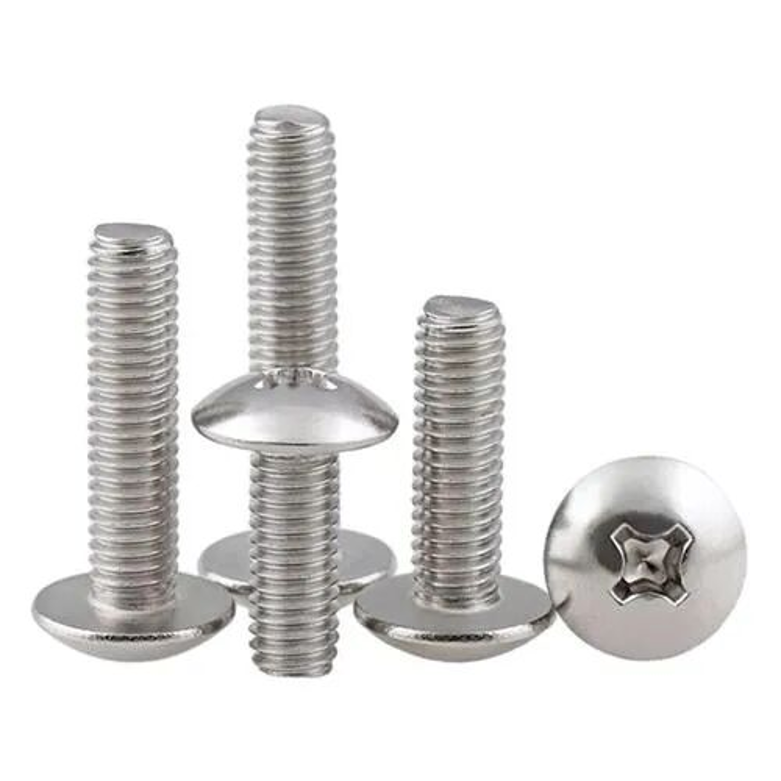
Choosing the right fastener material is essential for product reliability, corrosion resistance, mechanical performance, and long-term operating costs. A bolt, screw, nut, or stud that performs well in a dry indoor environment may not be suitable for marine equipment, chemical processing systems, or high-temperature machinery.
For industrial buyers and engineers, the best material is not necessarily the strongest, most corrosion-resistant, or most expensive option. It is the material that meets the application’s actual mechanical, environmental, manufacturing, and cost requirements.
This guide explains how to choose the right fastener material, compares commonly used materials, and outlines the information buyers should provide when sourcing custom fasteners.
1. What Factors Should You Consider When Selecting Fastener Materials?
Before choosing a material, evaluate the complete operating environment and the function of the fastener within the assembly.
1.1 Mechanical Strength and Load Requirements
Fasteners may experience tensile loads, shear forces, vibration, fatigue, impact, or a combination of these conditions.
The required mechanical properties depend on the joint design, applied loads, installation method, and applicable engineering standards.
When selecting a fastener material, consider:
- Tensile strength and proof-load requirements.
- Yield strength and deformation limits.
- Shear loading and fatigue resistance.
- Hardness and wear resistance.
- Ductility and toughness.
- The effects of temperature on mechanical performance.
Material selection alone does not establish the strength of a finished fastener. Manufacturing processes, heat treatment, cold working, dimensions, thread geometry, and the applicable property class can all affect performance.
For load-bearing applications, specify the required fastener standard and mechanical property class rather than relying on a general material name.
1.2 Corrosion Resistance and Environmental Exposure
Corrosion resistance is often a major consideration in industrial fastener selection.
Identify the substances and environmental conditions that the fastener will encounter, including:
- Fresh water and humidity.
- Salt spray and marine atmospheres.
- Acids, alkalis, cleaning chemicals, and process fluids.
- Outdoor exposure and industrial pollutants.
- Condensation and trapped moisture.
- Contact with dissimilar metals.
Different stainless steel grades offer different levels of corrosion resistance. Carbon steel fasteners may require a suitable protective coating, while certain demanding environments may require specialized stainless steels, nickel alloys, or other materials.
Stainless steel is not universally corrosion-proof. Chloride exposure, crevices, temperature, surface condition, and residual stress can influence corrosion behavior.
For applications involving aggressive chemicals, seawater, elevated temperatures, or safety-critical equipment, material selection should be based on the actual service conditions and relevant engineering guidance.
1.3 Operating Temperature
Temperature affects strength, ductility, oxidation, creep behavior, and corrosion resistance.
A material suitable for ordinary indoor machinery may not maintain the required properties at elevated or very low temperatures.
For high-temperature service, consider:
- Strength retention at operating temperature.
- Creep and stress relaxation.
- Oxidation and corrosion.
- Thermal expansion.
- Compatibility with mating components.
For low-temperature service, evaluate toughness, potential brittle behavior, and the specified material requirements.
Do not assume that a fastener’s room-temperature properties remain unchanged under extreme conditions. Specialized applications may require additional material specifications and engineering review.
1.4 Electrical and Galvanic Compatibility
When dissimilar metals are electrically connected in the presence of an electrolyte, galvanic corrosion may occur.
For example, a stainless steel fastener installed in an aluminum component may create a galvanic-corrosion concern under certain environmental conditions.
The actual risk depends on the metal combination, electrolyte, exposed surface-area ratio, coating condition, and assembly design.
Possible mitigation measures include selecting compatible materials, isolating dissimilar metals, controlling moisture exposure, and applying suitable protective systems.
Material selection should consider the complete assembly rather than evaluating the fastener in isolation.
1.5 Manufacturing, Installation, and Total Cost
Material choice affects more than the purchase price.
Different materials may require different machining parameters, tooling, forming processes, heat treatments, finishing methods, and inspection procedures.
For example, some stainless steel grades can work-harden during machining, while harder alloy steels may require specific tooling and heat-treatment controls.
Consider the total cost of ownership, including:
- Material and manufacturing costs.
- Tooling and setup requirements.
- Protective coatings and finishing.
- Inspection and documentation.
- Installation and maintenance.
- Expected service life and replacement costs.
A lower-cost fastener may be appropriate for a low-risk indoor application. A more corrosion-resistant material may be economically justified where premature failure would result in expensive maintenance or downtime.
2. Comparison of Common Fastener Materials
The following table provides a preliminary selection guide. It is not a substitute for grade-specific mechanical data, corrosion testing, or engineering approval.
| Material | Main Advantages | Limitations | Typical Considerations |
|---|---|---|---|
| Carbon steel | Widely used; can provide a broad range of strength levels; often economical | Unprotected material can corrode; properties depend on grade and processing | General machinery, equipment, and assemblies with appropriate corrosion protection |
| Alloy steel | Can achieve high strength and hardness through suitable processing | Heat treatment and hydrogen embrittlement risks may require careful control | High-load joints and mechanically demanding applications |
| Stainless steel | Corrosion resistance varies by grade; useful for many outdoor and industrial environments | Strength and corrosion behavior vary; galling and chloride corrosion can be concerns | Equipment, enclosures, food-processing environments, and outdoor assemblies where the selected grade is suitable |
| Titanium alloys | High strength-to-weight ratio and useful corrosion resistance in selected environments | Higher material cost; machining and sourcing can be more demanding | Weight-sensitive and specialized industrial applications |
| Brass | Useful electrical conductivity and corrosion behavior in suitable environments; relatively easy to machine in many grades | Generally not a substitute for high-strength steel fasteners; properties depend on alloy | Electrical components, instrumentation, and selected decorative or fluid-related applications |
| Aluminum alloys | Low density and useful corrosion behavior in suitable environments | Lower stiffness and strength than many steel grades; galvanic compatibility must be considered | Lightweight assemblies and applications where load requirements permit |
The correct choice depends on the exact alloy, condition, manufacturing process, geometry, and required performance. The material category alone is not a sufficient purchasing specification.
3. Carbon Steel vs. Stainless Steel Fasteners
One of the most common purchasing questions is whether to choose carbon steel or stainless steel.
Neither is universally better. The decision depends on mechanical requirements, corrosion exposure, coating requirements, and budget.
When Carbon Steel May Be Appropriate
Carbon steel fasteners are often considered for applications where mechanical performance and cost are important and corrosion can be controlled.
Depending on the grade and manufacturing process, carbon steel fasteners may be supplied in different strength classes.
When evaluating carbon steel, confirm:
- The required property class or mechanical specification.
- Heat-treatment requirements, where applicable.
- The corrosion-protection system.
- Coating thickness and dimensional effects.
- Any hydrogen embrittlement controls required by the specification.
High-strength steel fasteners with certain electroplated coatings require particular attention to hydrogen embrittlement risks. Applicable process controls and verification requirements should be defined by the relevant specification.
When Stainless Steel May Be Appropriate
Stainless steel fasteners are commonly considered when corrosion resistance, appearance, or reduced maintenance is important.
However, stainless steel includes multiple families with different properties.
- Austenitic stainless steels: Often selected for corrosion resistance and formability, depending on grade and service conditions.
- Martensitic stainless steels: Can offer higher hardness or strength in suitable heat-treated conditions, with corrosion behavior depending on the grade.
- Ferritic stainless steels: Offer different combinations of corrosion resistance, magnetic behavior, and mechanical properties.
- Duplex stainless steels: Can provide a combination of strength and corrosion resistance, including improved resistance to certain corrosion mechanisms compared with many common austenitic grades.
The appropriate grade must be selected for the actual environment and mechanical requirements.
ISO 3506-1 covers specified grades and property classes for corrosion-resistant stainless steel bolts, screws, and studs. ISO 3506-6 provides guidance on selecting stainless steels and nickel alloys for fasteners.
Is Stainless Steel Always Stronger Than Carbon Steel?
No. Strength depends on the specific grade, material condition, manufacturing process, and applicable fastener property class.
Some carbon steel fasteners are designed for high mechanical strength, while common austenitic stainless steel fasteners may have different strength characteristics.
Compare the required mechanical properties and applicable standards before substituting one material for another.
4. How to Choose the Right Stainless Steel Grade
When stainless steel is appropriate, the next step is to select a grade that balances corrosion resistance, mechanical properties, manufacturing requirements, and cost.
4.1 Consider the Corrosive Environment
For mild indoor or outdoor conditions, a commonly used stainless steel grade may be sufficient, depending on exposure and maintenance requirements.
Marine environments, chloride-containing cleaning agents, and chemical process conditions can be substantially more demanding.
Pitting corrosion and crevice corrosion are important concerns in chloride-containing environments. A grade that performs well in one environment may not provide adequate service life in another.
For demanding applications, obtain engineering guidance based on the chemical composition of the environment, temperature, stress, and expected service life.
4.2 Evaluate Mechanical Requirements
Corrosion resistance does not automatically establish suitability for a load-bearing application.
Verify the required property class, tensile and proof-load requirements where applicable, installation conditions, and compatibility with the mating nut or bolt.
For stainless steel fasteners, use the relevant product and mechanical-property standards rather than assuming that all fasteners made from a particular stainless steel grade have identical strength.
4.3 Check Temperature Limits
Stainless steel fasteners can lose or change mechanical properties under elevated or very low temperatures.
For service outside ordinary operating conditions, confirm the material’s suitability with the relevant standard, manufacturer documentation, and engineering assessment.
ISO 3506-5:2022 addresses specified stainless steel and nickel-alloy fasteners intended for high-temperature applications within its defined scope. Its requirements should not be generalized to every stainless steel fastener.
4.4 Consider Galling and Installation
Galling is a form of adhesive wear that can occur when contacting metal surfaces slide against each other under pressure.
Some stainless steel threaded assemblies are susceptible to galling, particularly when installation conditions are unfavorable.
To reduce the risk:
- Use compatible fastener and nut materials.
- Follow the specified installation torque and lubrication requirements.
- Avoid excessive installation speed where galling is a concern.
- Evaluate approved anti-seize compounds or surface treatments when appropriate.
- Validate the installation procedure for critical assemblies.
Lubrication changes the relationship between torque and clamping force. Do not apply a different lubricant or coating without checking the assembly requirements.
5. When Should You Consider Alloy Steel, Titanium, Brass, or Aluminum?
Stainless steel and carbon steel cover many common applications, but specialized designs may require other materials.
Alloy Steel for Mechanically Demanding Applications
Alloy steel fasteners may be suitable where high strength, hardness, or specific mechanical performance is required.
The selected grade and heat treatment must meet the design requirements. Corrosion protection and hydrogen embrittlement controls should also be evaluated where relevant.
A higher-strength material is not automatically the safest option. The complete joint design, including preload, fatigue, thread engagement, and mating components, must be considered.
Titanium Alloys for Weight-Sensitive Applications
Titanium alloys offer a high strength-to-weight ratio and can provide useful corrosion resistance in selected environments.
They may be considered for weight-sensitive equipment and specialized industrial assemblies.
However, titanium is not a universal replacement for steel. Material cost, machining, galling, contact with dissimilar metals, and application-specific mechanical requirements must be evaluated.
Brass for Electrical and Selected Industrial Components
Brass is used in some electrical, instrumentation, and other components where its combination of electrical conductivity, machinability, and corrosion behavior is suitable.
The exact alloy matters. Brass fasteners should not be assumed to meet the strength requirements of a steel fastener simply because their dimensions are identical.
Aluminum Alloys for Lightweight Designs
Aluminum alloy fasteners may be considered where low mass is important and the mechanical requirements permit their use.
Engineers should assess strength, stiffness, wear, thread durability, temperature, corrosion, and galvanic compatibility with adjoining materials.
6. How Surface Finishing Affects Fastener Material Selection
Material and surface finish should be specified together.
A coating can improve corrosion protection, change friction, affect dimensions, and influence installation behavior. It cannot automatically make an unsuitable base material appropriate for every environment.
Common surface treatments and finishes include:
- Zinc plating for specified corrosion-protection applications.
- Hot-dip galvanizing for appropriate steel fasteners and service conditions.
- Nickel plating for selected functional or decorative requirements.
- Passivation for applicable stainless steel components.
- Black oxide for selected applications where its limited corrosion protection is acceptable.
- Other specialized coatings defined by the design or customer specification.
When selecting a finish, specify the applicable standard, coating type, thickness where required, corrosion-performance criteria, and any restrictions related to strength, temperature, or assembly.
For high-strength fasteners, confirm that the coating process is compatible with the fastener’s mechanical requirements and any required hydrogen embrittlement controls.
For stainless steel, passivation and other surface treatments should be selected according to the grade, surface condition, and application.
7. A Practical Fastener Material Selection Checklist
Before requesting a quotation, engineers and buyers can use the following checklist to define the requirements.
Application and Environment
- What equipment or assembly will use the fastener?
- Will it be exposed to moisture, salt, chemicals, or outdoor conditions?
- What are the minimum and maximum operating temperatures?
- Will it contact dissimilar metals?
- Is the application subject to vibration, fatigue, impact, or repeated assembly?
Mechanical Requirements
- What loads will the fastener carry?
- What tensile, proof-load, shear, or fatigue requirements apply?
- Which product standard and property class are specified?
- Are there special installation torque or preload requirements?
- What mating materials and thread engagement conditions apply?
Manufacturing and Quality Requirements
- Is the fastener standard or custom-made?
- Is an engineering drawing or physical sample available?
- What material grade and heat-treatment condition are required?
- Which dimensions and tolerances are critical?
- Is a surface finish or coating required?
- What inspection records, material documentation, or traceability are specified?
Commercial Requirements
- What is the required order quantity?
- Is tooling or special processing involved?
- What is the target delivery date?
- What are the packaging, labeling, and shipping requirements?
- Is the purchasing decision based on initial price, expected service life, or total cost of ownership?
A complete specification helps suppliers evaluate the request more accurately and reduces avoidable clarification during quotation and production.
8. Frequently Asked Questions About Fastener Materials
What is the best material for industrial fasteners?
There is no single best material for every application. Carbon steel, alloy steel, stainless steel, titanium, brass, and aluminum alloys each have different strengths and limitations. Select the material based on the required mechanical properties, environment, temperature, manufacturing process, and cost.
Which fastener material is best for outdoor use?
The answer depends on the environment. Outdoor fasteners may require corrosion-resistant stainless steel, coated steel, or another material suited to the exposure conditions. Coastal areas and chloride-rich environments require more careful assessment than sheltered inland locations.
Are stainless steel fasteners corrosion-proof?
No. Stainless steel grades have different corrosion resistance. Chlorides, crevices, temperature, surface conditions, and applied stress can contribute to corrosion. Select the grade for the actual service environment rather than relying on the stainless steel label alone.
Is stainless steel stronger than carbon steel?
Not necessarily. Strength depends on the grade, manufacturing process, heat treatment, and specified property class. Compare the relevant mechanical requirements and standards before selecting or substituting a material.
What is the difference between 304 and 316 stainless steel fasteners?
Both are commonly used austenitic stainless steels, but their chemical compositions and corrosion behavior differ. Grade 316 contains molybdenum, which generally improves resistance to certain forms of localized corrosion in chloride-containing environments compared with 304. Neither grade is immune to all corrosion, and suitability depends on actual service conditions.
Can I replace carbon steel fasteners with stainless steel fasteners?
Not automatically. The replacement may change strength, friction, preload behavior, galling risk, corrosion compatibility, and joint performance. Confirm the applicable mechanical requirements and obtain engineering approval before making substitutions.
How do I choose fasteners for marine environments?
Evaluate chloride exposure, immersion or splash conditions, crevice geometry, temperature, applied stress, and expected service life. Material selection may require specialized stainless steel or nickel-alloy options, depending on the environment. A general-purpose stainless steel grade should not be assumed suitable for every marine application.
Does surface coating improve corrosion resistance?
A suitable coating can improve corrosion protection under defined conditions, but performance depends on the coating system, thickness, preparation, application process, and environment. Coatings can also affect dimensions, friction, and installation behavior.
What information should I send when requesting a custom fastener quotation?
Provide an engineering drawing or sample, product dimensions, thread details, material and property requirements, applicable standard, surface finish, quantity, operating environment, inspection requirements, and target delivery date. If the material or standard is uncertain, explain the intended application so the technical requirements can be clarified.
9. Final Recommendations: Choose Materials Based on the Complete Application
Selecting the right fastener material requires balancing mechanical strength, corrosion resistance, temperature, manufacturing requirements, installation behavior, and cost.
For routine industrial applications, a well-defined carbon steel or stainless steel specification may be appropriate. More demanding conditions may require alloy steels, specialized stainless steels, titanium alloys, nickel alloys, or other materials selected for the actual service environment.
The most reliable approach is to define the application first, establish the required performance, select the appropriate material and property specification, and verify compatibility with the complete assembly.
A properly documented specification helps engineers control technical risk and helps procurement teams compare supplier quotations on a consistent basis.
Need Custom Fasteners for Your Application?
TONGLIN welcomes inquiries about custom screws, bolts, nuts, and other fastener requirements.
If you are sourcing fasteners for an OEM project or industrial application, share your drawing and technical requirements for an initial review.
To help define your request, include:
- Fastener type, dimensions, and thread specifications.
- Preferred material grade, if known.
- Mechanical property or performance requirements.
- Operating environment and corrosion concerns.
- Surface finish or coating requirements.
- Applicable standards and required documentation.
- Order quantity and target delivery date.
Request a Quote: https://hktl-fastener.com/
Provide your drawing and specifications so that the relevant product and manufacturing requirements can be reviewed before quotation.
Technical note: This article provides general material-selection guidance and is not a substitute for engineering design, grade-specific material data, applicable standards, or professional assessment of safety-critical applications.