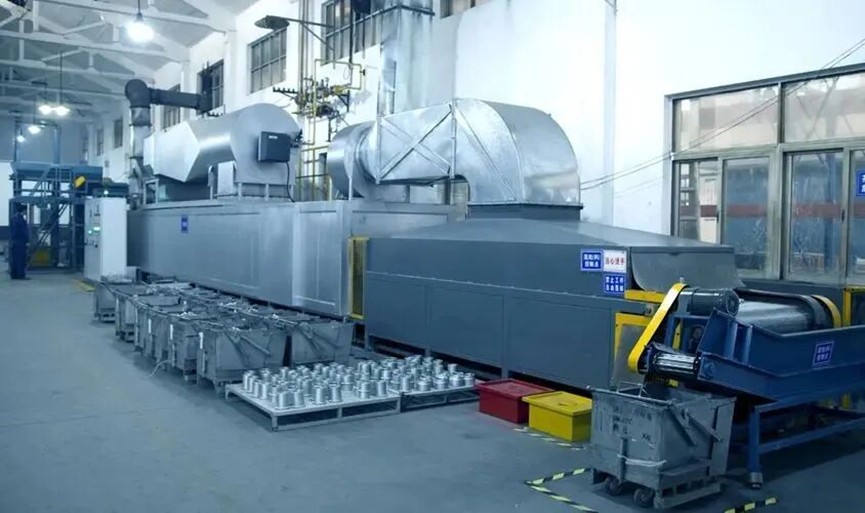
Choosing the right fastener surface finish is essential for controlling corrosion, maintaining thread fit, achieving reliable assembly performance, and managing total cost. The best finish depends on the fastener material, operating environment, required service life, mechanical strength, and installation conditions.
For industrial buyers and engineers, terms such as zinc plated, hot-dip galvanized, zinc flake coated, and passivated stainless steel describe different treatments with different characteristics. They should not be treated as interchangeable options.
This guide compares common fastener surface finishes, explains their advantages and limitations, and outlines the information to include in a request for quotation (RFQ).
What Is a Fastener Surface Finish?
A fastener surface finish is a coating, conversion treatment, or surface-conditioning process applied to a bolt, screw, nut, washer, or other fastening component.
Depending on the process, a finish may help to:
- Reduce corrosion of the underlying material
- Improve appearance or provide a specified color
- Control friction during installation
- Support consistent tightening performance
- Improve resistance to wear in selected applications
- Meet dimensional, environmental, or customer-specific requirements
A surface finish does not automatically improve every property. For example, a corrosion-protective coating may affect thread dimensions, friction, electrical contact, or the suitability of a fastener for welding or painting.
The finish must therefore be selected as part of the complete fastener specification—not as an afterthought.
Fastener Surface Finishes Compared
The following table provides a general comparison. Actual performance depends on the coating system, material, application process, exposure conditions, and specified acceptance criteria.
| Surface finish | Typical advantages | Key limitations and considerations | Common applications |
|---|---|---|---|
| Zinc electroplating | Relatively thin coating; widely used for general corrosion protection; available with different conversion coatings and sealers | Coating changes thread dimensions; corrosion performance depends on the complete system and exposure | Indoor equipment, machinery, general industrial assemblies |
| Hot-dip galvanizing | Relatively thick zinc coating; sacrificial corrosion protection for suitable steel fasteners | Coating thickness can affect thread fit and nut compatibility; coating buildup requires appropriate design | Outdoor steel structures and selected exposed assemblies |
| Zinc flake coating | Non-electrolytically applied coating system; can provide corrosion protection with relatively limited hydrogen-embrittlement risk associated with the coating process | Performance depends on the complete coating system, topcoat, lubricant, and specification | Automotive, industrial, and high-strength fastener applications where specified |
| Black oxide | Dark appearance; minimal dimensional buildup compared with many plated coatings | Usually provides limited corrosion protection unless supplemented by a suitable oil or other protective system | Indoor machinery, appearance-sensitive components |
| Stainless steel passivation | Helps promote a clean, corrosion-resistant passive surface on suitable stainless steel | Does not turn an unsuitable grade into a universally corrosion-proof material; cleaning and process control matter | Stainless steel fasteners in suitable industrial environments |
| Nickel plating | Can provide a decorative or functional finish, depending on the coating system | Corrosion, wear, adhesion, friction, and dimensional requirements must be specified for the application | Selected machinery, electrical, and appearance-related applications |
| Phosphate coating | Can support lubricant retention and provide a base for additional protection in suitable systems | Often requires supplementary protection where substantial corrosion resistance is needed | Selected machinery and industrial components |
| Organic or polymer-based coating | May offer color options, chemical resistance, electrical isolation, or controlled friction depending on formulation | Thickness, temperature limits, adhesion, wear, and thread fit require evaluation | Specialized assemblies and application-specific designs |
This comparison is a screening guide, not a universal performance ranking. A thin coating with a well-defined specification may outperform a different coating in one environment but perform poorly in another.
1. Zinc-Plated Fasteners
Zinc electroplating deposits a zinc-based coating onto a conductive fastener surface. The zinc provides sacrificial protection: under suitable conditions, it corrodes preferentially to the underlying steel.
Zinc-plated fasteners are commonly considered for general industrial applications where a relatively thin coating and a familiar appearance are desirable.
Advantages
- Relatively small dimensional buildup compared with many thicker coatings
- Multiple coating-system options, including conversion coatings, sealers, and lubricants
- Broad use in general industrial fastening applications
- Potentially cost-effective where the specified corrosion requirements are moderate
Limitations
Zinc plating does not provide unlimited corrosion protection. Performance depends on the coating thickness, coating system, damage during handling, environmental exposure, and the applicable test requirements.
For high-strength or surface-hardened fasteners, electroplating requires particular attention to hydrogen-embrittlement risk and the relevant process controls.
ISO 4042:2022 specifies requirements for electroplated coating systems on steel fasteners, including dimensional considerations and measures to address hydrogen-embrittlement risk.
Official reference: ISO 4042:2022 — Fasteners: Electroplated coating systems.
When should you consider zinc plating?
Consider it when the design requires a relatively thin protective coating and the expected environment is compatible with the specified coating system.
For outdoor, marine, chemical, or other aggressive environments, do not assume that standard zinc plating will meet the required service life. Define the exposure conditions and acceptance criteria before selecting the finish.
2. Hot-Dip Galvanized Fasteners
Hot-dip galvanizing applies a zinc coating by immersing suitable steel fasteners in molten zinc. The resulting coating is generally thicker than a conventional electroplated zinc coating.
It is commonly considered for outdoor steel structures and other applications where a substantial zinc coating is specified.
Advantages
- Zinc provides sacrificial protection to suitable steel substrates
- The relatively thick coating can be useful for selected outdoor applications
- Established specifications are available for applicable fastener types
Limitations
The coating can substantially affect thread dimensions. The bolt, nut, and any associated components must be designed and specified for the intended galvanized system.
A nut should not simply be assumed compatible with any galvanized bolt. The required thread allowances, nut coating condition, assembly arrangement, and applicable specification must be confirmed.
For suitable carbon steel and alloy steel bolts, screws, washers, nuts, and special threaded fasteners, ASTM F2329/F2329M addresses hot-dip zinc coating requirements within its scope.
Official reference: ASTM F2329/F2329M.
When should you consider hot-dip galvanizing?
It may be suitable for outdoor structural applications where the coating and mating-thread arrangement are specifically designed for hot-dip galvanized fasteners.
It is not automatically the best choice for small precision screws, tight-tolerance threads, or every high-strength fastener. Verify dimensional compatibility and applicable mechanical and coating requirements.
3. Zinc Flake Coatings
Zinc flake coating systems use a non-electrolytically applied coating process. Depending on the system, they may include metallic flakes, binders, topcoats, and lubricants.
These systems are used in applications where corrosion protection, coating thickness, friction characteristics, and fastener strength requirements must be considered together.
Advantages
- Applied without conventional electroplating
- Available in different system configurations
- Can be specified for applications involving high-strength steel fasteners
- Topcoats and lubricants can be selected to address particular performance requirements
Limitations
Not all zinc flake systems are the same. Corrosion performance, friction, color, chemical resistance, and compatibility with assembly requirements depend on the specified system and application.
A coating designation should therefore identify the required coating system and acceptance criteria rather than merely state “zinc flake.”
ISO 10683:2018 specifies requirements for non-electrolytically applied zinc flake coating systems for steel fasteners. Its scope includes systems with or without topcoats and lubricants.
Official reference: ISO 10683:2018 — Zinc flake coating systems.
When should you consider zinc flake coating?
Consider it when a non-electrolytically applied coating is required, particularly where the design needs corrosion protection and the risks associated with conventional electroplating of high-strength fasteners need to be managed.
It is not automatically hydrogen-embrittlement-proof. Material, manufacturing, cleaning, coating, and service-related risks must still be evaluated under the applicable requirements.
4. Black Oxide Fasteners
Black oxide is a conversion treatment that produces a dark surface on suitable materials. It is often selected for appearance, low dimensional buildup, or compatibility with a specified supplementary protective treatment.
Advantages
- Dark, relatively uniform appearance
- Minimal dimensional buildup compared with many thicker coatings
- May be useful where close dimensional fit must be maintained
Limitations
Black oxide alone generally provides limited corrosion protection compared with many dedicated corrosion-resistant coating systems. Additional oil, wax, or another protective treatment may be required, depending on the application.
If the component will be exposed to moisture, condensation, chemicals, or outdoor conditions, define the actual corrosion requirement instead of specifying black oxide based only on appearance.
When should you consider black oxide?
It may suit indoor machinery and other controlled environments where appearance or dimensional considerations are important and the corrosion requirement is modest or addressed by a supplementary treatment.
5. Stainless Steel Passivation
Stainless steel develops a passive surface layer that contributes to its corrosion resistance. Passivation is a controlled treatment intended to remove free iron or other contaminants and support the passive condition of a suitable stainless steel surface.
Passivation is not the same as applying a thick external coating.
Advantages
- Helps maintain the corrosion-resistant surface condition of suitable stainless steel fasteners
- Usually introduces little dimensional buildup compared with conventional plated coatings
- Can be specified where cleanliness and surface condition are important
Limitations
Passivation does not compensate for an unsuitable stainless steel grade or an incompatible operating environment. Chloride exposure, temperature, crevices, surface contamination, and contact with dissimilar metals can still affect corrosion performance.
ISO 16048 describes methods commonly used for passivation of corrosion-resistant stainless steel fasteners.
Official reference: ISO 16048 — Passivation of corrosion-resistant stainless-steel fasteners.
When should you consider passivation?
Consider it for suitable stainless steel fasteners when the specification requires controlled surface condition and passivation. Define the required process and acceptance requirements rather than assuming every stainless steel component needs the same treatment.
6. Nickel Plating
Nickel plating deposits a nickel coating on a suitable substrate. Depending on the coating system and engineering requirements, it may be used for appearance, wear-related characteristics, or selected functional properties.
Advantages
- Can provide a specified decorative finish
- May be suitable for selected wear or functional requirements
- Available in different coating systems for different purposes
Limitations
Performance depends on the coating type, thickness, substrate preparation, adhesion, and environment. Nickel plating should not be assumed to provide a particular corrosion life or wear performance without a defined specification.
For threaded fasteners, coating thickness and thread fit must be evaluated. Additional considerations may apply where electrical conductivity, contact resistance, or chemical exposure is important.
When should you consider nickel plating?
Use it when a defined appearance or functional requirement justifies the coating and the complete system has been evaluated for the application. Specify the coating type, thickness, relevant performance requirements, and any applicable restrictions.
7. Phosphate Coatings
Phosphate coatings are conversion coatings applied to suitable metal surfaces. They are often considered where lubricant retention, friction control, or a base for supplementary protection is required.
Advantages
- Can support lubricant retention in selected applications
- May be used as part of a specified surface-treatment system
- Can provide a suitable base for additional treatments where designed accordingly
Limitations
Phosphate coating alone is not a universal solution for corrosion protection. The result depends on the coating type, supplementary oil or treatment, and service environment.
Where assembly torque or clamp force matters, specify the required friction characteristics and verification method instead of assuming the coating will produce a particular tightening result.
When should you consider phosphate coating?
It may be appropriate for selected machinery and industrial applications where its surface characteristics support the assembly requirements and the corrosion protection system is clearly defined.
8. Organic and Polymer-Based Coatings
Organic or polymer-based coatings include application-specific systems formulated to provide properties such as color, chemical resistance, electrical isolation, or controlled friction.
Because formulations vary widely, the term “polymer coating” does not define a single level of performance.
Before selecting one, evaluate:
- Operating temperature and thermal cycling
- Chemical exposure and compatibility
- Adhesion and wear resistance
- Coating thickness and thread clearance
- Electrical insulation or conductivity requirements
- Assembly torque, friction, and clamp-force requirements
- Environmental and regulatory restrictions relevant to the application
These coatings may be useful in specialized assemblies, but the exact formulation and qualification requirements must be defined for the intended service conditions.
How to Choose the Right Fastener Surface Finish
The most appropriate finish is the one that meets the application’s performance requirements without introducing unacceptable dimensional, assembly, environmental, or cost issues.
Step 1: Define the operating environment
Identify whether the fastener will be used indoors, outdoors, near salt water, in a humid enclosure, or in contact with chemicals or cleaning agents.
Also consider temperature, condensation, abrasion, and expected exposure duration. A general description such as “outdoor use” may not provide enough information for a demanding application.
Step 2: Set measurable corrosion requirements
Where corrosion resistance is important, define the applicable test method and acceptance criteria. Salt-spray test results can help compare coating systems under specified test conditions, but they do not directly predict service life in every real environment.
Avoid specifying only “rust-proof” or “corrosion-resistant” without a measurable requirement.
Step 3: Check material and fastener strength
The substrate material and mechanical property class influence the available treatment options and process risks.
For high-strength steel fasteners, review hydrogen-embrittlement risks associated with cleaning and coating processes. The appropriate controls depend on the material, process, coating system, and governing specification.
Step 4: Confirm thread fit and dimensional requirements
Coatings add thickness or otherwise affect the surface. This can change thread fit, bearing dimensions, and the compatibility of mating parts.
For assemblies with tight tolerances, specify the required dimensions after finishing or identify the applicable coating and thread requirements.
Step 5: Evaluate friction and installation
If torque-controlled installation is used, friction at the threads and bearing surfaces can affect the relationship between applied torque and preload.
Where clamp force is critical, define the installation method and required verification. Do not assume that two coatings will provide identical tightening performance simply because they have similar appearance or corrosion ratings.
Step 6: Review cost and lifecycle requirements
Compare the total cost of the finished fastener, not just the coating price. Consider coating, inspection, handling, packaging, maintenance, replacement, and the consequences of corrosion-related failure.
The lowest-cost finish is not always the lowest-cost choice over the product’s service life.
What Should You Specify in a Fastener Surface Finish RFQ?
A complete request for quotation should make the required finish clear enough for the supplier to evaluate feasibility and quote the correct scope.
Include the following information where applicable:
Fastener identification
- Part number and drawing revision
- Fastener type, size, and thread specification
- Substrate material and mechanical property class
- Quantity and expected order frequency
Surface treatment
- Exact coating or treatment designation
- Applicable standard and edition
- Required coating thickness or finish condition, where specified
- Corrosion test method and acceptance criteria, if required
- Color, appearance, lubricant, sealer, or topcoat requirements
- Restrictions on chemicals or substances, where applicable
Dimensional and assembly requirements
- Thread fit after coating
- Mating nut, bolt, or component requirements
- Installation torque, friction, or clamp-force requirements, where relevant
- Any special dimensional inspection requirements
Quality and commercial requirements
- Required inspection reports and certificates
- Lot identification and traceability, where applicable
- Packaging and labeling requirements
- Delivery destination and requested schedule
If the exact finish has not yet been selected, provide the environment and performance requirements and ask the supplier to clarify the available options. Any proposed alternative should be reviewed and approved before production.
Common Mistakes When Specifying Fastener Finishes
Choosing a finish based on color alone
A black or silver appearance does not identify a unique coating system or prove a specific corrosion performance. Specify the process and acceptance requirements.
Assuming all zinc coatings perform the same way
Electroplated zinc, hot-dip galvanizing, and zinc flake systems differ in application method, thickness, dimensional effects, and performance characteristics.
Ignoring thread compatibility
A coating can affect thread dimensions and mating fit. Confirm the finished fastener and mating components are compatible.
Assuming stainless steel never corrodes
Stainless steel corrosion resistance depends on grade, environment, surface condition, and assembly design. Passivation does not eliminate every corrosion mechanism.
Overlooking high-strength fastener risks
Certain cleaning and electroplating processes can introduce hydrogen-embrittlement risks in susceptible fasteners. The appropriate controls should be defined under the relevant specification.
Using salt-spray hours as a direct service-life prediction
Accelerated test results are useful only when the method, coating system, and acceptance criteria are defined. They do not establish a universal conversion to years of outdoor service.
Failing to define the required documentation
If the project requires coating thickness measurements, corrosion test reports, or other records, state these requirements in the RFQ and confirm them before ordering.
Frequently Asked Questions About Fastener Surface Finishes
What is the best surface finish for bolts and screws?
There is no single best finish for every application. Zinc plating may suit general-purpose applications, hot-dip galvanizing may suit appropriately designed outdoor structural assemblies, zinc flake may suit specified high-strength applications, and passivation may be appropriate for stainless steel. Select the finish based on corrosion exposure, material, thread fit, assembly performance, and cost.
Is zinc plating the same as hot-dip galvanizing?
No. Zinc plating is an electrochemical deposition process that generally produces a thinner coating. Hot-dip galvanizing applies zinc by immersion in molten zinc and generally produces a thicker coating. The two processes have different dimensional and application considerations.
Which fastener finish is suitable for outdoor use?
The answer depends on the environment and required service performance. Outdoor exposure may involve rain, condensation, industrial pollutants, salt, or other corrosive conditions. Specify the actual environment and measurable acceptance requirements before selecting a coating.
Is zinc flake coating suitable for high-strength fasteners?
Zinc flake systems are often considered for high-strength steel fasteners because they are applied without conventional electroplating. This can help avoid the hydrogen-embrittlement risk associated with the electroplating process, but it does not eliminate every source of hydrogen-related risk. The material, processing sequence, coating system, and governing specification still require review.
Does surface coating affect screw thread fit?
Yes. Coating thickness or changes to the surface can affect thread dimensions and assembly fit. Specify the required thread tolerance and finish system together, and confirm compatibility with the mating component.
Does passivation make stainless steel rust-proof?
No. Passivation helps maintain a suitable passive surface on stainless steel, but the material can still corrode under unsuitable environmental or assembly conditions. Grade selection, surface cleanliness, exposure, and contact with other materials remain important.
How should I specify corrosion resistance?
Define the operating environment, required coating system, applicable test method, and acceptance criteria. If an accelerated corrosion test is required, state the test method and acceptance conditions rather than using an undefined phrase such as “high corrosion resistance.”
What information should I send when requesting a quotation for finished fasteners?
Provide the drawing, fastener material and strength class, thread details, specified finish, applicable standard, quantity, corrosion requirements, and any inspection or documentation needs. Include the application environment so the finish can be evaluated against the intended use.
Request a Quote for Fasteners with the Right Surface Finish
Choosing the correct fastener surface finish requires balancing corrosion protection, dimensional fit, mechanical requirements, assembly performance, and total cost.
A clear specification helps engineers and buyers compare coating options and gives suppliers the information needed to review the project requirements.
Contact HKTL-Fastener to discuss your fastener requirements and request a project-specific quotation. Share your drawing, base material, strength class, desired finish, quantity, and operating environment so the technical and commercial requirements can be reviewed.
Visit: https://hktl-fastener.com/
The suitability, availability, process controls, inspection scope, documentation, and lead time for any finish must be confirmed for the specific part and order. Any proposed change to an approved coating or surface-treatment specification should be reviewed and authorized by the customer or responsible design authority.