
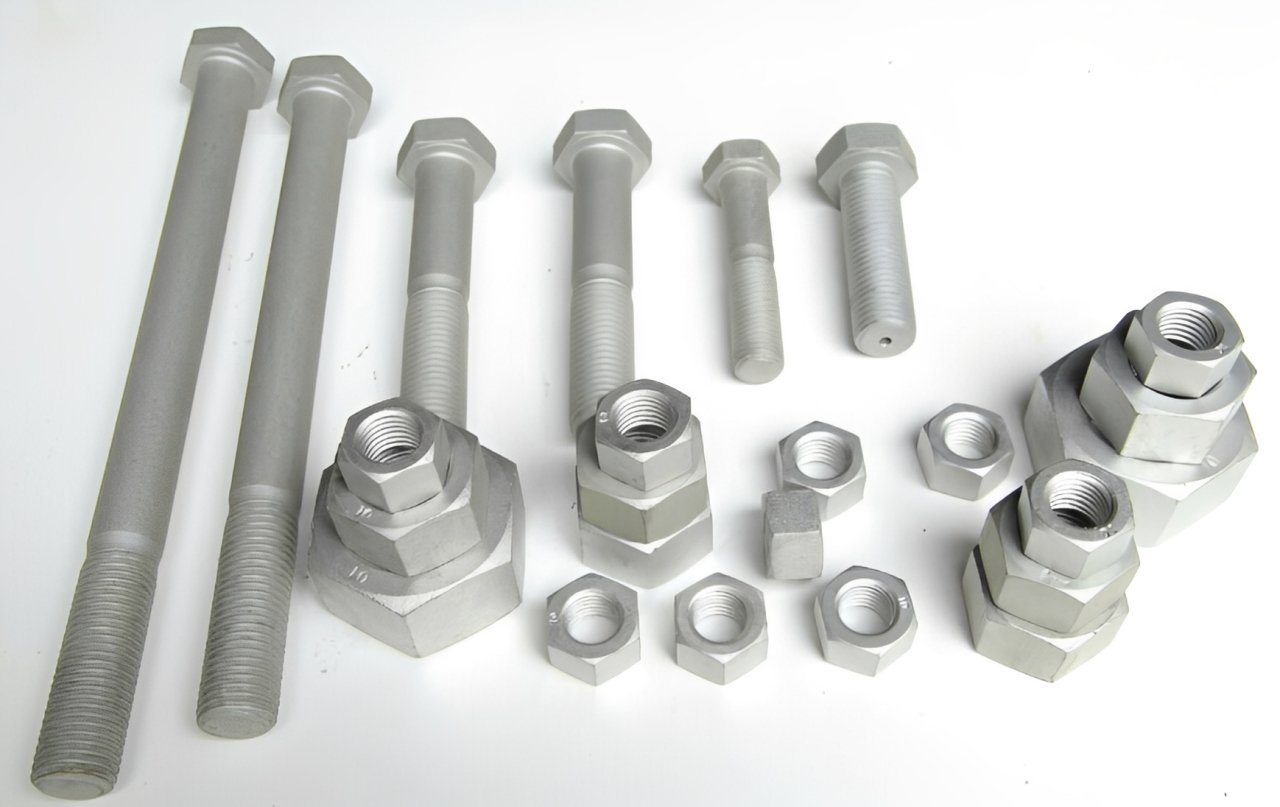
You only know that fasteners need surface treatment, but you are unaware of these little common sense facts.
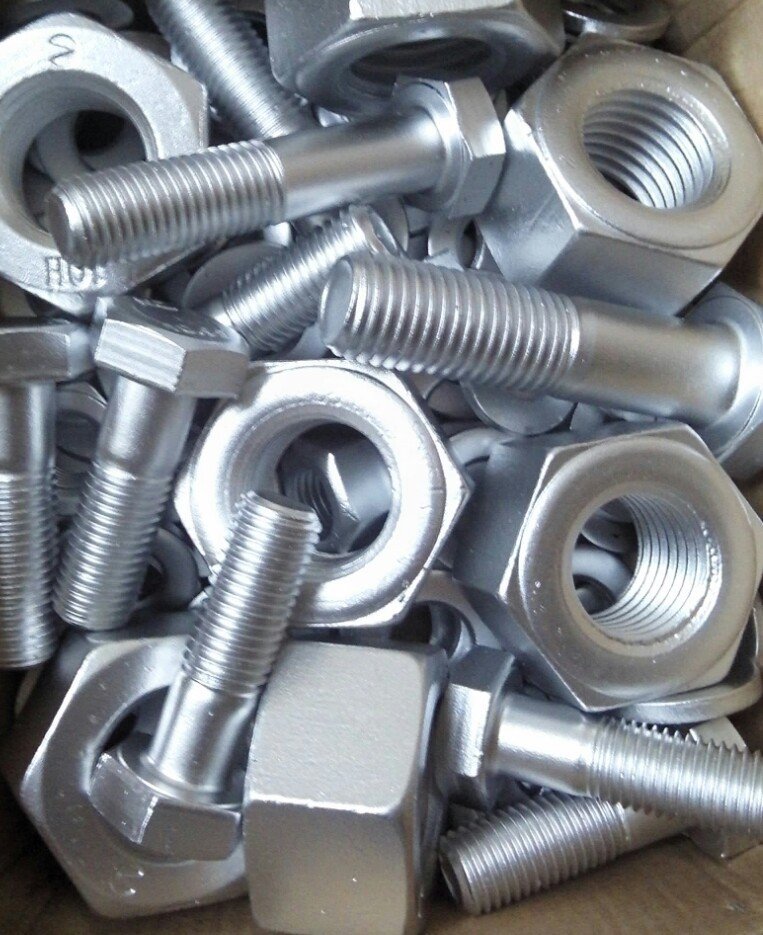
Why surface treatment is needed for fasteners:
Electroplating, hot-dip galvanizing and mechanical plating are the most commonly used methods for surface treatment of fasteners. The process involves forming a protective layer on the surface of the fasteners. After surface treatment, fasteners can present a more attractive appearance and their anti-corrosion ability will also be enhanced.
The main purpose is to endow fasteners with anti-corrosion ability to increase their reliability and adaptability in use. Therefore, the quality judgment of surface treatment of fasteners mainly focuses on whether the anti-corrosion ability of fasteners has been effectively increased and whether the increase meets the expected requirements.
Types of surface treatment:
Surface treatment is the process of forming a coating layer on the surface of a workpiece through certain methods. Its purpose is to make the surface of the product look beautiful and prevent corrosion. All the surface treatment methods can be classified into the following types:
1. Electroplating
The component to be electroplated is immersed in an aqueous solution containing the metal compound to be deposited. An electric current is passed through the solution to cause the electroplated metal to precipitate and deposit on the component. Common electroplating processes include zinc plating, copper plating, nickel plating, and copper-nickel alloy plating. Sometimes, blackening (bluing) and phosphating are also included in this category.
2. Hot-dip galvanizing
This process is accomplished by immersing carbon steel components in a molten zinc bath at approximately 510°C. As a result, the iron-zinc alloy on the surface of the steel gradually transforms into pure zinc on the product’s surface. Hot-dip aluminizing is a similar process.
3. Mechanical plating
This process involves impacting the surface of the product with particles of the coating metal and cold welding the coating onto the product’s surface. Generally, screws are electroplated, but hexagonal wood screws used outdoors in power facilities, highways, etc. are hot-dip galvanized. The cost of electroplating is typically 0.6 to 0.8 yuan per kilogram, while hot-dip galvanizing is generally 1.5 to 2 yuan per kilogram, making it more expensive.
Selection of surface treatment for fasteners:
The surface treatment options for fasteners include: electro-galvanizing, phosphating, oxidation (blackening), electro-galvanizing cadmium, electro-galvanizing chromium, electro-galvanizing silver, electro-galvanizing nickel, hot-dip galvanizing, zinc diffusion, and Dacromet.
For a specific design, choosing the right surface treatment is a problem that every designer faces. There are many types of surface treatments to choose from, ranging from ordinary oil to gold. However, designers should select the surface treatment that can economically achieve the desired purpose.
Since almost all commercial fasteners are made of carbon steel or alloy steel, some types of fasteners need to be protected against corrosion. Even fasteners made of anti-corrosion materials still require surface treatment to prevent corrosion caused by different materials. When surface treating fasteners, not only should the assembly processability be considered, but also environmental protection requirements.
The effect of electroplating:
The quality of electroplating is mainly measured by its corrosion resistance, followed by its appearance. Corrosion resistance means imitating the working environment of the product and setting it as the experimental condition to conduct a corrosion test on it. The quality of electroplated products is controlled from the following aspects:
1. Appearance
The surface of the product is not allowed to have local areas without coating, charring, roughness, dullness, peeling, skinning conditions and obvious stripes. It is not allowed to have pinholes, black dross, loose, cracked, fallen-off and severe purification traces of the passivation film.
2. Coating thickness
The service life of fasteners in corrosive atmosphere is directly proportional to the thickness of its coating. Generally, the recommended economic electroplating coating thickness is 0.00015in to 0.0005in (4 to 12um).
Hot-dip galvanizing: The standard average thickness is 54um (for diameters greater than or equal to 3/8, it is 43um), and the minimum thickness is 43um (for diameters greater than or equal to 3/8, it is 37um).
3. Coating distribution
Different deposition methods result in different ways of coating accumulation on the surface of fasteners. During electroplating, the coating metal is not evenly deposited on the outer edge, and thicker coatings are obtained at the corners.
In the threaded part of the fastener, the thickest coating is located at the top of the thread, gradually thinning along the side of the thread, and the thinnest coating is deposited at the bottom of the thread. In contrast, in hot-dip galvanizing, thicker coatings are deposited at the inner corners and the bottom of the thread. The deposition tendency of coating metal in mechanical plating is the same as that in hot-dip galvanizing, but it is smoother and the thickness is much more uniform over the entire surface.
4. Hydrogen Embrittlement
During the processing and treatment of fasteners, especially during the acid washing and degreasing before plating and the subsequent electroplating process, hydrogen atoms are absorbed on the surface. The deposited metal coating then traps the hydrogen.
When the fastener is tightened, hydrogen migrates towards the area with the most concentrated stress, causing the pressure to increase beyond the strength of the base metal and resulting in tiny surface cracks. Hydrogen is highly mobile and quickly penetrates into the newly formed cracks. This pressure-cracking-penetration cycle continues until the fastener breaks. It usually occurs within a few hours after the first application of stress.
To eliminate the threat of hydrogen embrittlement, fasteners should be heated and baked as quickly as possible after plating to allow hydrogen to escape from the coating. Baking is typically carried out at 375 to 400°F (176 to 190°C) for 3 to 24 hours.
If you are looking for quality fasteners, please visit us here https://hktl-fastener.com/.