
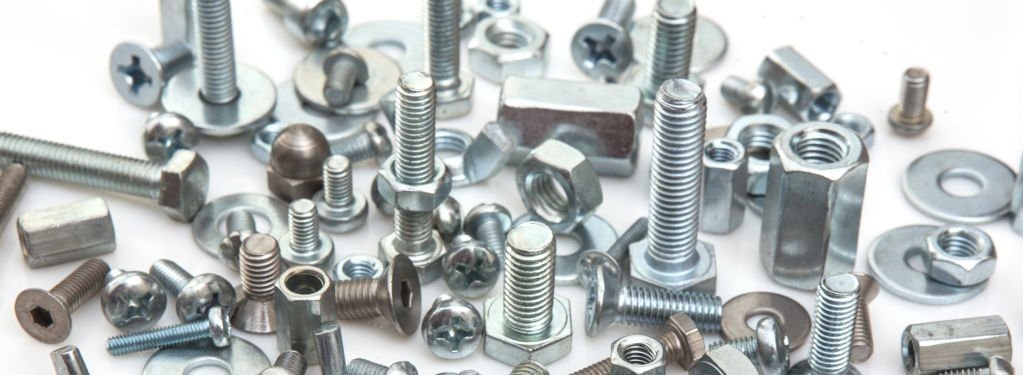
Fasteners are a type of mechanical parts used for fastening connections and are widely applied. They are used in a wide range of industries and can be seen in various machinery, equipment, vehicles, ships, railways, bridges, buildings, structures, tools, instruments, chemical industries, meters and daily necessities, etc. They are the most widely used mechanical basic parts.
Its characteristics are a wide variety of types and specifications, diverse performance and applications, and a very high degree of standardization, serialization and generalization. Therefore, some people refer to a type of fasteners with national standards as standard fasteners, or simply as standard parts.
Fastener product specifications
The parameters that need to be indicated for describing fasteners are:
Product name (standard), specification, material, strength grade, and surface treatment. For example: DIN912, M4-0.7×8, SCM435, 12.9 grade, blackening.
1. Product Name (Standard):
For screws without a standard, which are non-standard parts, a drawing needs to be provided. For example, DIN912, whose Chinese name is “Hexagon socket head cap screw”, is the product name. However, the most accurate approach is to refer to the standard, as GB70 also has the same product name; but there are many differences in dimensions between the two standards.
The major standards that have a significant influence in the world are: German Standard (DIN), International Standard (ISO), Chinese National Standard (GB), American Standard (ANSI), and Japanese Standard (JIS).
2. Specifications:
Generally, the designation of screws is based on the thread diameter and the length of the screw. Common metric thread diameters include: M2, M3, M4, M5, M6, M8, M10, M12, etc.
Commonly used in the US system are: 4#-40, 6#-32, 8#-32, 10#-24, 1/4-20, 5/16-18, 3/8-16, 1/2-13, etc.
The length of a screw refers to the effective length embedded in the object it is fastened to. For example, the total length is the length embedded for a countersunk screw, for a semi-countersunk screw, half the length of the head should be added, while the length of a cylindrical head screw does not include the head size.
For specifications, it is best to include the pitch in the full name. For example, M4-0.7×8, where 4 indicates the outer diameter of the thread is 4mm, 0.7 refers to the distance between two thread peaks being 0.7mm, and 8 indicates the effective length embedded in the object being 8mm.
For simplicity, the pitch is not written. Coarse thread is taken as the standard thread by default because it is the most common; thus, it does not need to be marked. This is unique to metric systems. For American products, the pitch still needs to be marked.
Here, let’s focus on the specifications of American standard screws, such as 6#-32*3/8. The 6# indicates the outer diameter of the thread, which is approximately 3.5mm; 32 means there are 32 threads per inch (equivalent to the pitch of metric screws); and 3/8 represents the length of the screw (specifically the same as metric screws).
Here are two formulas to remember: The outer diameter of the tooth A# = (Ax0.013 + 0.06) x 25.4 (mm), 1 inch = 25.4 mm.
Among them, 2# = 2.2mm, 4# = 2.9mm, 6# = 3.5mm, 8# = 4.2mm, 10# = 4.8mm are the data that must be memorized. Also, the number of threads corresponding to each specification of the screw must be memorized: 2# – 56, 4# – 40, 6# – 32, 8# – 32, 10# – 24, 1/4 – 20, 5/16 – 18, 3/8 – 16, 1/2 – 13 (American standard threads).
Note: The American standard UNC thread is the standard thread, while UNF is the fine thread. We default to the standard thread as the coarse thread.
3. Materials:
The most common materials are carbon steel, stainless steel, stainless iron, copper, aluminum, etc. Carbon steel is further classified into low carbon steel (such as C1008/C1010/C1015/C1018/C1022), medium carbon steel (for example, C1035), high carbon steel (C1045/C1050), and alloy steel (SCM435/10B21/40Cr).
Generally, C1008 material is used to produce standard grade products, such as 4.8 grade screws and standard grade nuts; C1015 is typically used for eye bolts; C1018 is commonly used for machine screws, although it can also be used for self-tapping screws; C1022 is generally used for self-tapping screws; C1035 is used for 8.8 grade screws; C1045/10B21/40Cr is used for 10.9 grade screws; 40Cr/SCM435 is used for 12.9 grade screws.
The most common types of stainless steel are SS302, SS304 and SS316. Of course, nowadays a large number of SS201 products are also popular, and even products with even lower nickel content. We call these non-genuine stainless steel products. They look similar to stainless steel at first glance, but their anti-corrosion performance is much worse.
4. Strength Grade:
The strength grade mainly refers to carbon steel fasteners. Common strength grades for carbon steel screws include: 4.8 grade, 5.8 grade, 6.8 grade, 8.8 grade, 10.9 grade, and 12.9 grade. Corresponding grades for nuts are: 4 grade, 6 grade, 8 grade, 10 grade, and 12 grade.
Generally, screws below grade 8.8 are called ordinary screws, while those at grade 8.8 and above (including grade 8.8) are classified as high-strength screws. The difference lies in that high-strength screws all need to undergo quenching and tempering heat treatment.
5. Surface treatment:
Surface treatment is mainly aimed at enhancing anti-corrosion performance, and in some cases, it also takes color into consideration. Therefore, it is primarily for carbon steel products, and generally, surface treatment is required.
Common surface treatments include: blackening, galvanizing, copper plating, nickel plating, chromium plating, silver plating, gold plating, Dacromet, hot-dip galvanizing, etc.
There are numerous types of galvanization, including blue-white zinc, blue zinc, white zinc, yellow zinc, black zinc, green zinc, etc. They are also classified as environmentally friendly and non-environmentally friendly. Each type of galvanization has multiple coating thicknesses to meet different salt spray test results.
Fastener Product Functions
I. Functional Aspects:
1. Torque Requirements for Screws: Hexagon socket screws can withstand relatively greater torque, while hexagon head screws can withstand less torque. Slotted screws can withstand even less torque (hence, this type of screw is generally of ordinary grade).
2. The assembly of hexagon socket head cap screws is generally done with adjustable wrenches, socket wrenches and open-end wrenches.
Adjustable wrenches have low assembly efficiency but are highly versatile and can be used for hexagon socket head cap screws of various head specifications.
Socket wrenches have the highest efficiency but are not suitable in some situations. A single socket wrench has only two heads and can only be used for hexagon socket head cap screws of two head specifications. Open-end wrenches are similar to socket wrenches, but they can be used with extension sockets.
The smaller the specification of the hexagon socket head cap screw, the higher the requirement for the sharpness of its corners. Otherwise, the head may slip when force is applied by the wrench.
To save materials, people invented hexagon socket head cap screws with concave holes. These screws are lighter in weight and have a thinner head, which makes them prone to slipping when force is applied and the head may also be stripped off.
3. Allen screws are assembled with Allen wrenches. This places high demands on the Allen holes. If the hole is a bit too large, the wrench will slip; if it is a bit too small, the wrench won’t fit in. The smaller the Allen screw specification, the higher the requirement for the hole.
For some larger-sized Allen screws, as long as one side of the Allen hole is qualified, the wrench can be used for normal assembly; for some very small Allen screws, such as M2 Allen set screws, if the wrench is inserted and a slight force is applied, the Allen hole will slip. Therefore, for M2, M2.5, and M3 Allen screws (especially for set screw products), the wrench is prone to slipping during assembly.
4. Cross recessed screws are assembled with screwdrivers and do not require excessive force, so a strength of grade 4.8 is sufficient. Occasionally, some screws need to be of high strength, and carburizing heat treatment is all that is needed.
5. In the application of product matching, we generally recommend choosing screws of a grade higher than that of the nuts by one level, which is the most economically beneficial. For instance, when using 8.8 grade screws, 4 grade nuts should be matched. In this way, when replacement is needed next time, only the nuts need to be replaced.
II. Heat Treatment
Heat treatment mainly applies to carbon steel screws, including quenching and tempering heat treatment and carburizing heat treatment, to meet the strength requirements of screws in different environments.
1. Quenching and tempering heat treatment: Products with a strength grade of 8.8 and above are all quenched and tempered heat-treated products. The characteristic of this heat treatment is that the hardness is relatively uniform both inside and outside.
When the same material undergoes heat treatment, the higher the hardness, the worse the toughness. Therefore, a safe match is needed, ensuring that while the hardness is met, the toughness is also guaranteed.
2. Carburizing heat treatment: This treatment is basically required for self-tapping screws. The characteristic is that the surface is very hard while the core is relatively soft; because it needs to be screwed into hard iron plates. Self-tapping screws have relatively high risks. For example, the heads of self-tapping screws often break. Possible reasons include: hydrogen embrittlement; breaking due to too high or too low hardness; too deep cross slots; too thin heads; no R angle at the junction of the head and neck causing stress concentration; and improper operation, etc.
III. Hydrogen embrittlement risk
1. Generally, products with a hardness greater than 32HRC have a risk of hydrogen embrittlement during electroplating. Therefore, all products with a grade of 10.9 or above (including 10.9) and those that have undergone carburizing heat treatment (such as self-tapping screws) will have a risk of hydrogen embrittlement during electroplating.
2. Hydrogen embrittlement occurs when H+ ions penetrate into the metal during the electroplating process of the product, forming bubbles. This causes the screws to break suddenly during use, but the delayed fracture occurs within 24 hours.
3. Products with the risk of hydrogen embrittlement need to be sent to the dehydrogenation furnace within 4 hours after electroplating and kept at 200 degrees Celsius for about 8 hours. This process is called dehydrogenation treatment.
4. Hydrogen embrittlement treatment can significantly reduce the risk of hydrogen embrittlement, but it cannot completely eliminate it. Therefore, in cases where 100% hydrogen embrittlement risk must be avoided, electroplated products are strictly prohibited, and alternative surface treatment processes such as Dacromet and sandblasting should be adopted instead.
IV. Development Directions of Fastener Performance and Processing Technology
1. High strength while ensuring toughness;
2. Reduced weight under the same size;
3. Smaller volume while maintaining mechanical strength;
4. Enhanced toughness while ensuring strength;
5. Improved anti-corrosion ability while meeting appearance requirements;
6. Increased precision to the limit.
If you are looking for quality fasteners, please visit us here https://hktl-fastener.com/.