DIN 933 vs ISO 4017
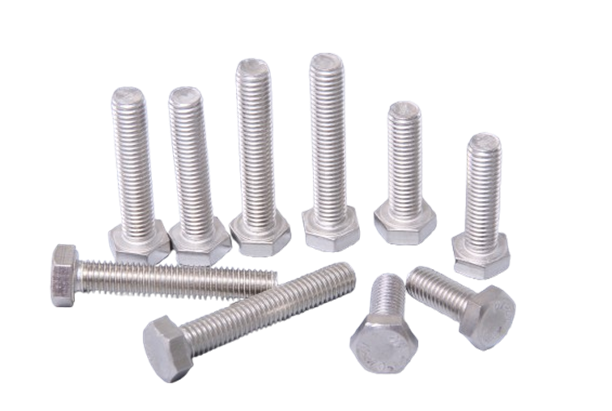
Few fastener topics cause as much confusion as the relationship between DIN 933 and ISO 4017. Both standards define fully-threaded hexagon head bolts — bolts threaded all the way from the head to the tip — and for the vast majority of applications they are completely interchangeable. Yet engineers, buyers and maintenance teams frequently wonder which standard to specify on a drawing, which one to order, and whether mixing the two will cause problems in service. The confusion is understandable: the two standards look nearly identical, and their products often sit side by side in the same warehouse. This article explains what each standard means, where they genuinely differ, and how to choose the right one with confidence.
What the Two Standards Have in Common
The similarities come first — because they explain why the two standards coexist so easily. Both DIN 933 and ISO 4017 describe hexagon head bolts with threads running the full length of the shank, up to the head. Both specify the same 6g thread tolerance grade, so the thread fit is identical for practical purposes. Both are manufactured in metric sizes with closely matching head dimensions and nominal diameters. A DIN 933 bolt and an ISO 4017 bolt of the same nominal size look alike, measure alike and perform alike in standard applications. In day-to-day use, they are effectively the same product governed by two different documents. This is why stockists carry both without conflict, and why maintenance teams can swap one for the other without second-guessing.
DIN 933: The Legacy German Standard
DIN 933 was the German national standard for fully-threaded hexagon head bolts. For decades it served as the reference for European machine building, construction and general engineering. Countless existing machines, equipment manuals, spare-parts lists and engineering drawings across Europe still reference DIN 933, and distributors continue to stock it in large quantities. The standard has now been withdrawn and superseded — German industry has migrated to the international ISO system — but it remains deeply embedded in legacy inventory, maintenance practice and replacement-parts workflows. For anyone maintaining older European equipment, DIN 933 is not a historical curiosity; it is the part number on the shelf.
ISO 4017: The Current International Standard
ISO 4017 is the international standard that has largely replaced DIN 933. Published by the International Organization for Standardization, it is now the recognized specification for new designs and global procurement. Any new drawing or specification should cite ISO 4017 rather than the older DIN designation. This migration reflects a broader trend in engineering: harmonizing national standards into one international framework so that components sourced from different countries are truly interchangeable and quality expectations are uniform worldwide. For exporters, importers and multinational projects, ISO 4017 removes ambiguity and simplifies cross-border sourcing.
Core Comparison Table
| Item | DIN 933 | ISO 4017 |
|---|---|---|
| Status | Old German standard (withdrawn/superseded) | Current international standard |
| Thread | Full thread, up to head | Full thread, up to head |
| Thread tolerance | 6g | 6g |
| Size range | M1.6 – M52 (old series) | M1.6 – M64 (wider range) |
| Compatibility | Legacy projects, replacements | New designs, global procurement |
| Availability | Still widely stocked | Standard for new production |
Key Differences in Practice
Despite their interchangeability, the two standards are not identical. Four differences matter most. First, status: DIN 933 is a legacy standard while ISO 4017 is current. Second, size range: the historical DIN series covered M1.6 to M52, whereas ISO 4017 extends to M64, giving wider coverage for larger applications. Third, thread tolerance: both use 6g, so there is no practical difference here — the fit, gauging and interchangeability of threads are effectively the same. Fourth, compatibility: DIN 933 suits legacy projects and replacements, while ISO 4017 suits new designs and international sourcing. In short, the differences are largely administrative — but they still matter when drawings, tenders and quality audits demand one specific standard.
Are They Interchangeable?
Yes — with one qualification. For the same nominal size, DIN 933 and ISO 4017 fully-threaded bolts are dimensionally interchangeable in the vast majority of standard applications. Thread pitch, head dimensions and strength classes align closely enough that a maintenance engineer can fit one where the other is specified, and vice versa. The differences between the two standards are mainly administrative — which document governs the specification — rather than physical. That said, for critical assemblies, always confirm the thread tolerance and strength class on the drawing rather than assuming interchangeability by name alone.
The Critical Caution: Full Thread vs Partial Thread
The most important warning has nothing to do with the DIN-versus-ISO debate itself. Never use a fully-threaded bolt (DIN 933 / ISO 4017) where a partially-threaded bolt is required. For joints carrying significant shear loads, the correct fastener is a partially-threaded hexagon bolt — DIN 931 or ISO 4014. These bolts have an unthreaded shank section, which provides a larger cross-section in the shear plane and greater resistance to shear forces. Using a fully-threaded bolt in a shear-critical joint can lead to premature failure, because the reduced root diameter at the thread creates a weak point. The rule of thumb: full thread for tensile applications, partial thread where shear strength matters.
How to Choose
Follow this practical guidance. For new designs, exports or international projects, specify ISO 4017. When maintaining existing European equipment or legacy stock, DIN 933 remains acceptable and widely available. For shear-critical joints, switch to DIN 931 / ISO 4014 partially-threaded bolts. And when in doubt, confirm the thread tolerance and strength class on the drawing — these properties matter more than the standard designation itself. A bolt with the wrong strength class fails regardless of whether it carries a DIN or ISO stamp.
Conclusion
DIN 933 and ISO 4017 describe the same family of fully-threaded hexagon bolts, and in most applications they are interchangeable. The practical difference lies in governance: ISO 4017 is the modern international standard, while DIN 933 is the retired German predecessor that remains common in legacy machinery and inventories. Choose ISO 4017 for new work, keep DIN 933 for replacements, and always remember the shear-strength rule before specifying a fully-threaded bolt. Getting these choices right keeps assemblies safe, procurement simple and maintenance trouble-free.
FAQ
Q: Is DIN 933 the same as ISO 4017?
A: They are equivalent for most applications. ISO 4017 is the international replacement of DIN 933, with minor dimensional and tolerance differences.
Q: Can I use ISO 4017 bolt instead of DIN 933?
A: Yes, for standard applications. Check fit with existing nuts (same pitch/class) and confirm tolerances for critical assemblies.
Q: What is the difference between DIN 933 and DIN 931?
A: DIN 933 has full thread along the entire shank; DIN 931 (ISO 4014) has partial thread with a longer plain shank for higher shear strength.
HKTL Fastener manufactures bolts to DIN, ISO and ANSI standards with custom sizes and surface treatments.