Main Conclusion
Industrial high‑performance bolt grades including B7, B7M, L7, B8M, B16, 660 and B8 are engineered for distinct temperature, corrosion and media conditions. Wrong material selection may cause leakage, shutdown or catastrophic failure. Correct bolt‑nut matching (strength, material compatibility, thermal‑expansion, corrosion‑resistance) and standardized installation are essential for safe long‑term service.
| Grade | Base Material | Core Characteristics | Service Environment & Matching Nut |
|---|---|---|---|
| B7 | Cr‑Mo alloy steel (4140/4142) | Quenched‑tempered, ≥860 MPa tensile strength, good high‑temp performance, cost‑effective | ‑29 ~ 450 ℃, non‑corrosive steam/oil medium; pair with 2H nuts. Re‑tighten periodically for creep relaxation at high‑temp |
| B7M | Same alloy as B7, strict heat‑treatment | Hardness ≤ HRC 22, anti‑sulfide‑stress‑corrosion‑cracking (SSCC), complies with NACE MR0175 | Wet‑H₂S acidic / sour oil‑gas refinery service; no substitution with ordinary B7; use torque wrench to avoid over‑torque |
| L7 | Ni‑Cr‑Mo alloy steel (4340), cryogenically treated | Excellent low‑temperature impact toughness (≥27 J @‑101 ℃), prevents brittle fracture | LNG, liquid ammonia cryogenic systems; match L7M nuts. Warm‑up before installation; regular impact‑energy inspection |
| B8M | 316 stainless steel | Molybdenum‑alloyed, resists chloride & sulfuric‑acid corrosion; tensile ≥ 515 MPa, lower mechanical strength | Moderate‑corrosion: seawater, chemical & papermaking equipment; match grade‑8 stainless‑steel nuts; avoid galvanic contact with carbon‑steel |
| B16 | Cr‑Mo‑V vanadium‑bearing alloy steel | Superior creep‑resistance at extreme high‑temperature | 550‑650 ℃ ultra‑supercritical power / high‑temp valves; pair with grade‑4 high‑temp nuts; monitor bolt elongation for creep damage |
| 660(A‑286) | Fe‑Ni superalloy | Maintains high‑strength up to 700 ℃, good oxidation & corrosion‑resistance | Combined high‑temp + corrosion + high‑stress (aero‑engine, gas‑turbine, nuclear); use 660‑grade nuts, dedicated assembly lubricant, periodic metallographic inspection |
| B8 | 304 stainless steel | Clean‑surface property, good general corrosion‑resistance | Low‑corrosion high‑cleanliness: food, pharmaceutical, semiconductor clean‑rooms; match grade‑8 stainless‑steel nuts; dust‑free assembly, periodic passivation |
Bolt‑Nut Matching General Rules
- Strength: Nut strength shall not be lower than bolt grade to avoid thread stripping.
- Material compatibility: Prevent galvanic corrosion; do not mix stainless‑steel bolts with carbon‑steel nuts.
- Temperature: Account for thermal‑expansion mismatch at high‑temperature; guarantee sufficient impact toughness under cryogenic conditions.
- Corrosion: Bolt and nut should adopt identical or corrosion‑compatible material for corrosive environments.
- Assembly: Deploy torque‑wrench or hydraulic tensioner for uniform preload; implement scheduled re‑tightening against relaxation and loosening.
In the industrial sector, bolts are often regarded as unassuming “grains of industry.” Yet it is precisely these small fasteners that ensure the safety of massive systems—from deep-sea oil platforms to ultra-supercritical power generation units. Incorrect selection can lead to minor issues such as leaks and shutdowns, or even catastrophic failures.
This article delves into the logic behind bolt selection across seven typical operating conditions, revealing the engineering secrets behind material designations like B7, B7M, and L7.
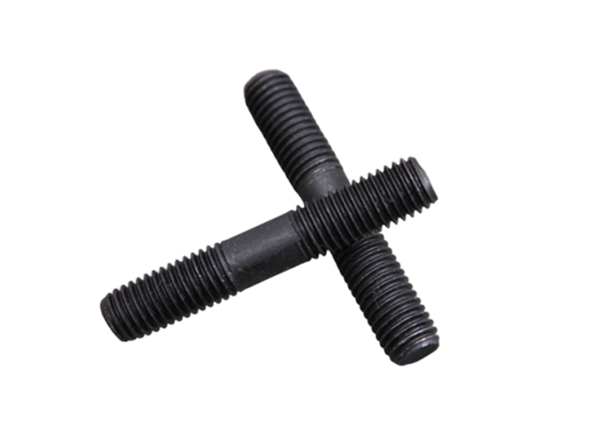
1. General Non-Corrosive Conditions: The Reliable Workhorse – B7 Bolts
Material Characteristics
B7 bolts are made from chromium-molybdenum alloy steel (e.g., 4140, 4142), heat-treated through quenching and tempering, offering high strength (tensile strength ≥860 MPa) and excellent high-temperature performance. Their key advantage lies in the perfect balance between cost-effectiveness and mechanical properties.
Application Considerations
Widely used in flanged connections involving non-corrosive media such as steam and oils within temperature ranges of -29°C to 450°C, B7 bolts are considered standard components in petrochemical and power industries.
Key Notes
Must be paired with Grade 2H nuts to ensure uniform preload; in high-temperature applications, creep relaxation must be considered, requiring periodic retightening.
2. Acidic and Sulfur-Rich Environments: The Bulletproof Armor – B7M Bolts
Material Characteristics
B7M is an enhanced version of B7, engineered with strict control over hardness (≤HRC 22) and impact toughness, enabling resistance to sulfide stress corrosion cracking (SSC). Its chemical composition matches that of B7, but its heat treatment process is more rigorous.
Application Considerations
Specifically designed for acidic environments containing wet H₂S—such as oil and gas production and hydrotreating units in refineries. Under NACE MR0175 standards, B7M is a mandatory requirement for such conditions.
Key Notes
Never substitute B7 for B7M; use torque wrenches during installation to avoid over-tightening, which may cause cracks in regions exceeding hardness limits.
3. Low-Temperature Applications: The Guardian Against Brittle Fracture – L7 Bolts
Material Characteristics
L7 bolts are made from nickel-chromium-molybdenum alloy steel (e.g., 4340), treated with cryogenic processing to maintain high impact toughness even below -100°C (≥27 J at -101°C). Their low-temperature toughness far exceeds that of carbon steel and conventional alloy steels.
Application Considerations
Ideal for connecting pipelines and equipment handling ultra-cold media such as liquefied natural gas (LNG), liquid ammonia, and liquid oxygen.
Key Notes
Must be used with L7M-grade low-temperature nuts; preheat to ambient temperature before installation to prevent brittle failure at low temperatures; regularly test impact energy to prevent embrittlement due to aging.
4. General Corrosive Environments: The Stainless Steel Shield – B8M Bolts
Material Characteristics
B8M bolts are made from 316 stainless steel, enriched with molybdenum to significantly improve resistance against corrosive agents such as chloride ions and sulfuric acid. With tensile strength ≥515 MPa, they offer superior corrosion resistance despite lower strength than B7.
Application Considerations
Suitable for moderately corrosive environments including seawater, chemical processing, and papermaking—commonly used in heat exchangers and reactors.
Key Notes
Must be paired with Grade 8 stainless steel nuts; avoid direct contact with carbon steel to prevent galvanic corrosion; maintain clean surfaces to minimize corrosion sites.
5. Ultra-High Temperature Conditions: The Heat-Resistant Vanguard – B16 Bolts
Material Characteristics
B16 bolts are made from vanadium-modified chromium-molybdenum-vanadium alloy steel (e.g., 6150), where added vanadium forms stable carbides, ensuring high strength and creep resistance above 550°C. Their high-temperature performance far surpasses that of B7.
Application Considerations
Designed specifically for extreme high-temperature environments such as ultra-supercritical power units and high-temperature valves operating between 550°C and 650°C.
Key Notes
Must be used with Grade 4 high-temperature nuts; strictly control preload during installation to prevent relaxation at elevated temperatures. Regularly inspect bolt elongation to assess creep damage.
6. High-Temperature, Corrosive, and Demanding Conditions: The “All-Rounder” 660 Bolt
Material Characteristics
The 660 bolt is made of iron-nickel-based high-temperature alloy (e.g., A286), strengthened by adding titanium and molybdenum to form γ’ phase, enabling it to maintain high strength at temperatures up to 700°C while offering excellent oxidation resistance and corrosion resistance. Its overall performance far exceeds that of ordinary stainless steel and alloy steel.
Application Scenarios
Suitable for extreme conditions involving high temperature, corrosion, and high stress, such as in aircraft engines, gas turbines, and nuclear reactors.
Key Considerations
Must be used with 660-grade high-temperature alloy nuts; apply dedicated lubricant during installation to reduce friction coefficient; conduct regular metallographic testing to evaluate microstructural stability.
7. Low-Corrosion, Clean Environments: The “Cleanroom Guardian” B8 Bolt
Material Characteristics
The B8 bolt is made of 304 stainless steel containing chromium, providing good corrosion resistance and cleanliness. It has a tensile strength ≥515 MPa, a smooth surface, and is less prone to bacterial growth.
Application Scenarios
Ideal for low-corrosion, high-cleanliness environments such as food processing, pharmaceuticals, and semiconductors—e.g., cleanrooms and sterile workshops.
Key Considerations
Must be paired with 8-grade stainless steel nuts; use dust-free tools during installation to prevent contamination; perform periodic surface passivation to maintain corrosion resistance.
Summary of Bolt-Nut Matching Guidelines
Strength Compatibility: Nut strength grade should not be lower than the bolt to avoid thread stripping.
Material Compatibility: Avoid contact between dissimilar metals to prevent galvanic corrosion (e.g., stainless steel bolts with carbon steel nuts).
Temperature Adaptability: In high-temperature applications, consider differences in thermal expansion coefficients; in low-temperature conditions, ensure adequate impact toughness.
Corrosion Resistance Synergy: In corrosive environments, bolts and nuts should be made of identical or compatible anti-corrosion materials.
Installation Standards: Use torque wrenches or hydraulic tensioners to ensure uniform preload; regularly
re-tighten to prevent loosening.
If you are looking for suitable bolts and nuts, please visit us here https://hktl-fastener.com/bolts-and-nuts/.