Key Takeaways
200‑series stainless steels adopt high‑manganese, nickel‑saving formulation for good cost‑performance. Three typical wire grades (665, 667, 669) differ significantly in chemical composition, mechanical properties and applicable scenarios. Misconceptions exist regarding corrosion‑resistance, magnetism and high‑temperature performance; material selection should match operating temperature, load and service medium rather than blindly choosing 300‑series grades.
| Grade | Main Alloy Features | Core Mechanical Properties | Typical Use‑Cases | Highlighted Advantages |
|---|---|---|---|---|
| 665 | 13.5%Cr‑26%Ni, Ti+B addition | Ts≥717 MPa, Ys≥365 MPa, Elongation 43% | Automobile exhaust clamps, boiler & oven high‑temp bolts | Excellent thermal‑fatigue; long‑term service 500‑760 °C; good weld retention rate |
| 667 | 17Cr‑5Ni‑6Mn high‑manganese | Cold‑worked Ts 800‑1000 MPa; Elongation 5‑8% | High‑strength nuts, self‑tapping screws, scaffolding / fitness‑equipment fasteners | Superior cold‑heading; becomes magnetic after cold‑working for automated positioning; high shear strength; ≥50 times repeat disassembly |
| 669 | 12%Cr, low‑Ni, C≤0.03% | Ts 550‑650 MPa; good elastic performance | Lighting / lock pins, sofa spring hooks, consumer‑electronic fine screws | Bright surface finish, low tap‑wear, cost ~30 % lower than 304 |
Material & processing highlights
- 665: Boron addition improves weld strength with ≥85 % tensile‑strength retention after welding; salt‑spray performance surpasses 201 under 300 °C continuous service.
- 667: Large cross‑section reduction ratio for cold heading; one‑step forming for complex socket‑head / countersunk‑head geometries, higher processing efficiency than 304. Cold working induces magnetism (not a quality defect).
- 669: Low‑hardness base material, achieves 6‑g thread precision; good elastic fatigue for spring‑type fasteners.
Three common selection misconceptions
- Corrosion‑resistance: 667 / 669 are fully adequate for dry‑indoor furniture and household‑electrical appliances. It is wasteful to blindly specify 304 for such benign environments.
- Magnetism: Magnetism generated by cold‑working of 200‑series material is normal; it can even assist automated assembly positioning. Magnetic property does not indicate defective material.
- High‑temperature material: Below 600 °C, 665 delivers oxidation‑resistance comparable to 310S with better cost‑effectiveness, not requiring mandatory 316.
Selection principle: Match material grade against actual service temperature, mechanical load and environmental medium instead of simply upgrading to 300‑series stainless steel.
In the selection of stainless steel fasteners, the 200 series has become a practical choice in the industrial field due to its high cost performance.
Among them, the three types of wire materials, 665, 667, and 669, stand out with their unique properties in applications such as springs and structural connections. This article will deeply analyze the core characteristics of these three materials to provide professional reference for your selection.
I. Materials Genome: Decoding the “Alloy Code” of the 200 Series
The core advantage of 200 series stainless steel lies in its high-manganese and nickel-saving alloy design. By optimizing the ratio of chromium, manganese, and nickel, it achieves a balance between cost control and mechanical properties as well as basic corrosion resistance. Although 665, 667, and 669 all belong to this system, their compositional differences result in distinct application profiles:
• 665 Stainless Steel: With a special composition of 13.5% chromium and 26% nickel, it is further strengthened by adding titanium (3.00%) and boron (0.02%). It is the “high-end version” among the 200 series.
The high nickel content not only maintains the advantage of nickel saving but also enhances high-temperature stability, making it particularly suitable for fasteners that are constantly exposed to temperatures ranging from 500 to 760°C.
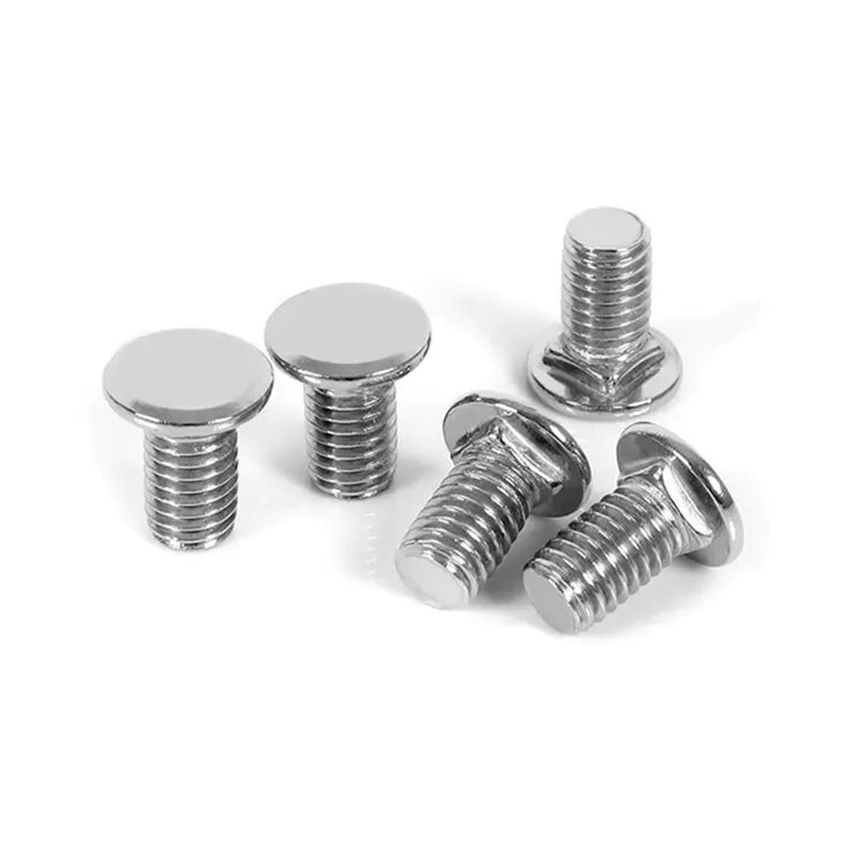
• 667 Stainless Steel: Characterized by a typical 17Cr-5Ni-6Mn composition, the 6% manganese content is designed to enhance cold working performance. After cold heading, the hardness can reach above HV300, making it the “strength leader” in the 200 series. It becomes magnetic after cold working, facilitating magnetic positioning in automated assembly processes.
• 669 Stainless Steel: An economical formula with 12% chromium and 0.8-1% nickel, it ensures excellent cold forming performance by precisely controlling the carbon content (≤0.03%). The surface finish can reach Ra0.8μm, making it an ideal choice for decorative fasteners.
II. Mechanical Properties: The Bridge from Data to Application
1. Balance of Strength and Toughness
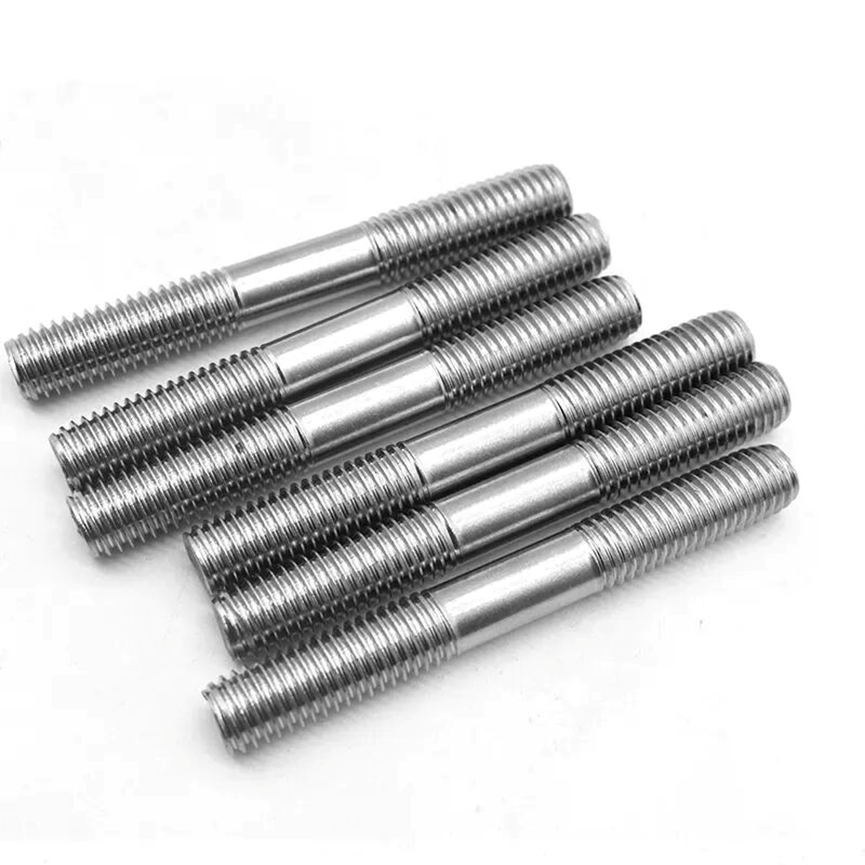
• 665: With tensile strength ≥ 717 MPa, yield strength ≥ 365 MPa, and elongation of 43%, it excels in high-temperature bolts and turbocharger connection parts, capable of withstanding alternating loads and thermal fatigue.
• 667: After cold working, its tensile strength can reach 800-1000 MPa, combined with an elongation of 5%-8%, making it suitable for high-strength nuts and self-tapping screws, reliable and durable in load-bearing scenarios such as construction scaffolding and warehouse shelves.
• 669: With a tensile strength of 550-650 MPa and an elastic modulus of 193 GPa, it is particularly suitable for spring-type fasteners (such as furniture tension springs and electrical contact springs), with an elastic decay rate of ≤ 5% after 100,000 cycles of testing.
2. Processing Performance: Smooth Transformation from Wire to Finished Product
• Cold heading: The cross-sectional reduction rate of 667 wire is ≥ 50%, allowing for one-time forming of complex head structures (such as hexagon socket and countersunk heads), with a processing efficiency 20% higher than that of 304.
• Thread processing: The low hardness (HRB80-90) of 669 reduces tap wear, and the thread accuracy can reach 6g grade, suitable for precise connections in electronic devices.
• Welding performance: The boron content in 665 optimizes the weld strength, with a tensile strength retention rate of ≥ 85% after welding, meeting the requirements of on-site welding scenarios such as pipe flanges.
III. Scene Adaptation: Ensuring Each Fastener Finds Its Right Place
1. 665 Stainless Steel Fasteners: Loyal Guardians in High-Temperature Environments
• Typical applications: Exhaust pipe clamps for automobiles, boiler pressure gauge joints, and heating tube fixing bolts for ovens.
• Core advantages: In a continuous working environment of 300°C, its corrosion resistance is superior to that of 201 stainless steel, with no red rust after 48 hours of salt spray testing.
2. 667 Stainless Steel Fasteners: The Strength Backbone in Structural Connections
• Typical applications: Storage cage clips, bolts for fitness equipment, and hinge pins for doors and windows.
• Core advantages: Hardness reaches HRC25-30, shear strength ≥ 600 MPa, and it is less likely to strip during installation, with a repeat disassembly life of ≥ 50 times.
3. 669 Stainless Steel Fasteners: Nimble Hands in Fine Assembly
• Typical applications: Spring hooks for sofas, screws for lighting fixtures, and pins for locks.
• Core advantages: The surface is bright and does not require secondary electroplating, with a cost 30% lower than 304, suitable for mass-produced consumer products.
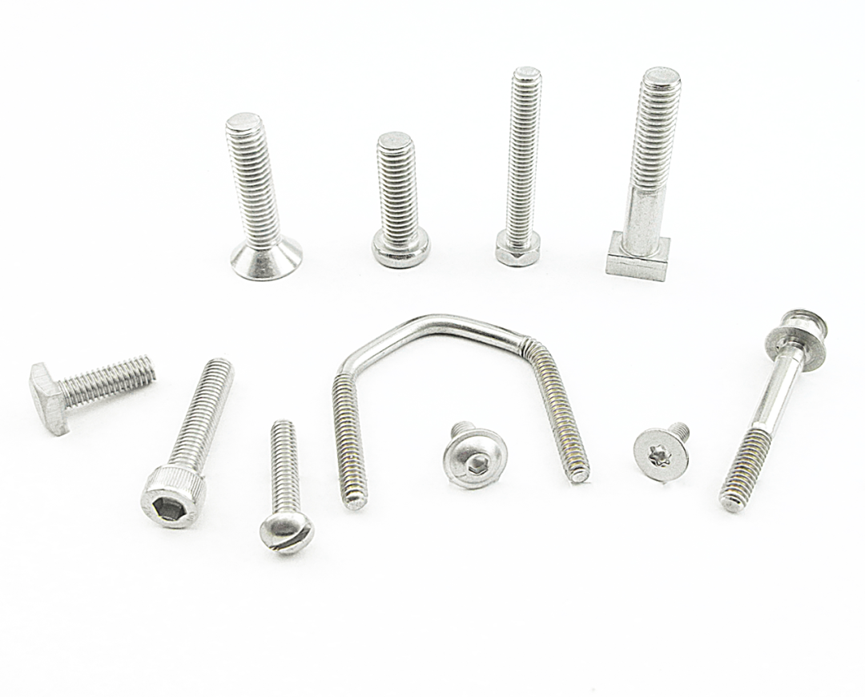
IV. Selection Tips: Avoiding 3 Common Misconceptions
1. “If it’s not as corrosion-resistant as 304, it’s inferior”: In dry indoor environments (such as furniture and electrical appliances), the corrosion resistance of 667/669 fully meets the requirements, and over-pursuing 304 only increases costs.
2. “If it’s magnetic, it’s not genuine”: The magnetic property of 200 series after cold working is a normal phenomenon and has nothing to do with the quality of the material; instead, it facilitates automated assembly.
3. “316 must be used in high-temperature scenarios”: 665 has an oxidation resistance close to 310S at temperatures below 600°C, and is more cost-effective, making it a good choice for medium and high-temperature scenarios.
From automotive parts to household items, 200 series 665/667/669 stainless steel fasteners, with their precise performance positioning, interpret the industrial philosophy of “the best is the most suitable” in their respective fields.
When making a choice, a comprehensive judgment should be made based on temperature, load, and environmental medium to ensure a perfect match between material properties and application requirements.
If you are looking for quality fasteners, please visit us here https://hktl-fastener.com/.