Key Findings
Petrochemical‑industry bolts face complex operating‑conditions: high‑temperature, high‑pressure, H₂S/chloride‑ion corrosion, hydrogen‑rich atmosphere and cryogenic environments. Selection follows four core principles: adapt to service‑conditions, comply with industry standards, material‑matching, full‑life‑cycle consideration. Material, specification‑strength‑grade, inspection, installation and maintenance must be strictly controlled; mis‑selection may trigger leakage or serious safety‑accidents.
| Working Condition | Representative Materials | Critical Performance Requirement |
|---|---|---|
| Normal‑temp & non‑corrosive | Q235, 20#, 35# carbon‑steel | Low‑cost for non‑critical auxiliary‑equipment |
| High‑temp & high‑pressure | SA193 B7(42CrMo), P91, Inconel‑nickel‑base alloys | High‑temperature creep‑resistance; B7 matches A194‑2H nuts |
| H₂S‑corrosion | SA193 B7M, A320 L7M | Hardness ≤22HRC, suppress sulfide‑stress‑corrosion‑cracking |
| Chloride‑ion / seawater | 316L, 2205/2507 duplex‑steel, 904L super‑austenitic‑steel | Resist pitting & crevice‑corrosion |
| Strong acid‑alkali | Hastelloy C276, Monel alloy | Resist severe chemical‑medium corrosion |
| Cryogenic ≤‑50℃ | A320 L7, A286 iron‑nickel alloy | Guarantee low‑temperature impact‑toughness, prevent cold‑brittle‑fracture |
| Hydrogen‑rich service | 12CrMoV, 15CrMoR, SA193 B7 | Anti‑hydrogen‑embrittlement; control hardness & impurity‑content |
Specification, thread & strength‑grade rules
- Diameter: Selected according to flange DN / PN‑pressure‑class; upgrade size for high‑pressure working‑conditions.
- Length: Calculated: flange thickness + gasket thickness + nut height + 2‑3 exposed threads. High‑temp piping add extra 5‑10 % length for thermal‑expansion; RJ‑type flanges adopt dedicated extended‑bolts.
- Thread: Default 6H/6g precision‑fit; M24 and‑above prefer 8UN series threads; prohibit mixing metric‑thread with UNC/UNF inch‑thread.
- Strength‑grade: 8.8‑grade for ordinary‑low‑pressure; 10.9 /12.9 alloy‑steel for ≥10 MPa medium‑high‑pressure; nickel‑base / duplex‑steel alloys are selected by material‑property instead of conventional strength‑grade marking.
Standards, special‑condition notes
Domestic standards: SH/T 3404, HG/T 20613, HG/T 20634, GB/T 16939. International: ASTM A193 / A320, ASME B18.2.1, API 20E. Critical fasteners require MTC material‑certificate, heat‑treatment and mechanical‑test‑reports.
- Thermal‑cycling: adopt thermal‑fatigue‑resistant alloy / nickel‑base‑alloy.
- Vibration (pumps / compressors): full‑thread bolts plus anti‑loosening‑nuts, optionally anti‑loosening‑washers.
- Flammable‑explosive media: avoid spark‑generating materials.
- Off‑shore petrochemical: ≥1200‑hour salt‑spray resistance or corrosion‑resistant alloy‑material.
Inspection, installation & maintenance
- Inspection: visual check for cracks / thread‑damage; verify MTC‑documents; spectroscopy‑check‑composition; re‑test hardness‑tensile‑impact‑values; verify thread‑dimension‑accuracy.
- Installation: use material‑matched bolt‑nut pairs (B7‑2H; L7‑7L); tighten following VDI 2230 with torque‑wrench; apply high‑temperature anti‑seize‑compound on threads.
- Maintenance: inspect hardness‑corrosion every two‑years; corrosive‑environment replace fasteners every five‑years; shorten‑interval for high‑temp‑high‑pressure‑units.
Selection prohibitions
Forbid substituting ordinary‑carbon‑steel for alloy‑steel under high‑temp/high‑pressure/hydrogen‑exposure/corrosive‑conditions; prohibit mixing dissimilar‑material bolt‑nut (galvanic‑corrosion risk); must‑not arbitrarily reduce bolt‑diameter / length; reject fasteners without valid‑certificates for key‑petrochemical‑facilities.
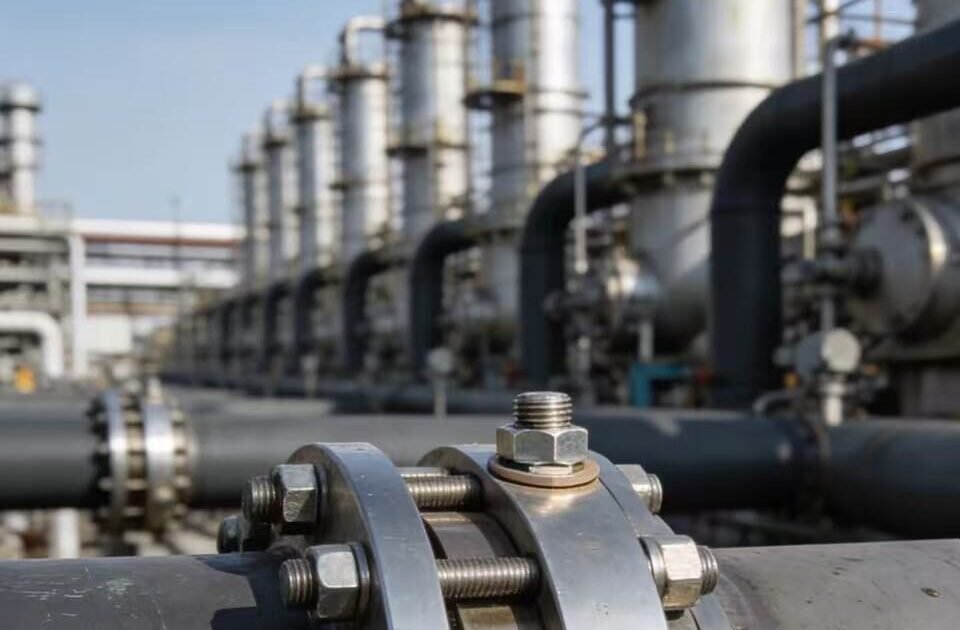
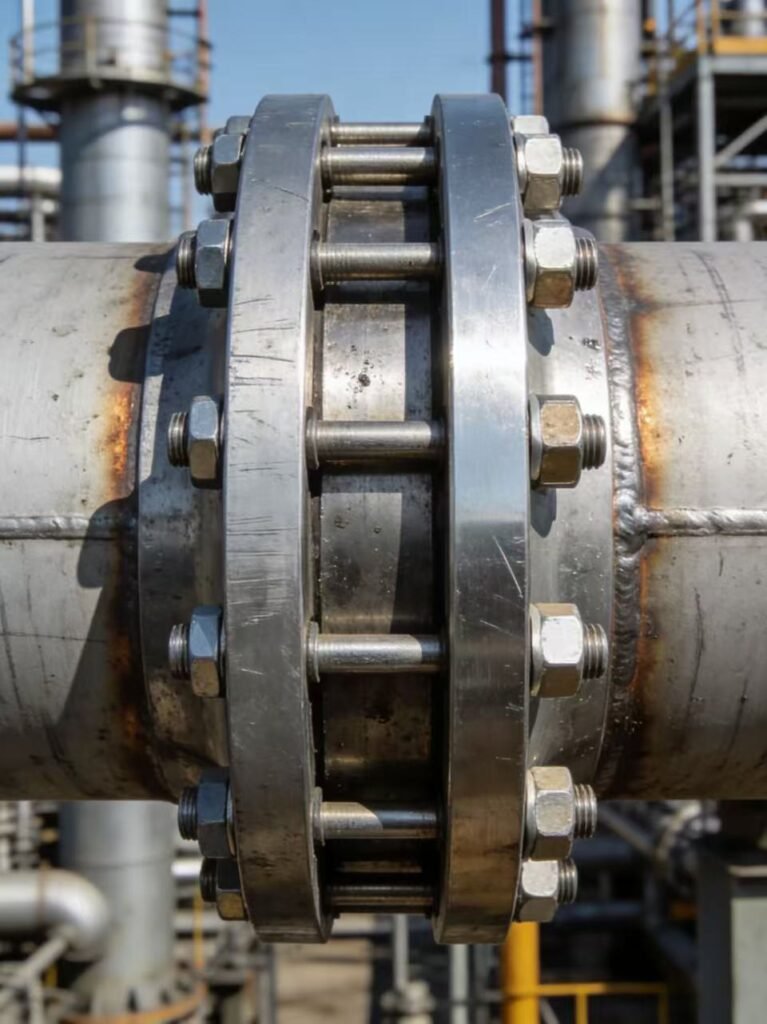
Bolts, as the core fastening components for equipment and pipeline flanges in the petrochemical industry, their selection is directly related to the sealing reliability, operational safety, and service life of the plant.
The petrochemical industry has complex working conditions, with common extreme conditions such as high temperature, high pressure, strong corrosion, hydrogen exposure, and low temperature.
The selection of bolts must comprehensively consider factors such as working conditions, material properties, specifications, and installation compatibility to avoid leakage, fracture, and even safety accidents due to incorrect selection.
This guide focuses on the core principles of bolt selection in the petrochemical industry and provides professional references for engineering design, procurement, construction, and operation and maintenance.
I. Core Principles of Bolt Selection
Adaptation to Working Conditions: Focus on the core working conditions such as operating temperature, pressure, medium corrosiveness, and load type, and prioritize the selection of bolts that meet the mechanical performance and corrosion resistance requirements for extreme conditions to avoid using “general-purpose” bolts in extremely demanding environments.
Compliance with Standards: Strictly follow specialized petrochemical industry standards and international general standards to ensure that the material, size, performance, and inspection requirements of the bolts comply with the norms. Non-standard and non-compliant products must not be admitted.
Matching Principle: Bolts need to achieve material, specification, and strength compatibility with flanges, nuts, and gaskets to avoid electrochemical corrosion and connection failure due to material differences.
Consideration of the Entire Life Cycle: Take into account procurement costs, installation convenience, maintenance difficulty, and service life, and prioritize the selection of cost-effective, easy-to-maintain, and resistant to aging and fatigue bolt products.
II. Selecting Bolt Materials Based on Working Conditions
The working conditions in the petrochemical industry are diverse, and material is the core of bolt selection. The suitable materials for different working conditions are as follows:
(1) Normal Temperature and Normal Pressure without Corrosion
Suitable for auxiliary pipelines in petrochemical plants, non-pressure storage tanks, and non-critical equipment connections, with media such as air, water, and non-corrosive oil.
• Recommended Materials: Q235, 20# carbon steel, 35# medium carbon steel
• Performance Characteristics: Low cost, good processing performance, meeting conventional load and sealing requirements. Do not use for high-temperature, high-pressure, and corrosive environments.
(2) High Temperature and High Pressure Conditions
Suitable for refining cracking units, hydrogenation units, steam pipelines, and high-pressure reaction vessels, with temperatures ≥ 200°C and pressures ≥ 4 MPa. It is necessary to consider the high-temperature creep strength and high-pressure bearing capacity.
• Main Materials: 42CrMo (SA193 B7), 25CrMoA, 35CrMoA
• Premium Materials: P91, Inconel 718, Inconel 625 nickel-based alloys
• Key Performance Points: SA193 B7 material has a tensile strength of ≥ 860 MPa, a maximum service temperature of 480°C, and a high retention rate of high-temperature strength. It requires an A194 2H grade nut; nickel-based alloys can withstand temperatures above 650°C and are suitable for ultra-high temperature cracking equipment.
(3) Strong Corrosion Conditions
Hydrogen Sulfide (H₂S) Conditions: Hydrogenation cracking, sulfur recovery, acid water pipelines, etc., where H₂S can cause hydrogen sulfide stress corrosion cracking (SSCC).
◦ Recommended Materials: SA193 B7M, A320 L7M, hardness ≤ 22HRC, sulfur content ≤ 0.01%, effectively inhibiting intergranular corrosion.
Chloride Ion (Cl⁻) Conditions: Seawater transportation, coastal petrochemical plants, salt water pipelines, etc., where chloride ions can cause pitting and crevice corrosion.
◦ Recommended Materials: 316L, 2205/2507 duplex stainless steel, 904L super austenitic stainless steel
Strong Acid and Strong Alkali Conditions: Chemical synthesis, acid-base refining units, where the media is sulfuric acid, hydrochloric acid, caustic soda, etc., strong corrosive fluids.
◦ Recommended Materials: Hastelloy C276, Monel alloy, resistant to strong oxidizing and reducing acid corrosion, suitable for extremely harsh corrosion environments. (4) Low-temperature conditions
Applicable to LNG receiving stations, low-temperature liquefied gas storage tanks, refrigeration pipelines, etc., with a temperature of ≤ -50℃. Avoid cold brittle fracture.
• Recommended materials: A320 L7, A286 iron-nickel-based alloy
• Key performance points: A320 L7 has an impact energy of ≥ 27J at -150℃, A286 has an impact energy of 54J at -196℃ ultra-low temperature, far superior to ordinary stainless steel, eliminating brittle failure at low temperatures.
(5) Hydrogen-rich conditions
Applicable to hydrogenation refining, hydrogenation cracking, etc. in hydrogen-rich environments, hydrogen is prone to causing hydrogen embrittlement and hydrogen corrosion.
• Recommended materials: 12CrMoV, 15CrMoR, SA193 B7 anti-hydrogen alloy steel
• Key performance points: The material must have excellent anti-hydrogen embrittlement performance, strictly control hardness and impurity content, avoid hydrogen-induced cracks.
III. Selection of bolt specifications and strength grades
(1) Specification size selection
Diameter selection: Based on the nominal diameter (DN) of the flange and pressure grade (PN/Class), determine accordingly. For DN50 PN16 flange, M16 bolts are suitable, and for high-pressure conditions, increase the specification by 1-2 levels; the bolt diameter must meet the preload requirements to ensure uniform force on the flange sealing surface.
Length selection: Calculate according to the formula of “total flange thickness + gasket thickness + nut height + 2-3 threads of thread allowance”, for high-temperature pipelines, reserve thermal expansion gap, and the length should increase by 5%-10%; for metal ring connection surfaces (RJ) flanges, it is necessary to match dedicated extended bolts.
Thread selection: Preferentially adopt 6H/6g high-precision threads, strictly prohibit the use of mixed metric and UNC/UNF American standard threads; for bolts with a diameter of M24 and above, it is recommended to use 8UN coarse-threaded bolts to enhance thread meshing strength and reduce stress concentration.
(2) Strength grade selection
The strength grade of bolts in the petrochemical industry must match the working pressure. Low-grade bolts must not be used in high-pressure scenarios:
• Ordinary conditions: 8.8 grade carbon steel bolts, suitable for normal pressure, low-pressure non-critical connections;
• Medium-high pressure conditions: 10.9 grade, 12.9 grade alloy steel bolts, suitable for pipelines and equipment with pressure ≥ 10MPa;
• Special alloy materials: Nickel-based alloys, duplex steel have no clear strength grades, the selection is based on high-temperature/low-temperature mechanical properties, corrosion resistance;
IV. Follow industry standards and norms
The selection of bolts in the petrochemical industry must strictly follow specific standards to ensure product quality compliance:
Domestic standards: SH/T 3404 “Petroleum and Chemical Steel Pipe Flange Fasteners”, HG/T 20613 “Steel Pipe Flange Fasteners (American Standard System)”, HG/T 20634 “Steel Pipe Flange Fasteners (National Standard System)”, GB/T 16939 “High-strength Bolts for Steel Grid Frame Bolted Joints”;
International standards: ASTM A193 “Alloy Steel and Stainless Steel Bolts for High Temperature”, ASTM A320 “Alloy Steel Bolts for Low Temperature”, ASME B18.2.1 “American Standard Bolts and Screws”, API 20E “Lag Bolts and Fastening Systems for Oil and Gas Industry”;
Quality certification: Key working condition bolts must have ASME, API, NORSOK international certifications, accompanied by material quality certificates (MTC), heat treatment reports, mechanical property test reports.
V. Special conditions selection precautions
Temperature alternating conditions: Select alloy steel or nickel-based alloy bolts with excellent anti-thermal fatigue performance to avoid stress relaxation and fracture due to repeated thermal expansion and contraction;
Vibration load conditions: For pump bodies, compressor connections, use full-threaded bolts + anti-loosening nuts combination to enhance anti-vibration loosening ability, and add anti-loosening gaskets when necessary;
Flammable and explosive medium conditions: It is strictly prohibited to use materials that are prone to generating sparks. To prevent safety accidents caused by friction and impact of bolts, stainless steel and alloy materials should be preferred.
Marine petrochemical conditions: In addition to being resistant to chloride ion corrosion, the bolts should also pass salt spray tests for at least 1200 hours and have a coating thickness of at least 80 μm. Alternatively, stainless steel materials can be used to resist marine atmospheric corrosion.
VI. Key points for bolt quality inspection and installation
(1) Quality inspection
Visual inspection: The surface of the bolt should be free of cracks, pores, rust, and thread damage. The coating/anti-corrosion layer should be uniform and complete.
Material verification: Verify the quality certificate and the physical material identification. If necessary, conduct chemical composition spectroscopy analysis.
Performance testing: High-strength bolts should undergo hardness, tensile strength, and impact toughness re-inspections. The hardness value should comply with the requirements of the working conditions.
Dimension verification: Test the diameter, length, and thread accuracy of the bolt to ensure precise matching with the flange and nut.
(2) Installation compatibility
Pairing use: Bolts and nuts should be of the same material or compatible materials to avoid electrochemical corrosion. For example, B7 bolts should be paired with 2H nuts, and L7 bolts with 7L nuts.
Installation torque control: Calculate the installation torque according to the VDI 2230 standard and use a torque wrench to evenly tighten. Do not install with excessive or insufficient torque.
Lubrication treatment: In high-temperature and corrosive conditions, the bolt threads should be coated with a high-temperature anti-sticking agent to reduce friction and facilitate later disassembly.
Regular maintenance: During service, re-examine the hardness and corrosion condition of the bolts every 2 years. Replace fasteners every 5 years in corrosive environments. Shorten the inspection cycle in high-temperature and high-pressure conditions.
VII. Selection restrictions
It is strictly prohibited to use ordinary carbon steel bolts instead of alloy steel bolts for high-temperature, high-pressure, hydrogen exposure, and corrosive conditions.
Do not mix different material bolts and nuts to avoid accelerated failure due to electrochemical corrosion.
Do not arbitrarily reduce the bolt diameter or length to ensure the sealing and force safety of the flange connection.
Bolts without quality certificates, certifications, or those that ar (unqualified) are strictly prohibited from being used in key petrochemical devices.
In conclusion, the selection of bolts in the petrochemical industry should be based on the working conditions as the core, standards as the basis, and safety as the prerequisite. Precisely match the material, specification, and performance.
At the same time, strictly control the quality inspection and installation and maintenance of bolts to ensure the long-term, safe, and stable operation of petrochemical devices.
FAQ
Q: What bolt materials are recommended for typical petrochemical working conditions?
A: Use carbon‑steel for normal‑temp non‑corrosive service. SA193 B7 for high‑temp high‑pressure; B7M / L7M for H₂S corrosion; 316L / duplex steel for chloride‑rich media; A320 L7 for low‑temperature LNG applications. Nickel‑base alloys serve ultra‑harsh conditions.
Q: What international standards and documents are required for petrochemical bolts?
A: Follow ASTM A193, ASTM A320, ASME B18.2.1, API 20E. Critical bolts need MTC material certificates, heat‑treatment and mechanical test reports, plus ASME / NORSOK relevant certifications.
Q: What pairing & installation rules should I follow for petrochemical bolts?
A: Match compatible bolt‑nut materials (B7 with 2H nuts). Calculate torque per VDI 2230. Apply high‑temperature anti‑seize lubricant. Inspect every 2 years; replace bolts every 5 years under corrosive service.
HKTL Fastener supplies ASTM‑compliant petrochemical‑grade bolts for high‑temp, low‑temp, corrosive and hydrogen‑exposed process‑plant flange connections.
If you are looking for suitable bolts and nuts, please visit us here https://hktl-fastener.com/bolts-and-nuts/.