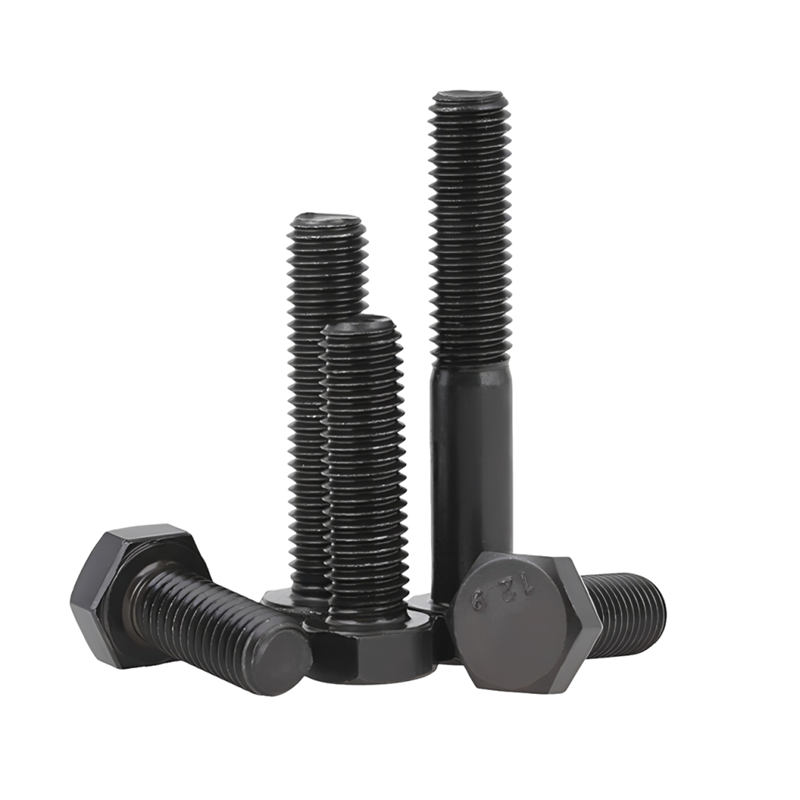
Core Conclusion
Bolts are fundamental detachable industrial‑standard fasteners. Proper selection requires understanding metric specification notation, multiple thread profiles, performance‑grade definitions, real‑world application scenarios, plus correct installation‑maintenance rules. Wrong size, grade or tightening procedure may cause structural safety hazards.
| Module | Main Content |
|---|---|
| Specification notation | M‑nominal‑dia × pitch × shank‑length; coarse‑thread omits pitch; governed by ISO / GB‑T‑5782‑2016; diameter and length both critical for safety |
| Thread types | Coarse / fine, pipe, trapezoidal, saw‑tooth; each differs in self‑locking, sealing, transmission and load‑bearing characteristics |
| Performance grades | 3.6‑6.8 ordinary bolts; ≥8.8 high‑strength (quenched‑tempered alloy steel); 10.9 /12.9 for extreme‑safety‑critical equipment |
| Typical industries | Construction‑steel‑structure / anchor‑bolts; automotive engine‑chassis; aerospace high‑strength lightweight bolts; household appliances & furniture |
| Selection‑&‑usage | Calculate tension/shear/bending loads; adapt to temperature‑corrosion environment; control tightening torque; regular inspection; apply anti‑loosening for vibration‑prone joints |
1. Specification‑system
Metric marking example M12×1.75×50: nominal diameter 12 mm, pitch 1.75 mm, bolt‑shank length 50 mm (head excluded). Nominal diameter determines tensile capacity; pitch influences thread‑meshing; shank‑length shall match total stack‑thickness of parts, washers and nuts. Too‑small diameter risks fracture; over‑large bolt‑holes weaken base material; improper length yields insufficient clamping or dangerous over‑protrusion. Products follow ISO and GB standards to guarantee interchangeability.
2. Thread varieties
- Coarse‑thread: Larger pitch, robust thread teeth, general‑purpose fastening.
- Fine‑thread: Small‑pitch, superior self‑locking, for precision adjustment, hydraulic sealing and high‑fatigue‑demand assemblies.
- Pipe‑thread (G / NPT): For fluid‑pipeline sealing.
- Trapezoidal‑thread: Good transmission‑efficiency, used for machine‑tool lead‑screws.
- Saw‑tooth‑thread: Strong unidirectional axial load‑bearing, applied in screw‑presses and jacks.
3. Performance‑grade logic (ISO 898‑1)
First number ÷ 100 = nominal tensile strength (MPa); second number ÷ 10 = yield‑to‑tensile ratio. - 3.6‑6.8: ordinary carbon‑steel bolts for light‑load general assemblies. - ≥ 8.8: high‑strength bolts made of alloy steel after quenching‑and‑tempering. 8.8 for automotive / machinery; 10.9 /12.9 for bridges, nuclear‑power and aerospace critical components. Improper grade substitution leads to safety risks; over‑specification causes unnecessary cost waste.
4. Industry‑specific applications
- Construction: 10.9‑grade high‑strength hex‑bolts for steel‑beam‑column connections; anchor‑bolts fix equipment‑bases onto concrete foundations.
- Automotive: 10.9 /12.9 cylinder‑head bolts endure high‑temperature‑vibration; 8.8‑grade for suspension assemblies; adopt galvanizing or Dacromet surface‑treatment.
- Aerospace: Titanium‑alloy / super‑alloy bolts for high strength‑to‑weight ratio, withstand low‑temperature, high‑temperature and extreme‑pressure operating‑conditions.
- Civil consumer goods: household‑appliance and furniture fasteners.
5. Selection, installation & maintenance best‑practice
- Design: Compute tension / shear / bending loads to decide bolt diameter and performance‑grade; select high‑temp‑resistant alloy for high‑temperature environments; choose stainless‑steel or anti‑corrosion‑coated bolts for humid / corrosive conditions.
- Assembly: Apply calibrated torque‑wrench; avoid insufficient pre‑load (loosening) or over‑torque (plastic‑deformation / fracture); critical joints can use torque‑angle tightening‑method.
- Maintenance: Periodically inspect for looseness, deformation and corrosion; replace defective bolts promptly; install lock‑washers / lock‑nuts / stop‑washers for vibration‑exposed connections.
In numerous fields such as mechanical manufacturing, construction engineering, and the automotive industry, bolts, as a common standard component, although seemingly ordinary, play a crucial role. They are like the “buttons” of the industrial world, tightly connecting various parts to ensure the stable operation of equipment and structures.
However, the knowledge of bolts is far from being as simple as it appears on the surface. Their specifications, threads, grades, and application scenarios all have strict standards and meticulous considerations. Now, let’s delve into the world of bolts and gain a comprehensive understanding of these key information.
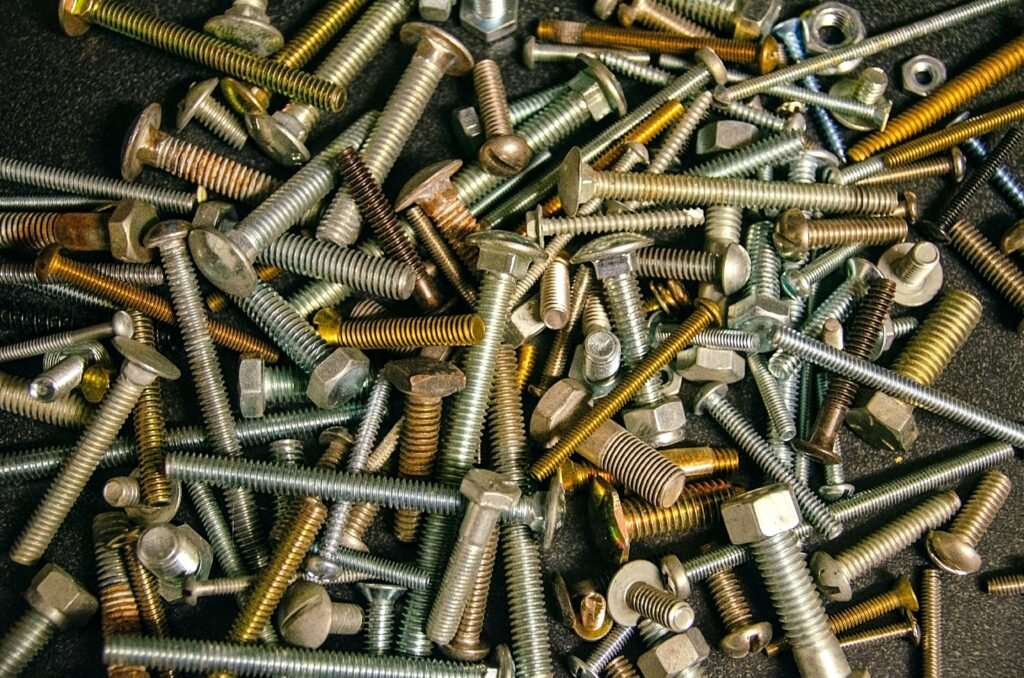
I. The Specification System of Bolts: The Art of Precise Matching
The specification of a bolt is the foundation for choosing the right one, and its representation involves several key parameters. The most common form is “M + nominal diameter × pitch × shank length”. For instance, M12×1.75×50 indicates that the bolt is a standard metric thread, with a nominal diameter of 12mm, a pitch of 1.75mm (the default pitch for coarse threads, while fine threads require explicit indication), and a shank length of 50mm (excluding the head size).
The nominal diameter determines the thickness of the bolt and is a crucial dimension for withstanding axial tensile force; the pitch affects the engagement between the bolt and the nut, as well as the speed and efficiency of tightening; the shank length should be determined based on the total thickness of the connected parts, the thickness of the washer, and the thickness of the nut, among other factors, to ensure that the bolt can be effectively tightened without being too long or too short to affect its use.
In practical applications, the selection of bolt specifications is of critical importance. Take building steel structures as an example. The connection between steel beams and steel columns usually bears huge shear forces and tensile forces.
According to engineering mechanics calculations, if the nominal diameter of the selected bolts is too small, it may lead to bolt breakage during use due to inability to withstand the load, thereby causing serious safety accidents; conversely, if the nominal diameter is too large, it will not only increase material costs but also weaken the strength of the steel due to overly large bolt holes.
For connection components of different thicknesses, precisely matching the length of the screw is equally important. A screw that is too short cannot fully pass through the connection component, resulting in insufficient fastening force; a screw that is too long will form unnecessary protrusions inside the structure, which may affect the installation of other components or cause safety hazards.
To meet diverse engineering requirements, the market offers a wide range of bolt specifications. From the ultra-small M1 – M3 bolts used in microelectronic products to the giant M64 and even larger bolts applied in the construction of large bridges, all size ranges are covered.
Meanwhile, the formulation of standard specifications adheres to relevant international and domestic standards, such as the International Organization for Standardization (ISO) and Chinese National Standards (GB), to ensure that bolts produced by different manufacturers are interchangeable and universal.
For instance, in accordance with the GB/T 5782 – 2016 “Hexagon Head Bolts” standard, the dimensions, tolerances, technical conditions, and other aspects of hexagon head bolts ranging from M1.6 to M64 are stipulated, enabling manufacturers to produce stable-quality and consistent-specification products based on a unified standard, facilitating users’ selection and procurement on a global scale.
II. The Mystery of Threads: The Transmission Belt of Force
Threads are the core structure of bolts. They achieve a tight fit with nuts through spiral grooves, thereby converting axial force into frictional force to fulfill the fastening function. There are various types of threads, including common threads, pipe threads, trapezoidal threads, and sawtooth threads, each with its unique characteristics and applicable scenarios.
Common threads are the most widely used type of thread, which can be divided into coarse and fine threads. Coarse threads have a larger pitch. Under the same nominal diameter, the thread profile height is higher, and the strength of the thread teeth is relatively greater.
They are suitable for general fastening connections, such as fixing the outer casing of mechanical equipment and general connections in building structures. Their advantage is that they can generate a greater axial preload force under the same tightening torque and are less likely to loosen in a vibrating environment because the larger pitch makes the friction force distribution between the threads more uniform.
Fine threads have a smaller pitch and a shallower thread profile. Under the same nominal diameter, they have more thread turns, which makes their self-locking performance better. They are suitable for applications with high anti-loosening requirements, where fine adjustment is needed, or where the axial force is relatively small, such as the connection of precision components in instruments and meters and the connection of pipe joints in hydraulic systems to prevent oil leakage.
Due to the shallower thread profile of fine threads, the stress concentration at the root of the thread teeth is relatively smaller when subjected to a large axial force, so they are also used in some structures with high fatigue strength requirements.Pipe threads are mainly used for pipe connections, and their thread angles are typically 55° or 60°, featuring good sealing performance.
55° sealing pipe threads (such as G threads) are widely used in low-pressure fluid transmission systems for water, gas, and lubrication, effectively preventing fluid leakage through the tight fit of the thread pair and the assistance of sealing materials like PTFE tape.
60° sealing pipe threads (such as NPT threads) are commonly used in American standard pipe thread connections and are frequently applied in high-pressure pipeline systems in industries like petroleum and chemical engineering.
The tapered thread design allows the contact area between the threads to gradually increase during tightening, enhancing the sealing performance as the tightening degree increases.
The trapezoidal thread has a trapezoidal profile with an isosceles shape, and the tooth angle is generally 30°. Its characteristics include high transmission efficiency and strong load-bearing capacity. It is often used in situations where bidirectional power or motion is transmitted, such as in the lead screw transmission mechanism of machine tools.
In machine tools, the trapezoidal thread lead screw converts the rotational motion of the motor into the linear motion of the worktable. Due to its high transmission efficiency, it can reduce energy loss and improve the working efficiency of the machine tool; at the same time, its strong load-bearing capacity enables it to withstand the weight of the worktable and workpiece as well as the cutting force, ensuring the stability and accuracy of the machine tool during the processing.
The tooth profile of the sawtooth thread is sawtooth-shaped, with one side having a tooth angle of 3° and the other side 30°. This unique tooth profile design gives it the characteristic of strong unidirectional load-bearing capacity, making it suitable for applications that require withstanding large unidirectional axial forces, such as in screw presses and jacks.
In a screw press, the sawtooth thread screw converts the rotational force of the motor into a powerful axial pressure, which is used for forging and stamping operations on workpieces. Due to its strong unidirectional load-bearing capacity, it can effectively prevent the screw from loosening or reversing under reverse force during operation, ensuring the safe operation of the equipment.
III. The Connotation of Bolt Grades: Indicators of Strength and Quality
Bolt grades are crucial indicators for assessing the strength and quality of bolts. They reflect the mechanical properties of the bolt material and the level of processing technology. Internationally, common standards for bolt performance grades include ISO 898-1, ASTM A325, and ASTM A490.
Although the grade classifications under different standard systems may vary slightly, the core focus is on key mechanical performance indicators such as tensile strength and yield strength of the bolts.
Take ISO 898 – 1 standard as an example, the performance grades of bolts range from 3.6 to 12.9 and are divided into multiple levels. Each level is composed of two digits, where the first digit represents 1/100 of the nominal tensile strength (in MPa), and the second digit represents ten times the ratio of yield strength to tensile strength.
For instance, an 8.8 grade bolt has a nominal tensile strength of 800 MPa and a yield-to-tensile ratio of 0.8, with a yield strength of 800 × 0.8 = 640 MPa.
As the grade number increases, the strength and quality requirements of the bolts also increase. Grades 3.6 – 6.8 are classified as common bolts, typically made of low-carbon or medium-carbon steel, without heat treatment or only undergoing simple annealing treatment.
They are suitable for general mechanical connections and parts in building structures that bear relatively small loads, such as fixing the shells of ordinary machinery and assembling furniture. These bolts have relatively low strength but are relatively inexpensive and can meet general fastening requirements.
Bolts of grade 8.8 and above are referred to as high-strength bolts, typically made of low-carbon alloy steel or medium-carbon steel, and undergo heat treatment processes such as quenching and tempering to enhance their strength and toughness.
Grade 8.8 high-strength bolts are widely used in fields such as automotive manufacturing and mechanical engineering, for instance, in the cylinder head bolts of car engines and the connecting bolts of transmissions. These parts are subject to significant dynamic loads and vibrations during operation, and grade 8.8 bolts can provide sufficient preload and fatigue resistance to ensure the reliability of the connections.
Bolts of grade 10.9 and 12.9 belong to even higher strength grades and are commonly used in sectors with extremely high requirements for safety and reliability, such as aerospace, bridge construction, and nuclear power plants.
In aircraft engines, the connecting bolts of critical components are usually made of grade 12.9 high-strength alloy steel to withstand the huge loads under extreme conditions like high temperature, high pressure, and high speed, ensuring the safe and stable operation of the engine.
In the steel structure connections of large bridges, grade 10.9 high-strength bolts can withstand tensile and shear forces from various complex external forces such as self-weight, vehicle loads, and wind loads, ensuring the integrity and safety of the bridge structure.
Selecting the appropriate grade of bolts is crucial for engineering safety. If bolts of a lower grade than actually required are used in parts that bear heavy loads, it may lead to deformation, fracture and other failure forms of the bolts during use, thereby causing serious safety accidents.
Conversely, if bolts of a higher grade than necessary are used in parts that only bear small loads, although the strength requirements can be met, it will result in material waste and increased costs. Therefore, when designing and using bolt connections, it is necessary to accurately calculate the required bolt strength based on specific working conditions and load requirements, and select the corresponding grade of bolt products.
IV. Applications of Bolts in Different Scenarios: The “Universal Glue” of the Industrial World
Bolts, with their simple and reliable connection method, are widely used in various fields, from household appliances in daily life to large and complex industrial equipment, from ordinary building structures to high-tech aerospace vehicles. Bolts can be seen everywhere.
In the field of construction, bolts are crucial connecting components for building stable structures. In steel structure buildings, steel beams and columns are connected by high-strength bolts to form a solid framework system.
For instance, in the construction of high-rise office buildings, a large number of M20 – M30 sized 10.9 grade high-strength hexagon head bolts are used to tightly connect steel beams and columns, bearing the building’s self-weight, wind loads, and seismic forces, among other external forces.
During installation, these bolts must be tightened with a pre-tightening force strictly in accordance with the specifications, using tools such as torque wrenches or hydraulic tensioners to ensure that the pre-tightening force of each bolt is uniform and consistent, thereby guaranteeing the overall stability of the steel structure. In concrete buildings, anchor bolts are used to fix equipment foundations, steel column feet, and other components to the concrete foundation. F
or example, in the installation of large-scale mechanical equipment, anchor bolts are first embedded in the concrete foundation, then the bolt holes on the equipment base are aligned with the anchor bolts, and the equipment is firmly fixed to the foundation by tightening the nuts to prevent the equipment from shifting or vibrating during operation.
The specifications and lengths of anchor bolts are designed and selected based on factors such as the weight and size of the equipment, as well as the strength of the concrete foundation. Generally, low-alloy steels such as Q345 are used to manufacture them to ensure sufficient anchoring force.
The automotive industry is another significant field for the application of bolts. As the core component of a car, the engine contains a large number of bolt connections inside. For instance, the cylinder head bolts are used to tightly connect the cylinder head and the cylinder block, forming a sealed combustion chamber.
These bolts need to withstand high temperatures, high pressures, and intense vibrations during engine operation. Therefore, they are typically made of high-strength alloy steel of grade 10.9 or 12.9 and undergo special surface treatments (such as galvanization or Dacromet coating) to enhance their corrosion resistance and fatigue strength.
Various specifications and grades of bolts are also widely used in the suspension system, transmission system, and other parts of the car chassis. For example, 8.8 grade bolts of M8 – M16 are used to connect suspension components, ensuring the vehicle’s handling stability and comfort during driving; while the half shaft bolts adopt higher-strength 10.9 grade bolts to transmit the engine’s torque and drive the wheels to rotate.
In the aerospace field, the performance and quality requirements for bolts have reached an extreme level. The fuselage structure, engine components, and avionics equipment of aircraft all require a large number of high-precision and high-strength bolts for connection.
For instance, the bolts connecting the aircraft wing to the fuselage must have an extremely high strength-to-weight ratio to ensure reliable connection while reducing the overall weight of the aircraft, thereby improving fuel efficiency and flight performance.
These bolts are typically made of advanced materials such as titanium alloys and ultra-high-strength alloy steels and undergo strict quality inspection and certification to maintain stable performance in extreme high-altitude environments (low temperature, low pressure, strong air currents).
Inside the engine, the bolts connecting high-temperature components need to have good high-temperature resistance and creep resistance to withstand the high-temperature and high-pressure environment during engine operation. For example, the bolts connecting the turbine blades to the turbine disk are made of nickel-based high-temperature alloys and can operate for long periods at temperatures above 1000°C without deformation or failure.
Apart from the aforementioned large-scale industrial fields, bolts are also ubiquitous in daily life. The assembly of household appliances such as refrigerators, washing machines, and air conditioners cannot do without various specifications of common bolts, which are used to fix the outer casing and install internal components, etc.
In furniture manufacturing, bolts are used to connect various parts of the furniture, such as the legs and tabletops of tables and chairs, and the side panels and back panels of cabinets, providing stable structural support. Even the bicycles we use daily rely on bolts for the assembly of the frame, the fixation of the wheels, and the connection of the braking system, etc.
V. Key Points for the Selection and Use of Bolts: The Assurance of Safety and Efficiency
When selecting bolts, multiple factors need to be comprehensively considered to ensure they can work safely and efficiently in practical applications. Firstly, based on the type and magnitude of the load at the connection point (tension, shear, bending, etc.), the minimum nominal diameter and performance grade of the required bolt are determined through engineering mechanics calculations.
For instance, for connections subjected to significant tensile loads, bolts with higher strength grades and sufficiently large nominal diameters should be chosen to prevent them from breaking due to overloading. Additionally, environmental factors such as temperature, humidity, and corrosive media must be taken into account.
In high-temperature environments, bolts made of high-temperature resistant materials, such as high-temperature alloy bolts, should be selected to prevent creep or strength reduction at high temperatures; in humid or corrosive environments, stainless steel bolts or bolts with special anti-corrosion treatments (such as galvanizing, nickel plating, or Dacromet coating) should be used to enhance their corrosion resistance and extend their service life.
The correct installation and usage methods are crucial for the performance of bolts. When installing bolts, it is essential to strictly follow the specified tightening torque. If the tightening torque is too small, the bolt cannot provide sufficient preload, and the connection part is prone to loosening during operation, leading to equipment failure or safety accidents; if the tightening torque is too large, it may cause plastic deformation or even fracture of the bolt.
To ensure the accuracy of the tightening torque, a reliable torque wrench or other professional tightening tools should be used, and they should be calibrated regularly. In some critical connection parts, the torque-angle method can be adopted for tightening, that is, the bolt is first tightened to a certain initial torque, and then tightened at a specified angle to ensure uniform and consistent preload of the bolt.
During the usage process, regular inspection and maintenance of bolt connections are also indispensable. The inspection content includes whether the bolts are loose, deformed, corroded, etc. If any problems are found, they should be dealt with in a timely manner.
For loose bolts, they should be retightened to the specified torque; for deformed or severely corroded bolts, they must be replaced in a timely manner to ensure the reliability of the connection. In some equipment with large vibration or long-term exposure to harsh environments, anti-loosening measures can also be taken, such as using spring washers, lock nuts, and stop washers, to prevent the bolts from loosening due to vibration.
VI. Conclusion
Bolts, as indispensable standard parts in the industrial field, contain rich knowledge and technical points in terms of their specifications, threads, grades, and application scenarios. From the microscopic thread design to the macroscopic engineering application, every link is closely connected, jointly determining the reliability and safety of bolt connections.
When choosing and using bolts, we must fully understand their various parameters and performance characteristics, precisely match them according to actual needs, and strictly follow installation and maintenance norms to ensure that bolts can play their due role in various complex working conditions.
With the continuous progress of technology and the sustained development of industry, the design and manufacturing technology of bolts are also constantly innovating. In the future, we are expected to see the emergence of more high-performance and intelligent bolt products, providing stronger support for the development of various fields.
If you are looking for suitable bolts and nuts, please visit us here https://hktl-fastener.com/bolts-and-nuts/.