Key Takeaways
Water‑stop bolts are a special subclass of tie‑bolt (through‑wall bolt). Both serve to fix formwork and control wall thickness, preventing formwork bulging. Ordinary tie‑bolts are reusable for non‑waterproof walls above foundations; water‑stop bolts with welded water‑stop plates are consumables for underground waterproof structures to block water seepage.
| Item | Tie bolt (through‑wall bolt) | Water‑stop bolt |
|---|---|---|
| Structure | Double‑ended threaded rod, no water‑stop plate | Fitted with welded water‑stop plate and positioning plates |
| Reusability | Re‑usable after disassembly | Consumable; inner segment stays embedded inside concrete wall |
| Typical Application | Above‑ground non‑waterproof walls | Basements, tunnels, culverts, sewage tanks requiring anti‑seepage |
| Cost & Weight | Lower cost, lighter weight | Higher cost and weight due to extra plate‑welding processing |
| Installation feature | Entire bolt can be pulled out | Exposed outer ends need to be cut off after pouring |
Tie‑bolts are double‑ended through‑wall fasteners, secured by timber, steel pipes, angle brackets and nuts on both sides for formwork restraint. Water‑stop bolts inherit this form‑fixing function while adding seepage‑blocking capability via the welded water‑stop plate embedded in the wall core.
Water‑stop bolts can be one‑piece or three‑piece assemblies consisting of inner rod, outer rod, conical threaded sleeves and hex internal‑thread nuts. Weld requirements: weld width ≥8 mm, weld thickness ≥5 mm. Common installation spacing ranges 400‑600 mm; typical bolt length equals wall thickness plus 40 cm, with a usage density of roughly 3‑4 pieces per square‑metre. Marking follows metric bolt conventions using the “M” designation.
Waterstop bolts are a type of tie bolts.
Tie bolts are also known as through-wall bolts, mainly because the bolts pass through the wall, and on both sides of the bolts, there are fasteners such as wooden strips, steel pipes, angle plates, and nuts to provide a tightening effect, forming a tie form.
Waterstop bolts are a type of through-wall bolts with welded waterstop sections. Thus, it can be seen that waterstop bolts belong to the category of tie bolts or through-wall bolts. Waterstop bolts are a type of tie bolts with waterstop functions.
Tie bolts play a role in controlling the thickness of the formwork and preventing formwork bulging in construction projects. Waterstop bolts also have this basic function and, at the same time, prevent water from seeping from the outside to the inside, so they are also called waterstop tie bolts.
Different characteristics
At present, the tie bolts we refer to are double-ended bolts, that is, double-ended bolts. Some people also consider threaded bolts as a type of tie bolts and through-wall bolts. Tie bolts are mainly used in walls above the foundation in construction projects where no waterproofing is done, and they can be reused.
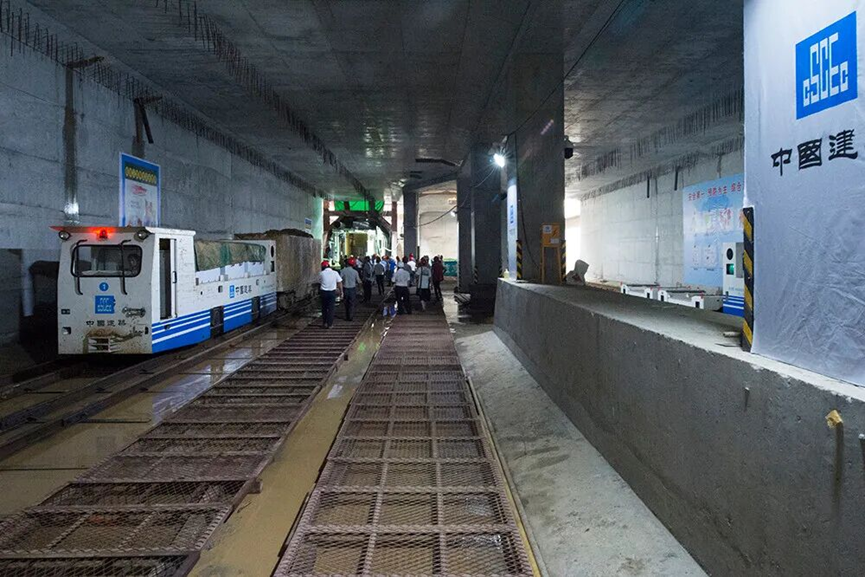
Waterstop bolts are mainly used in underground projects, such as basements, garages, tunnels, culverts, and sewage tanks, where water seepage prevention is required. The part of the bolt with the waterstop plate is left in the middle of the wall for waterproofing, so waterstop bolts are consumable materials.
The price of the waterstop bolt is higher than that of the tie bolt by an additional processing fee. The processing fee for the waterstop bolt includes the cost of the waterstop sheet, positioning sheet, and welding labor. The weight is also heavier by the weight of one waterstop sheet and two positioning sheets. In terms of usage length, they are the same. Special projects are treated specially.
Normally, 3 to 4 bolts are used per square meter. The length is usually the thickness of the wall plus 40 cm. The usage quantity depends on their own performance. The tie bolt is a type of material that can be saved for later use, while the waterstop bolt is a consumable material. Once the waterstop bolt is used up, it needs to be purchased again, but the tie bolt can be reused later.
Specifications of Waterstop Bolts
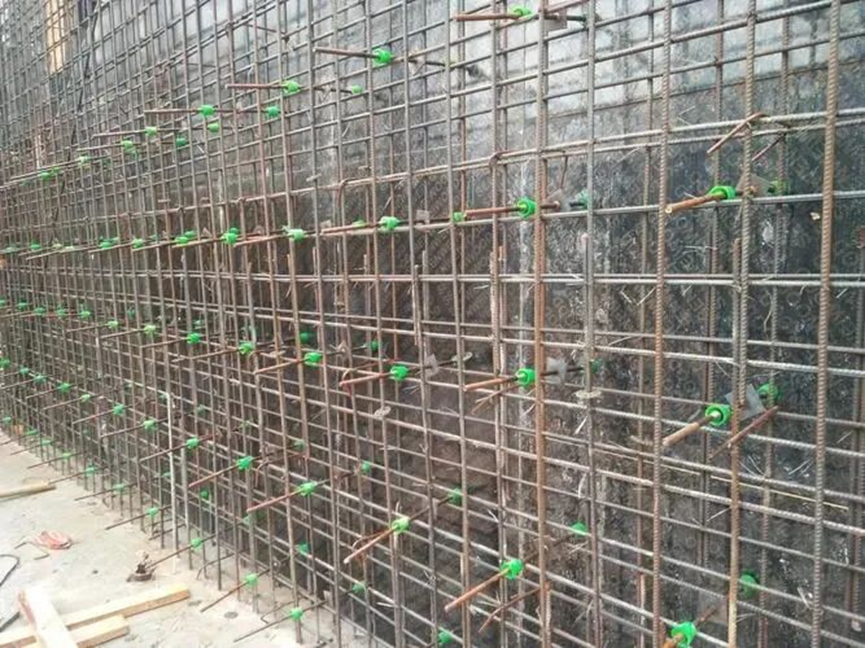
Waterstop bolts are generally composed of an inner rod, an outer rod, a conical screw sleeve and an internal thread hexagonal nut. Their specifications should comply with relevant regulations. After installation, the entire bolt penetrates the wall and needs to withstand the lateral strength and rigidity of the formwork.
Therefore, quality issues should be paid attention to. Additionally, the part of the waterstop bolt protruding from the wall should be cut off, while the part remaining in the wall allows water to seep through the strong bolt.
The specifications of bolts are commonly represented by codes, numbers and letters. Among them, “M” indicates metric, capital letters represent internal threads, and lowercase letters represent external threads. In addition, it also involves nominal diameter, bolt diameter, internal diameter of the thread, weight, pitch, engagement length, etc.
The specifications of the water-stop bolts should comply with the standard requirements of the above-mentioned common bolts. The welding position should also be selected in accordance with the requirements.
During welding, the normal use of the bolts should not be affected. In addition, the welding should be as seamless as possible, with the weld width not less than 8mm and the weld thickness not less than 5mm. The welding surface should be as smooth and flat as possible to reduce errors and keep them within 1mm as much as possible.
In addition, pay attention to the spacing of the water-stop bolts here. According to the water-stop bolt specifications, the general required spacing is between 400 and 600. However, in practice, the adopted spacing is usually larger, within the range of 400 to 600. But in actual application, specific problems should be analyzed specifically, and everything should be based on practicality and usability.
If you are looking for suitable bolts and nuts, please visit us here https://hktl-fastener.com/bolts-and-nuts/.