Principal Findings
Three mainstream surface‑treatment options for pressure‑vessel fasteners are blackening, phosphating and galvanizing. Each process has distinct pros, cons and operating‑environment boundaries. Strict pre‑workpiece cleaning heavily determines final coating quality. Galvanized fasteners are seldom adopted for pressure‑vessel corrosive service conditions.
| Treatment Type | Core Feature | Key Drawback | Process Note |
|---|---|---|---|
| Alkaline‑heating blackening | Stable dense Fe₃O₄ film; low pre‑cleaning demand | Energy‑intensive, toxic fumes, being phased out | Heated at 140 °C for ~40 min |
| Room‑temperature blackening | Low‑cost, simple workflow | Uneven films without thorough degreasing | Rigorous pre‑cleaning is mandatory |
| Phosphating | Anti‑corrosion base layer, improves paint adhesion | Not for standalone heavy‑duty anti‑rust | Multi‑step pre‑treatment required |
| Galvanizing | Zinc sacrificial anti‑rust coating | Zinc reacts with acids/alkalis | Rarely used for corrosive pressure‑vessel environments |
Alkaline‑heating blackening creates compact magnetite oxide films yet generates hazardous vapours and consumes high energy. Room‑temperature blackening needs complete degreasing; poor pre‑cleaning triggers uneven colour, rust spots and weak film adhesion.
Phosphating builds conversion films offering mild base‑metal protection, acting as excellent under‑coat for painting and providing lubrication for cold forming. Its workflow includes degreasing, rust removal, phosphating and post‑treatment. Galvanizing forms sacrificial zinc layers, but zinc dissolves in both acid and alkali media so it sees limited deployment for pressure‑vessel fasteners under corrosive conditions. Select finishes according to the pressure‑vessel’s actual chemical atmosphere.
The common methods for fastening component treatment include: blackening, phosphating, and galvanizing.
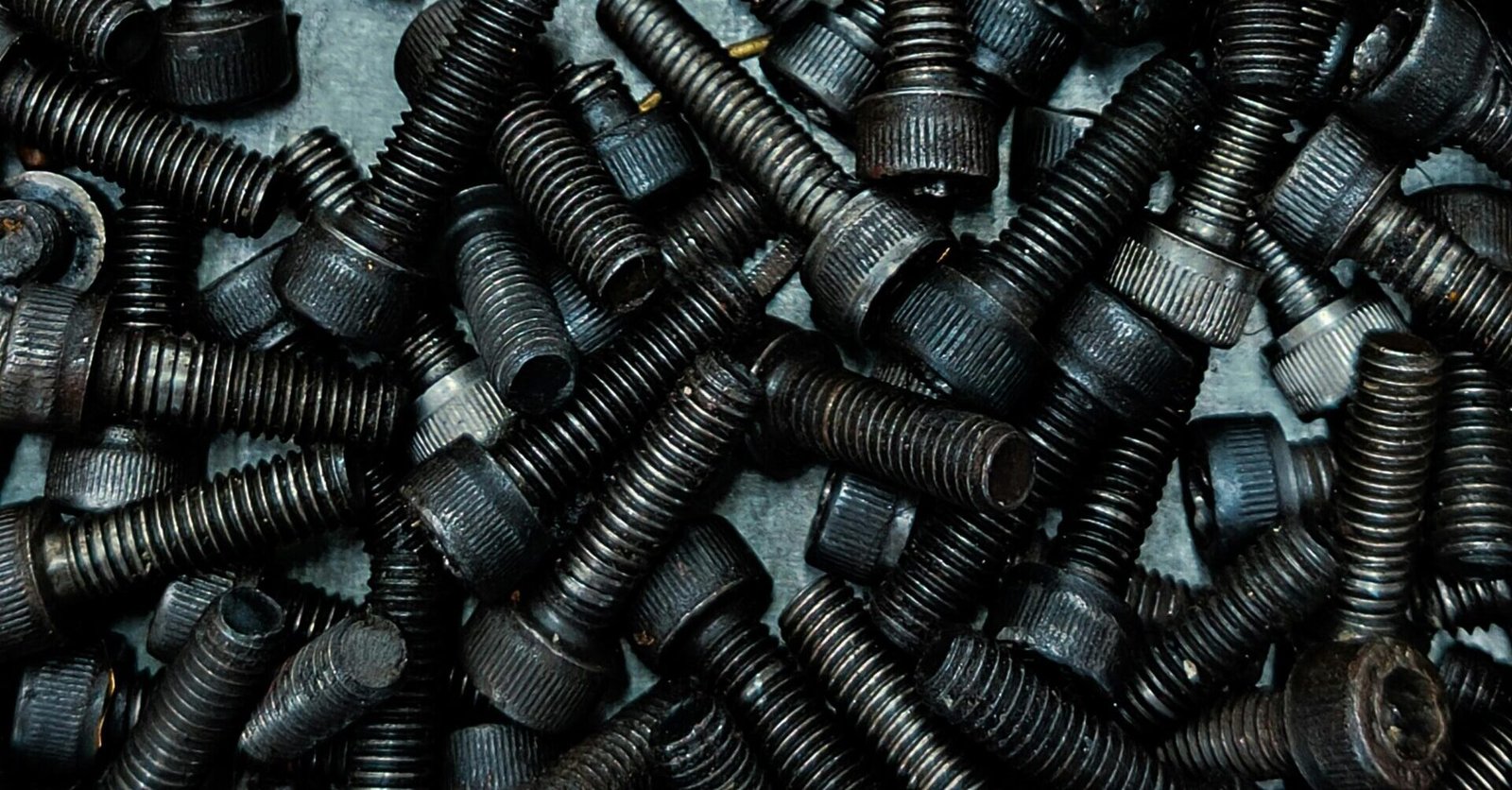
Blackening treatment, also known as bluing treatment, is a method of surface treatment for metals and is currently a widely used metal anti-rust treatment technology. After blackening treatment, the metal surface forms a black hard film, which can protect the metal surface from oxidation and achieve the purpose of anti-rust.
The current common methods of blackening treatment include the traditional alkaline heating blackening and the relatively late appearing room temperature blackening. The main components of the blackening solution are sodium hydroxide and sodium nitrite.

Alkaline heating blackening
Alkaline heating blackening is the most typical blackening method for steel, with relatively mature technology and stable blackening quality. It is currently the most widely used blackening process. This method uses concentrated solutions of NaNO2 and NaOH.
The steel parts to be blackened are placed in this solution and heated at 140℃ for about 40 minutes. X-ray diffraction analysis results show that a dense crystalline structure Fe3O4 film is formed on the surface of the steel parts.
This oxide film has good adhesion and anti-corrosion properties and is in good contact with the surface of the steel substrate. The blackening process is carried out under high temperature and strong alkaline medium, so the requirement for oil removal before processing the workpiece is not very high.
Disadvantages: Alkaline heating blackening is carried out under heating conditions. This treatment technology has significant disadvantages. For example, it is labor-intensive, time-consuming, and energy-consuming. In addition, the blackening agent will vaporize harmful gases under heating conditions, which is harmful to human health. Therefore, it is currently being phased out.
Normal temperature blackening technology
The steel normal temperature blackening agent has the advantages of stable solution, short blackening time with suitable color, convenient and simple usage process, sufficient raw materials, and low cost. Especially, the adhesion of the blackening film layer and the corrosion resistance are significantly better than those of the original product.
The most crucial step in using the normal temperature blackening solution is the pre-cleaning of the workpiece. Before blackening, the workpiece must be cleaned with an oil removal cleaning agent; otherwise, the blackening effect will be affected.
The common defects of blackening in the normal temperature blackening agent include uneven blackening film layer, light blackening film color, poor luster, rust spots, and poorer firmness than alkaline blueing. Each defect has corresponding elimination methods in the manufacturing process.

Phosphating
is a process where chemical and electrochemical reactions form a phosphate chemical conversion film. The formed phosphate conversion film is called a phosphating film.
The main purposes of phosphating are: to provide protection for the base metal, preventing the metal from being corroded to a certain extent; used as a primer before painting to improve the adhesion and corrosion resistance of the paint film; and to play a role of reducing friction and lubricating during the cold processing of metals.
Common process flow: pre-degreasing → degreasing → rust removal → water washing → (surface treatment) → phosphating → water washing → phosphating post-treatment

Galvanization
It refers to a surface treatment technology where a layer of zinc is plated on the surface of metals, alloys or other materials to achieve aesthetic and anti-rust effects.
Zinc hardly changes in a dry air environment. It is soluble in acids and also in alkalis, so it is called a dual-metal. Therefore, zinc-plated fasteners are less used in pressure vessel corrosion environments.
If you are looking for suitable bolts and nuts, please visit us here https://hktl-fastener.com/bolts-and-nuts/.