

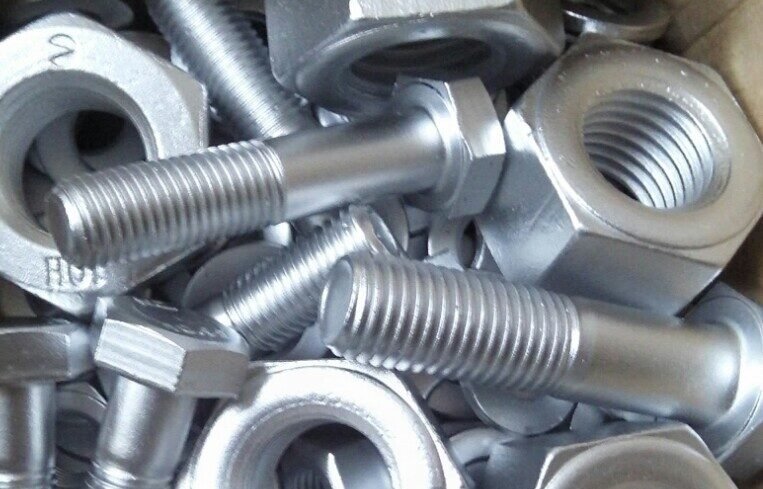
This article explores six of the most commonly used surface treatment processes based on the following criteria: electrical galvanizing, electro-galvanizing nickel (galvanized nickel alloy), mechanical galvanizing, non-electrolytic zinc sheet coating, hot-dip galvanizing and epoxy resin coating.

1. Safety of connection – Incorrect surface treatment can easily lead to failure of the fastening connection.
2. Corrosion resistance – How long is the expected service life of the product and in what kind of environment will it be used?
3. Protection against damage during operation – How do scratches and abrasions caused during operation and installation affect the surface treatment?
4. Criticality of connection – Will the assembly fail if the connection loosens? What are the consequences of assembly failure?
5. Functionality – Will the surface treatment prevent the assembly of fasteners due to blocked threads or slots?
6. Feasibility – Is the surface treatment readily available?
7. Cost – Can the surface treatment bring cost benefits to my assembly?
This article focuses on the following commonly used surface treatments:
• Electro-galvanizing (“commercial” galvanizing)
• Electro-galvanizing nickel
• Mechanical galvanizing
• Non-electrolytic zinc sheet coating
• Hot-dip galvanizing
• Epoxy electrophoretic coating
Safety
The main safety issue to consider when choosing a surface treatment for fasteners is how to avoid hydrogen embrittlement. Hydrogen embrittlement (HE) is a delayed, catastrophic failure of high-strength fasteners induced by hydrogen and under tensile load.
Using the wrong surface treatment on a high-strength fastener can cause hydrogen embrittlement. So what are the “high-strength fasteners” that people are concerned about causing hydrogen embrittlement?
Fasteners that are considered to have a risk of hydrogen embrittlement have a hardness of over 380HV; for example, but not limited to:
• Metric performance grade 12.9
• British standard alloy hexagon socket head cap screws
• Surface-hardened external thread fasteners with machine threads, such as thread-forming screws or surface-hardened serrated flange screws
• Cone-shaped elastic washers
• Straight or rolled elastic cylindrical pins
• Retaining rings
To eliminate the risk of hydrogen embrittlement in the above fasteners, acid pickling and/or electroplating should be avoided as much as possible. Appropriate measures can be taken to reduce the risk of hydrogen embrittlement, such as baking immediately after electroplating, but these measures can only reduce the risk and cannot completely eliminate it.
Fastener Corrosion Prevention
What is the expected service life of fasteners and in what kind of environment will they be used? ASTM B633 defines “service conditions” as follows:
• Service Condition 1: Light – Exposed to minimal condensation and minimal wear in an indoor environment. Examples: buttons, wire products, fasteners.
• Service Condition 2: Moderate – Mainly exposed to dry indoor environments but occasionally affected by condensation and wear. Examples: tools, zippers, drawer slides, machine parts.
• Service Condition 3: Severe – Exposed to condensation, sweat, rare wet rain, and cleaning agents. Examples: tubular furniture, insect screens, door and window hardware, building hardware, military hardware accessories, washing machine parts, bicycle parts.
• Service Condition 4: Extremely Severe – Exposed to harsh conditions or frequently affected by damp environments, cleaning agents, and salt solutions, along with surface indentations, scratches, or wear. Examples: sanitary ware, utility pole accessories.
Preventing damage during operation
Damage during operation can be defined as scratches and abrasions during transportation and/or installation, which requires attention to the surface treatment of fasteners. If not handled properly during operation and installation of fasteners, those softer or very brittle surface treatments will enter the corrosion cycle earlier.
How the surface treatment adheres better to the fastener is also a key factor in maintaining good anti-corrosion performance during operation.
The criticality of connection
Will a loose connection lead to assembly failure? What are the consequences of assembly failure? The locking and maintaining of the lock of the connection completely depend on the appropriate clamping force. A good connection design with the correct clamping force will definitely not loosen.
And what does this have to do with the surface treatment of the fastener? Most connections are controlled by torque during assembly to ensure a predictable and repeatable clamping force generated by continuous connection friction.
Some surface treatments have a certain coefficient of friction, while others do not. If the continuous and repeatable clamping force is crucial to the existence of the connection, then a surface coating with a known coefficient of friction should be used.
Functionality:
The surface treatment of small-sized diameter fasteners and threaded fasteners with internal drive locking mechanisms may not be easy to perform well. The type of surface treatment and application method may cause additional coating materials to remain in the threads and/or slots. Please refer to the following limitations and suggestions.
The following guidance provides the most common surface treatment processes for fasteners to help you make an informed choice:
Electro-galvanizing (“commercial” galvanizing)
• Safety: High-strength fasteners have a risk of hydrogen embrittlement
• Corrosion resistance: Light to moderate corrosion resistance
• Resistance to damage treatment: Average
• Critical connections: Difficult to control friction
• Functionality: No problem for small-sized threads or slots
• Cost: Low
• Availability: High
• Recommended use: Any fastener with light to moderate corrosion resistance requirements and hardness below HRC38
Electro-galvanizing-nickel
• Safety: Lower risk of hydrogen embrittlement than electro-galvanizing, but still a risk
• Corrosion resistance: High to extremely high corrosion resistance
• Resistance to damage treatment: Good
• Critical connections: Difficult to control friction
• Functionality: No problem for small-sized threads or slots
• Cost: High
• Availability: Low
• Recommended use: Any fastener with high to extremely high corrosion resistance requirements and hardness below HRC38. If the baking process is properly controlled and handled, this may be the best alternative for small-sized, high-strength fasteners up to and including M6.
Mechanical galvanizing
• Safety: No risk of hydrogen embrittlement
• Corrosion resistance: Light to moderate corrosion resistance
• Resistance to damage treatment: Average
• Critical connections: Difficult to control friction
• Functionality: Poor adhesion to slots or holes – not recommended for use on threaded components
• Cost: Medium/High
• Availability: Medium/Low
• Recommended use: Any high-strength washers and pins (hardness above HRC38), generally not recommended for use on threaded fasteners.
Zinc flake coating (Dacromet)
• Safety: No risk of hydrogen embrittlement
• Corrosion resistance: High to extremely high corrosion resistance
• Resistance to damage treatment: Average
• Critical connections: Excellent control of friction performance
• Functionality: Generally not recommended for use on fasteners smaller than M8 or with internal drive mechanisms.
• Cost: Medium
• Availability: Medium
• Recommended use: Large-sized fasteners (greater than M6), with high to extremely high corrosion resistance requirements, and/or for applications where clamping force is required and connection integrity is of great importance.
Hot-dip galvanizing
• Safety: Low risk of hydrogen embrittlement for high-strength fasteners; do not use on 12.9 or alloy steel grade components due to possible tempering hardness during the processing.
• Corrosion resistance: High to extremely high corrosion resistance
• Resistance to damage treatment: Excellent
• Critical connections: Difficult to control friction
• Functionality: Generally not recommended for use on fasteners smaller than M8 or with internal drive mechanisms. – The nut/internal thread needs to be re-threaded after coating treatment.
• Cost: Medium
• Availability: Medium
• Recommended use: Outdoor structural applications.
Epoxy electrophoretic coating
• Safety: No risk of hydrogen embrittlement
• Corrosion resistance: Moderate to high corrosion resistance
• Resistance to damage treatment: Average
• Critical connections: Excellent control of friction performance
• Functionality: Generally used on small-sized fasteners with internal drive mechanisms, or on products with threads equal to or larger than M4 without any problem.
• Cost: High
• Availability: Low
• Recommended use: Self-tapping locking screws or black appearance screws with high decorative requirements.
Hexavalent chromium (Cr VI or Cr 6+) contained in the surface treatment of fasteners. Hexavalent chromium is currently regulated in many countries. It was widely used in the surface treatment of fasteners in the past and can still be found in some regions today. Among all the surface treatment methods mentioned above, “hexavalent chromium-free” is selected.
If you are looking for quality fasteners, please visit us here https://hktl-fastener.com/.

