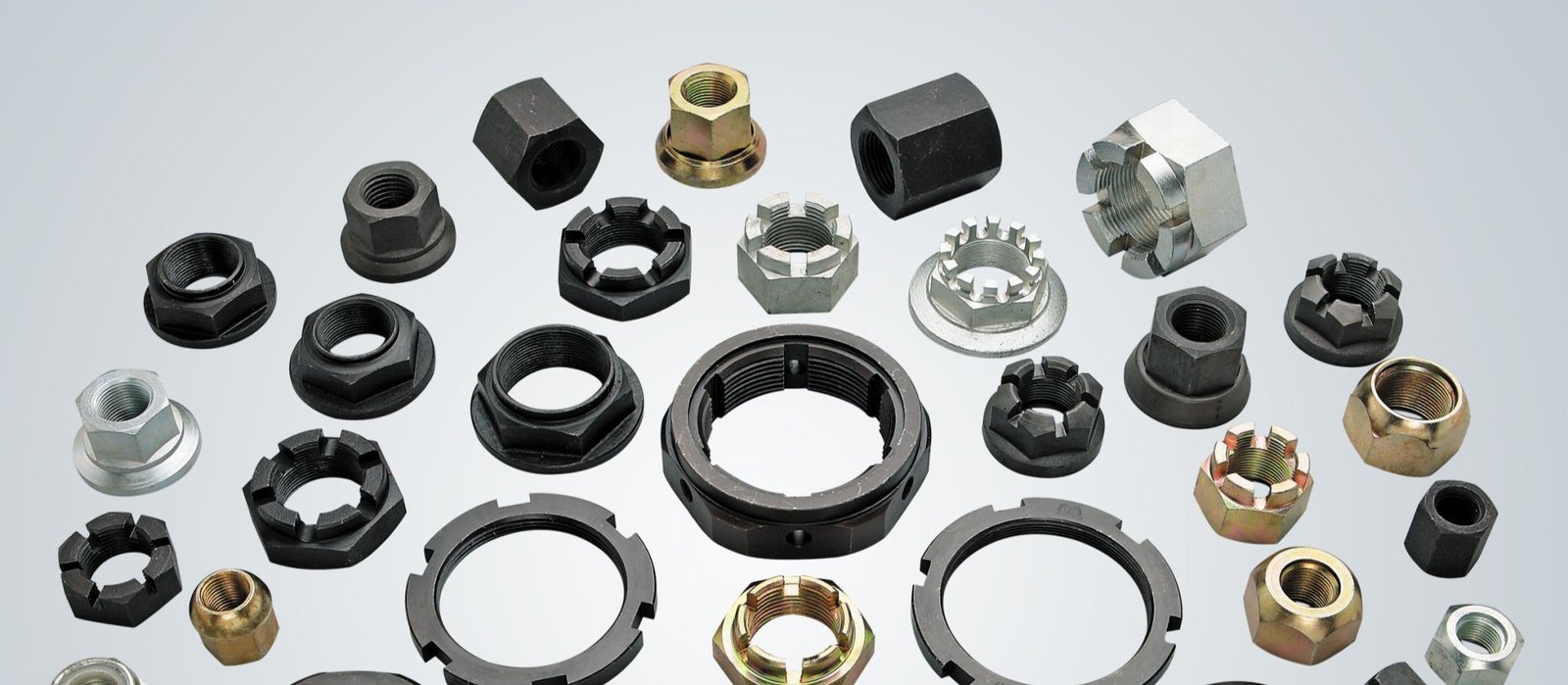
As essential components for connecting and securing various parts, fasteners not only impact a vehicle’s structural strength and stability but also directly influence its safety, durability, and production efficiency.
With the advancement of the automotive industry and technological progress, demands on fasteners continue to rise. From early simple bolts and nuts to today’s high-performance materials and precision machining techniques, the evolution of fasteners has paralleled the continuous advancement of the automotive industry.
This article explores the specific applications of fasteners in automotive manufacturing, analyzes the characteristics and functions of different fastener types, and reveals the multifaceted roles fasteners play in vehicle production.
Fasteners play a crucial role in automotive manufacturing.

I. Basic Concepts and Classification of Fasteners
Fasteners are a category of universal components used to connect mechanical parts, widely applied across various machinery and industrial sectors. Based on their purpose and performance, fasteners can be classified into multiple types, including bolts, nuts, screws, washers, rivets, and more. Each type possesses unique characteristics and specific application scenarios.
1. Bolts
Bolts are common fasteners primarily used to connect two or more components. Typically paired with nuts, they achieve secure fastening through clamping force generated by rotation. Bolt performance and applicability are influenced by material composition, strength grade, and surface treatment methods.
2. Nuts
Nuts are typically paired with bolts, primarily functioning to create a secure connection through their internal threads engaging with the bolt. Nuts come in various types and specifications. Depending on the application, different nut types can be selected, such as hex nuts, lock nuts, flange nuts, etc.
3. Screws
Screws are commonly used to directly fasten one component to another, often found in small assemblies or lightweight connections. Screws can be further categorized based on thread type and head shape, including self-tapping screws, machine screws, wood screws, and others.
4. Washers
Washers are thin discs placed between bolts/screws and the connected components. They increase contact area, reduce surface pressure, prevent loosening, and enhance joint stability. Washer material and shape directly impact their functionality and effectiveness.
5. Rivets
Rivets are fasteners that do not require threads and are primarily used for permanent connections. They mechanically join components together, commonly used in metal sheet connections such as vehicle body structures.
II. Specific Applications of Fasteners in Automotive Manufacturing
Automotive manufacturing requires extensive use of fasteners across various vehicle components, including the body, chassis, engine, and interior. Different locations impose distinct demands on fasteners, necessitating careful consideration of performance, material, strength, corrosion resistance, and other factors during selection and application.
1. Fastener Applications in Body Structures
The body structure serves as the vehicle’s skeleton, bearing primary loads. To ensure body rigidity and strength, high-strength bolts and rivets are extensively employed. These fasteners must possess high tensile and shear strength to guarantee structural stability under diverse operating conditions.
2. Application of Fasteners in the Chassis System
The chassis system encompasses the suspension, steering, and braking systems, which directly impact vehicle handling and safety. Consequently, fasteners used in the chassis system must not only exhibit high strength but also possess excellent fatigue resistance to withstand complex road conditions and prolonged wear.
3. Fastener Applications in Engine and Transmission Systems
The engine and transmission system serve as the vehicle’s power source and power transmission mechanism, involving numerous fasteners such as bolts, nuts, and washers. These fasteners typically endure high temperatures, pressures, and vibrations.
Consequently, high-strength alloy steels are commonly selected for their material composition, supplemented by specialized heat treatment and surface finishing to enhance durability and fatigue resistance.
4. Fastener Applications in Interior Trim and Assembly
Assembling automotive interiors requires numerous small fasteners like screws and clips. These components must ensure secure installation while considering aesthetics and assembly convenience. Additionally, interior fasteners require excellent corrosion resistance to withstand diverse cabin environments.
III. Data Analysis of Fastener Usage in Automotive Manufacturing
The quantity and quality of fasteners directly impact automotive manufacturing costs, efficiency, and quality. Data analysis enables effective monitoring and optimization of fastener usage, thereby enhancing production efficiency and reducing manufacturing costs.
1. Data Analysis of Fastener Usage Volume
In automotive manufacturing, fastener usage volume is a critical metric. Statistical analysis of fastener usage across different vehicle models and production lines reveals patterns in fastener demand for various vehicle types. For instance, SUV models typically require more high-strength fasteners than sedans due to their unique body structures and chassis systems.
2. Quality Inspection Data Analysis for Fasteners
Fasteners’ quality directly impacts vehicle safety. By testing metrics such as strength, hardness, and fatigue resistance, and analyzing the inspection data, manufacturers can evaluate the quality consistency of fasteners across different suppliers and production batches. This data assists companies in selecting high-quality suppliers and mitigating product quality risks.
3. Failure Mode and Root Cause Analysis of Fasteners
In practical use, fastener failure can lead to severe safety incidents. By analyzing failed fasteners to identify failure modes (e.g., fracture, loosening, corrosion) and root causes, targeted improvements can be made to fastener design and usage methods, enhancing overall vehicle safety performance.
4. Lifecycle Management of Fasteners
Fasteners undergo comprehensive lifecycle management spanning design, procurement, usage, and disposal. Tracking and analyzing data throughout this lifecycle optimizes selection, usage, and maintenance strategies, extending service life and reducing maintenance costs.
IV. Advances in Fastener Technology and Future Trends
As the automotive industry evolves, fastener technology continues to advance. From material innovations and enhanced manufacturing processes to the development of intelligent assembly techniques, fasteners are becoming increasingly efficient and reliable in automotive production.
1. Application of New Materials
Traditional fasteners primarily use carbon steel or alloy steel. However, with progress in materials science, an increasing number of new materials are being adopted in fastener manufacturing. For instance, lightweight materials like titanium alloys and aluminum alloys, valued for their superior strength-to-weight ratio and corrosion resistance, are increasingly prevalent in high-end automotive manufacturing.
2. High-Precision Machining Technologies
Advancements in precision machining have significantly enhanced fastener manufacturing accuracy. Through advanced techniques like CNC machining and laser processing, fasteners with precise dimensions and superior performance can be produced, meeting the high-precision demands of modern automotive manufacturing.
3. Intelligent Assembly and Inspection Technologies
Smart manufacturing represents the future trajectory of the automotive industry. During fastener assembly, technologies like intelligent torque control systems and automated assembly lines substantially enhance assembly efficiency and precision. Furthermore, advancements in intelligent inspection technologies enable faster and more accurate quality control of fasteners, effectively reducing production defects.
4. Green Environmental Protection and Sustainable Development
Increasingly stringent environmental regulations drive the automotive manufacturing industry to continuously seek green and eco-friendly solutions. The production and use of fasteners are also evolving toward environmental sustainability.
Measures such as optimizing designs to reduce material consumption, employing eco-friendly surface treatment technologies, and enhancing the recyclability of fasteners are progressively realizing the greening and sustainable development of fastener production.
As indispensable foundational components in automotive manufacturing, the importance of fasteners cannot be overlooked. By analyzing application scenarios, performance requirements, and data, enterprises can better select and manage fasteners, thereby enhancing vehicle quality and production efficiency.
Simultaneously, driven by technological advancements and evolving market demands, fastener technology continues to innovate, providing robust support for the automotive industry’s development.
Looking ahead, as the automotive industry evolves toward intelligent, lightweight, and eco-friendly directions, fasteners will encounter both greater challenges and opportunities. Through continuous technological innovation and optimized management, fasteners will continue to play a vital role in automotive manufacturing, contributing to the sustainable development of the automotive industry.
If you are looking for quality fasteners, please visit us here https://hktl-fastener.com/.