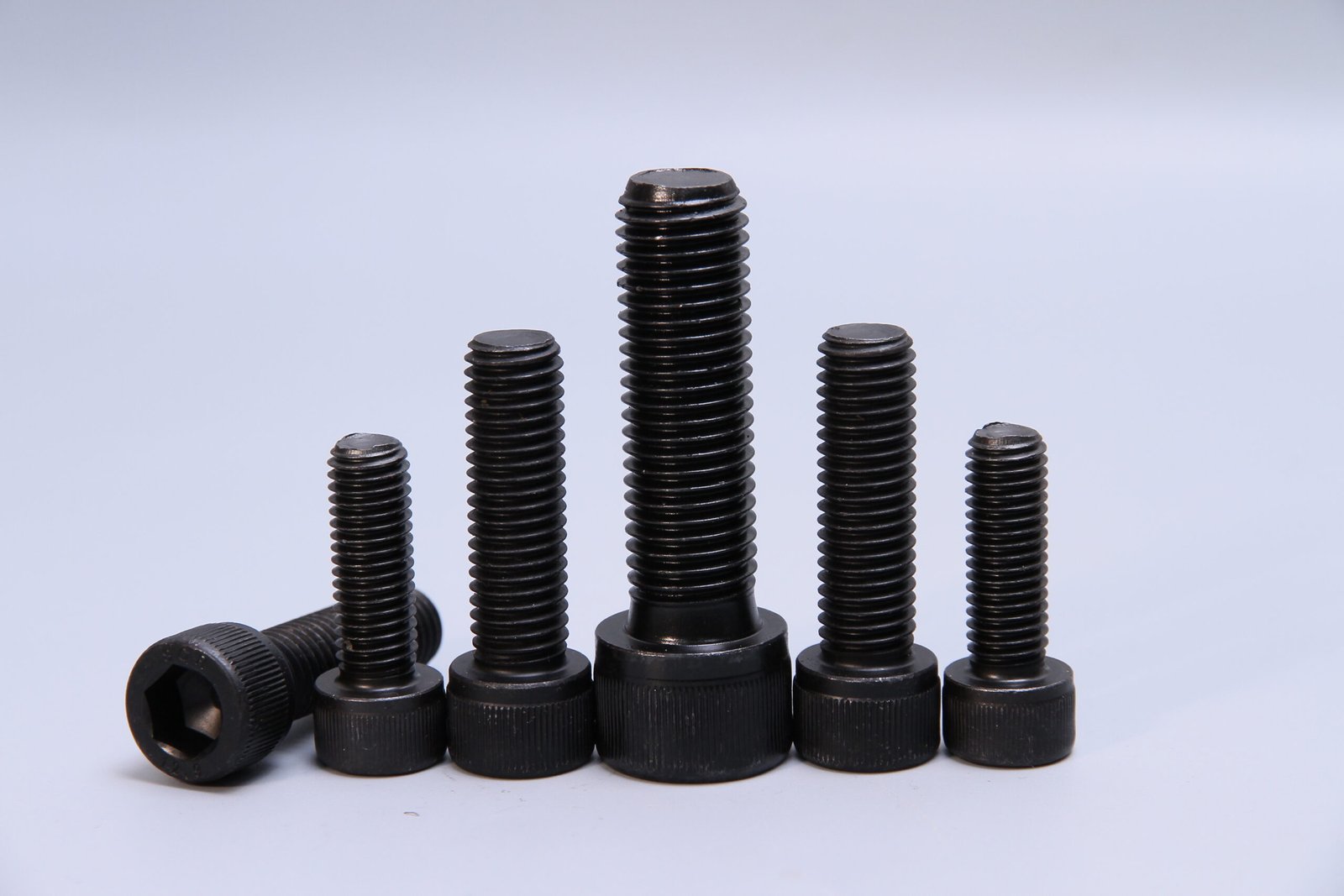
Principal Findings
High‑strength bolts (≥ 8.8 grade) are frequently black mainly due to hydrogen‑embrittlement risk avoidance. Blackening (oxidation) / phosphating are chemical conversion treatments without electrolytic steps, so hydrogen will not infiltrate steel. It is the safest and most‑cost‑effective option for high‑strength bolts, not for visual‑aesthetic purposes. Color cannot be used to judge bolt strength; strength must be verified by head marking.
| Item | Main Points |
|---|---|
| Root‑cause safety risk | Electroplating / galvanizing are electrolytic processes, generating hydrogen atoms that penetrate high‑strength steel. Under tension, hydrogen‑induced delayed brittle fracture may occur below design load, which is concealed and hazardous. |
| Blackening‑treatment merits | Pure chemical conversion process; no electrolysis, no hydrogen‑introduction. Delivers stable friction‑coefficient for accurate pre‑load / torque control, moderate wear‑resistance, basic rust‑protection and low‑cost. |
| Related alternative | Phosphating (black‑grey appearance) also avoids hydrogen‑embrittlement and is widely‑used for high‑strength bolts. |
Critical clarifications & misconception correction
- Colour ≠ strength: Ordinary 4.8‑grade bolts can also be blackened. Strength grade must be read from embossed markings (8.8 /10.9 /12.9), not judged by surface colour.
- High‑strength bolts are not forced to be black:
- High‑strength stainless‑steel bolts (A4‑80): retain metallic silver finish.
- Corrosive‑environment applications adopt hydrogen‑safe Dacromet (silvery‑grey).
- Galvanized high‑strength bolts exist but require strict dehydrogenation baking.
- Limitation: Blackening only provides limited anti‑rust capability. For humid service conditions, supplementary anti‑rust oil is recommended.
Typical engineering‑selection logic
- Specify high‑strength bolt grade according to mechanical‑load requirements;
- Select hydrogen‑embrittlement‑free surface‑treatment (blackening / phosphating / Dacromet);
- Resulting surface appears mostly black.
High-strength bolts in mechanical equipment and important structures are often black, not for aesthetic reasons, but as a necessary choice in manufacturing processes.
The core reason lies in avoiding the risk of hydrogen embrittlement for high-strength bolts.
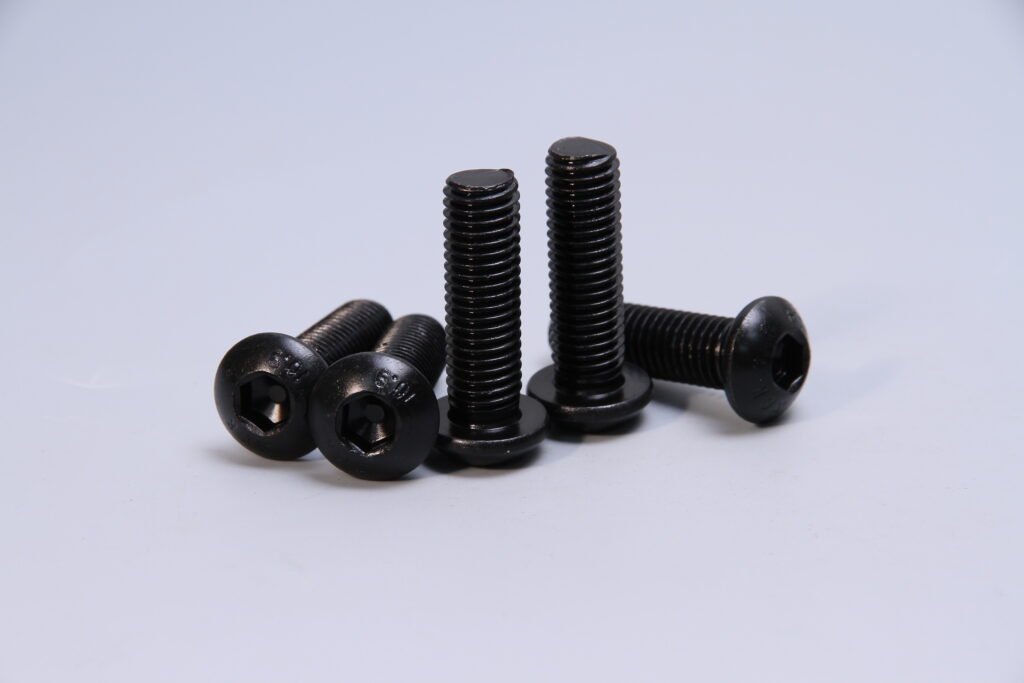
Black (usually blackening treatment) as a pure chemical surface conversion process can eliminate the risk of hydrogen embrittlement caused by electroplating and other electrolytic processes from the root, while providing a stable friction coefficient and basic rust prevention ability. It is the safest and most economical surface treatment option for high-strength bolts.
In our actual mechanical equipment and important structures, the black bolts we often see are indeed high-strength bolts. Why is that? Is it because they look good?
In fact, there is a clear engineering logic behind this. The reason lies in: it is not that blackness gives high strength, but the requirements for manufacturing high-strength bolts make “black” (usually blackening treatment) the most suitable and safe surface treatment option.
01 Key reason: Avoiding “hydrogen embrittlement” risk
This is the most crucial reason. For high-strength bolts (typically grade 8.8 and above), the steel used is highly sensitive to a failure mode called “hydrogen embrittlement”.
- The harm of hydrogen embrittlement: During surface treatments like electroplating (such as common galvanizing), hydrogen atoms are produced and may penetrate the steel lattice. Subsequently, when the bolt is under tension, hydrogen atoms accumulate at stress concentration points, potentially causing delayed fractures at loads lower than the design load. This failure is concealed and dangerous.
- The advantage of blackening treatment: The most common black treatment is “blackening treatment” (oxidation treatment). It is a pure chemical surface conversion process where an alkaline or acidic solution reacts with steel at high temperatures to form a dense layer of iron oxide.
This process does not involve any electrochemical reactions, thus eliminating the introduction of hydrogen atoms from the root and is the most economical and reliable option for avoiding hydrogen embrittlement risk.
02 Other considerations
Apart from safety factors, blackening treatment also has the following advantages, making it a common choice for high-strength bolts:
- Stable friction coefficient: The treated surface has a relatively stable friction coefficient, which is crucial for high-strength bolt connections that require precise control of preload (torque).
- Good wear resistance: The surface oxide layer has certain wear resistance, capable of withstanding the tightening operation during installation.
- Cost-effectiveness: The material and heat treatment costs of high-strength bolts are already high. Blackening, as a simple and low-cost treatment method, can provide basic rust protection without significantly increasing the total cost.
03 Important clarifications and notes
To avoid misunderstandings, the following points must be made clear:
1. Color is not a strength indicator: This rule cannot be reversed. Many bolts of ordinary strength (such as grade 4.8) are also blackened for rust prevention. The only reliable way to determine the strength of a bolt is the performance grade number engraved on the head or shank (such as 8.8, 10.9, 12.9).
2. Black treatment is not limited to one type: Besides blackening, phosphating treatment (often blackish-gray) also provides similar protection against hydrogen embrittlement and is commonly used for high-strength bolts.
3. High-strength bolts can also be other colors:
- Stainless steel color: High-strength stainless steel bolts (such as grade A4-80) usually retain their metallic color.
- Special coatings: In highly corrosive environments (such as car chassis), coatings like Dacromet that do not pose hydrogen embrittlement risks are used, with a silver-gray appearance.
- Galvanizing is also common, and there are several other types not listed here.
04 A simple summary
In summary, the black color of high-strength bolts is not for aesthetics but a necessary choice in manufacturing to ensure safety and reliability. Understanding this helps avoid misunderstandings and ensures proper use of these critical components. In our actual work, our selection logic should typically be as follows:
First, determine that high-strength bolts (such as grade 10.9) must be used based on mechanical requirements → To ensure safety, a surface treatment process that does not cause hydrogen embrittlement must be selected → Therefore, blackening/phosphating treatment becomes the most common and reliable choice → Ultimately, the bolts appear black.
So, when black bolts are seen in critical parts, it can be reasonably inferred that they are high-strength components selected after safety considerations, but this cannot replace the confirmation of the bolt grade marking. If the black bolts are used in a humid environment, it should be noted that their basic rust prevention ability is limited and rust preventive oil may need to be used in combination.
If you are looking for suitable bolts and nuts, please visit us here https://hktl-fastener.com/bolts-and-nuts/.