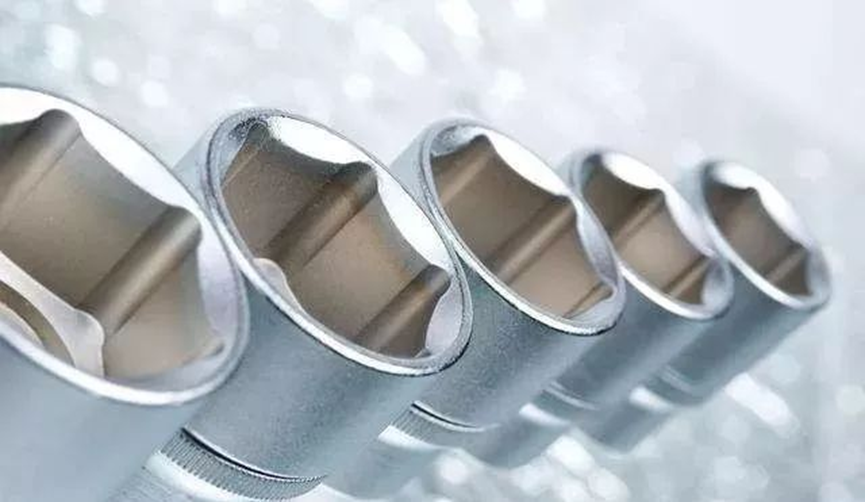
Fasteners are currently widely used in engineering fields such as machinery, construction, bridges and oil extraction. As the basic units of large structural components, many fasteners will develop defects such as cracks, corrosion, pits and man-made damages during operation. Among them, crack defects account for a large proportion and are highly harmful, seriously threatening the safety and reliability of existing structures and mechanisms.
Crack detection is the inspection and assessment of mechanical structures to determine whether cracks exist, and to identify their location and severity. With the rapid development of modern mechanical manufacturing, electronic technology, and computer technology, non-destructive testing (NDT) technology has made significant progress, and crack detection technology has also developed rapidly.
Non-destructive testing for cracks in fasteners
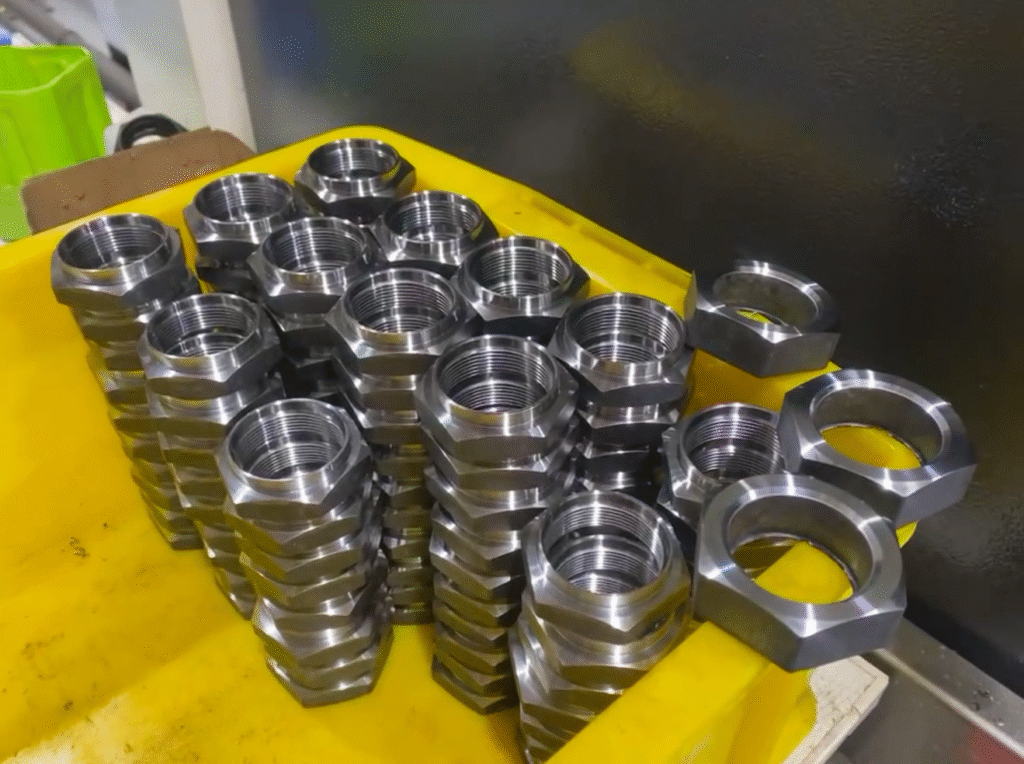
This paper first introduces traditional crack detection methods, and on this basis, summarizes modern NDT methods based on wavelet analysis and electromagnetic (eddy current) pulses, and points out the hotspots and directions of crack detection methods for fasteners.
01 Traditional Crack Detection Methods
There are many traditional crack detection methods, which can be divided into conventional and unconventional detection methods. Conventional detection methods include eddy current testing, penetrant testing, magnetic particle testing, radiographic testing, and ultrasonic testing. Unconventional detection methods include acoustic emission, infrared testing, and laser holographic testing.
(1) Conventional Detection Methods
Currently, simple crack detection in engineering fields such as machinery, construction, and oil extraction generally uses conventional detection methods. Different detection methods are used for different structures.
For example, ultrasonic testing is mainly applied to the inspection of metal plates, pipes, and bars, castings, forgings, and welds, as well as concrete structures in bridges and buildings; radiographic testing is mainly used for the inspection of castings, welds, and other components in fields such as machinery, weapons, shipbuilding, electronics, aerospace, and petrochemicals;
Magnetic particle testing is mainly used for the inspection of metal castings, forgings, and welds; penetrant testing is mainly used for the inspection of castings, forgings, welded parts, powder metallurgy parts, and ceramic, plastic, and glass products made of non-ferrous and ferrous metals; eddy current testing is mainly used for the inspection of conductive pipes, bars, and wires, as well as material sorting.
For crack detection in fasteners, ultrasonic testing and eddy current testing can be used. For example, in the experimental study on the optimal eddy current testing parameters for small cracks in fasteners, the optimal parameter range where the eddy current testing parameters and phase signals show a linear relationship was obtained, which has important guiding significance for improving the detection accuracy of small cracks in bars and the selection of eddy current testing parameters for external fasteners.
However, eddy current testing has many interfering factors and requires special signal processing techniques. There is also the Lamb wave propagation energy spectrum structure crack detection method, which has the advantages of strong penetration, high sensitivity, and convenience, but it sometimes has blind spots and blockage phenomena, making it difficult to detect nearby cracks and to qualitatively and quantitatively characterize the defects found.
For most fasteners, magnetic particle testing and fluorescent penetrant testing are used, which have relatively high detection efficiency but consume a lot of manpower and material resources, and can harm human health. Moreover, due to the influence of human factors, missed detections often occur.
(2) Unconventional inspection methods
When inspecting fasteners for cracks and conventional inspection methods fail to meet the required objectives, unconventional inspection methods can be considered. The following are three commonly used unconventional crack detection methods.
1) Acoustic emission technology
This technology is most mature in crack detection of pressure-bearing equipment and has achieved relatively ideal results in safety assessment of pressure vessels and pressure-bearing pipelines. It has also been vigorously developed in crack detection of aerospace, composite materials, etc.
For crack diagnosis of rotating machinery, it has developed to a certain extent in fatigue crack detection of rotating shafts, gears and bearing crack detection, etc. The advantage of acoustic emission is that it is a dynamic detection method. The energy detected by acoustic emission comes from the tested object itself, rather than being provided by non-destructive testing instruments like ultrasonic or radiographic testing.
Acoustic emission detection is very sensitive to defects and can detect and evaluate the active defect state in the structure as a whole. The disadvantages are that the detection is greatly affected by materials; the detection room is affected by electrical noise and mechanical noise; the positioning accuracy is not high, and the identification of cracks can only provide limited information.
2) Infrared detection
It is mainly applied in the detection of power equipment, petrochemical equipment, mechanical processing, fire detection, superior crop seeds, and non-destructive testing of defects in materials and components. The advantages of infrared non-destructive testing technology lie in its non-contact detection method, high spatial resolution at a long distance, safety and reliability, no harm to the human body, high sensitivity, wide detection range, fast speed, and no impact on the tested object.
The disadvantages of infrared detection are that its detection sensitivity is related to the thermal emissivity, thus being interfered by the surface and background radiation of the test piece, affected by the size and depth of the defect, having poor resolution for the original test piece, being unable to accurately determine the shape, size and location of the defect, and having complex interpretation of the detection results, which requires reference standards and trained operators.
3) Laser holographic detection
It is mainly used for the detection of honeycomb structures, composite materials, defects between the outer shell, insulation layer, coating layer and propellant column of solid rocket engines, the quality of solder joints on printed circuit boards, and fatigue cracks in pressure vessels, etc. Its advantages are convenient detection, high sensitivity, no special requirements for the tested object, and the ability to quantitatively analyze defects.
The disadvantages are that it can only detect deep debonding defects when the debonding area is relatively large. In addition, laser holographic detection is mostly carried out in a darkroom and requires strict vibration isolation measures, which is not conducive to on-site detection and has certain limitations.
02 Modern Crack Detection Technologies
With the rapid development of science and technology, the requirements for crack detection in engineering fields such as machinery, construction, and oil extraction are getting higher and higher. Therefore, many new crack detection technologies have emerged. Signal processing-based crack detection methods and electromagnetic (eddy current) pulse non-destructive testing are modern commonly used new technologies.
(1) Crack detection methods based on wavelet analysis
With the development of signal processing technology, crack detection methods based on signal processing have emerged, including time-domain, frequency-domain and time-frequency domain methods, mainly including Fourier transform, short-time Fourier transform, Wigner-Ville distribution, Hilbert-Huang transform (HHT), blind source separation, etc.
Among them, the method based on wavelet analysis is the most representative. The crack identification methods directly using wavelet analysis can be divided into the following two types:
1) Analysis methods based on time-domain responses
These include the method of using singular points in time-domain decomposition diagrams, the method of using changes in wavelet coefficients, and the method of using changes in energy after wavelet decomposition. The analysis methods based on time-domain responses aim to identify the moment when crack damage occurs.
2) The analysis method based on spatial response
It is to replace the time axis of the time-domain response signal with the spatial coordinate axis of the spatial position, and conduct wavelet analysis with the spatial domain response as the input. The analysis method based on spatial domain response can determine the location where the crack occurs.
The wavelet method itself can only judge the occurrence time or location of the damage, and the former application is more common. If you want to identify small cracks, you need to combine wavelet with other methods to detect the cracks.
(2) Electromagnetic (eddy current) pulse nondestructive testing
Electromagnetic technology, combined with various functions such as ultrasonic testing, eddy current imaging, array eddy current, and pulse eddy current testing, has formed a new modern electromagnetic testing technology.
Among them, common crack detection technologies include pulse eddy current testing, pulse eddy current thermal imaging technology, dual-probe nondestructive testing of pulse eddy current and electromagnetic acoustic transducer (EMAT), and metal magnetic memory testing technology.
Pulse eddy current uses a pulsed current to excite the coil and analyzes the time-domain transient response signal sensed by the detection probe. The peak value, zero-crossing time and peak time of the signal are selected to quantitatively detect cracks. Yang Binfeng et al. from National University of Defense Technology proved through experiments that pulse eddy current can quantitatively detect cracks at different depths on the tested component with only one scan.
Some researchers used the alternative technology of harmonic coils for pulse eddy current detection. They found that the change in the form of the electric dipole of the contribution of the self-electric field to the total electric field inside the conductor is higher than the change on the conductor measured by the magnetic field sensor, and detected the crack area by finding the distribution density of the electric dipole.
The disadvantage of pulsed eddy current is that the peak of the pulsed eddy current signal is highly susceptible to other factors (such as lift-off effect), and the detection capability of the pulsed eddy current probe also affects the detection of cracks. Pulsed eddy current imaging instruments all use coils as inspection sensors. Some people use Hall sensors as inspection sensors. In recent years, super quantum interference instruments have begun to be applied in the field of non-destructive testing.
The pulsed eddy current thermal imaging technology eliminates the lift-off effect in other detections and avoids distortion of the imaging results. Some researchers have used a YAG laser with a Gaussian beam shape to irradiate the surface of a metal plate, and used pulsed eddy current and electromagnetic acoustic transducer detection technology to identify cracks by the sudden change in the ultrasonic waveform or the sudden increase in the frequency component in the waveform when the laser irradiates the crack.
03 Hotspots in Crack Research
At present, research on crack detection of fasteners is still limited to traditional detection methods. To promote the development of detection technology and solve practical application problems, the current hotspots in crack damage identification mainly focus on the following two aspects: one is the statistical identification method considering the influence of uncertainty, and the other is the identification of micro-cracks in fasteners.
There are many uncertainties in crack damage detection, so it is proposed to use statistical inference methods to deal with system identification problems. With the rapid development of damage identification research, the research on damage identification methods based on probability and statistics theory has been continuously deepened. Currently, the main research and application fields of this method are system identification and pattern recognition.
Nowadays, there are methods for detecting microcracks in fasteners, such as microcrack detection based on ICT technology and laser ultrasonic capture method for identifying microcracks with laser-assisted heating. However, both have their limitations.
For instance, the limitation of microcrack detection based on ICT technology lies in the requirement that the difference between the gray value of the collected image and the background gray value should be large.
If the difference between the gray value and the background gray value is not significant, the details will be difficult to distinguish, thus affecting the image quality and making image acquisition difficult. At the same time, it also poses higher requirements for image post-processing.
Moreover, when extracting microcracks using VG Studio MAX software, it is uncertain to extract the entire spatial range of the microcracks. The limitation of the laser ultrasonic capture method based on laser-assisted heating in identifying microcracks is that the operation is relatively complex and it cannot be used in harsh environments, so it still needs to be developed.
With the continuous development of the social economy, the requirements for the detection methods of cracks in fasteners are getting higher and higher. They must meet the requirements of real-time online detection, high sensitivity, simple operation, and being less affected by external interference, and be able to work in harsh external environments;
Quickly and accurately detect the location, size, width, depth and development trend of cracks, etc.; the detection results can be displayed in image form and analyzed; integrating fast detection speed, high efficiency and intuitive results.
04 Conclusion
Although a considerable amount of research has been conducted on the identification of crack damage in fasteners, the current damage identification methods or indicators are still limited to traditional detection methods. Considering the cost of detection equipment, the usage environment, and human factors, the detection of multiple and micro-cracks in fasteners is a current research hotspot.
To achieve rapid location, precise quantification, and improvement of detection accuracy and reliability, and to achieve good and fast crack detection, these are all the development directions of crack detection in fasteners.
If you are looking for quality fasteners, please visit us here https://hktl-fastener.com/.