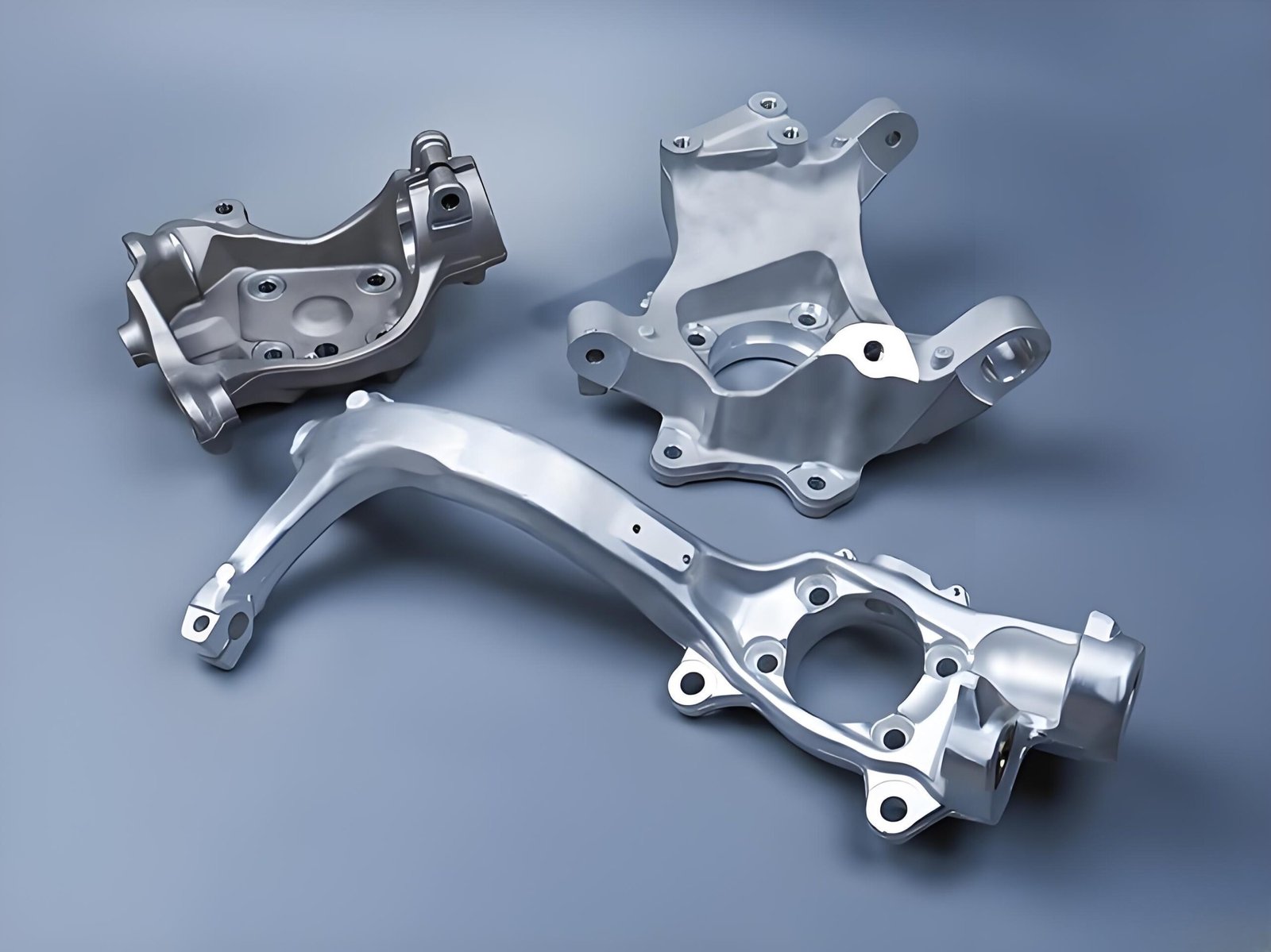
Forging
Forging is widely used in the automotive manufacturing process. With the advancement of technology and the continuous improvement of the precision requirements for workpieces, precision forging technology, which features high efficiency, low cost, low energy consumption and high quality, has been increasingly applied.
According to the different deformation temperatures during metal plastic forming, precision cold forging can be classified into cold forging, warm forging, sub-thermal forging and hot precision forging. The automotive parts produced include: clutch engagement gear rings, input shaft parts for automotive transmissions, bearing rings, universal joint sliding sleeve series products, differential gears and front axles of automobiles.
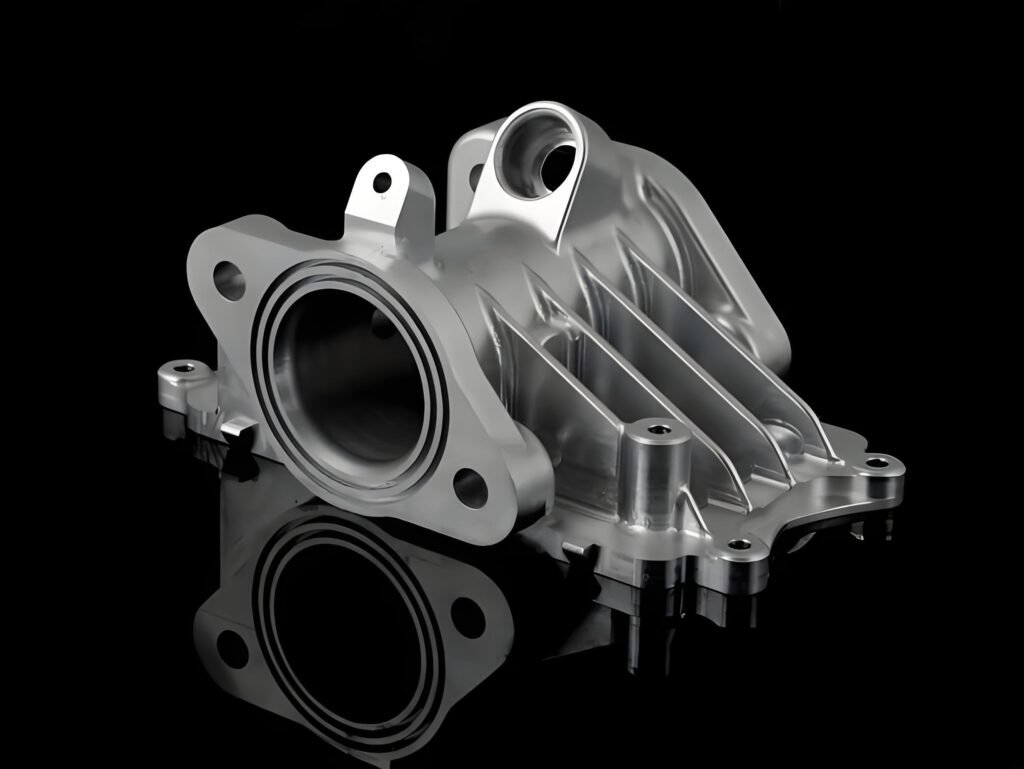
Definition and Classification of Forging
1. Definition of Forging
Forging is a processing method that applies pressure to metal billets using forging machinery to cause plastic deformation and obtain forgings with certain mechanical properties, shapes, and dimensions. It is one of the two major components of forging and stamping.
Forging can eliminate the casting porosity and other defects produced during the smelting process of metals, optimize the microstructure, and since the metal flow lines are preserved intact, the mechanical properties of forgings are generally superior to those of castings made of the same material. In related machinery, for important parts that bear high loads and operate under severe conditions, except for those with relatively simple shapes that can be made from rolled plates, sections or welded parts, forgings are mostly used.
2. Classification of Forging
Forging techniques can be classified into free forging, die forging, ring rolling and special forging based on different production tools.
A. Free forging: It refers to a processing method of obtaining forgings with the required geometric shape and internal quality by directly applying external force to the billet between the upper and lower anvil irons of forging equipment or with simple universal tools, causing the billet to deform.
B. Die forging refers to the process where metal billets are deformed under pressure within a die cavity of a certain shape to obtain forged parts. Die forging can be classified into hot die forging, warm forging and cold forging. Warm forging and cold forging represent the future development direction of die forging and also indicate the level of forging technology.
C. Ring rolling: It refers to the production of ring-shaped parts of different diameters through a dedicated ring rolling machine, and is also used to produce wheel-shaped parts such as car wheels and train wheels.
D. Special forging: This includes forging methods such as roll forging, cross wedge rolling, radial forging, and liquid die forging, all of which are suitable for manufacturing parts with certain special shapes. For instance, roll forging can serve as an effective pre-forming process, significantly reducing the subsequent forming pressure; cross wedge rolling can produce parts like steel balls and transmission shafts; radial forging can produce large forgings such as gun barrels and stepped shafts.
According to the forging temperature, forging technology can be classified into hot forging, warm forging and cold forging.
The initial recrystallization temperature of steel is approximately 727℃, but 800℃ is generally used as the dividing line. Hot forging is performed above 800℃, while forging between 300 and 800℃ is called warm forging or semi-hot forging. Forging at room temperature is called cold forging. Most forgings used in various industries are hot forged, while warm forging and cold forging are mainly used for forging parts in the automotive and general machinery industries. Warm forging and cold forging can effectively save materials.
According to the movement mode of the forging die, forging can be further classified into methods such as swing rolling, swing rotary forging, roll forging, cross wedge rolling, ring rolling and cross rolling.
3. Materials for Forging
The materials mainly used for forging are carbon steels and alloy steels with various compositions. Next come aluminum, magnesium, copper, titanium and their alloys, iron-based superalloys, nickel-based superalloys, and cobalt-based superalloys.
Deformation alloys of these superalloys are also processed by forging or rolling. However, due to their relatively narrow plastic zones, forging these alloys is more challenging. There are strict requirements for heating temperature, forging start temperature and final forging temperature for different materials.
The original states of materials include bar stock, ingots, metal powders and liquid metals. The ratio of the cross-sectional area of a metal before deformation to that after deformation is called the forging ratio.
The correct selection of forging ratio, reasonable heating temperature and holding time, reasonable starting and ending forging temperatures, as well as reasonable deformation amount and deformation speed, are closely related to improving product quality and reducing costs.
Common Forging Methods and Their Advantages and Disadvantages
1. Open Die Forging
Open die forging refers to the processing method of applying external force directly to the billet between the upper and lower anvil irons of forging equipment or with simple universal tools to cause the billet to deform and obtain the required geometric shape and internal quality of the forging. The forgings produced by the open die forging method are called open die forgings.
Free forging mainly produces forgings in small batches. It uses forging equipment such as forging hammers and hydraulic presses to shape the billets and obtain qualified forgings. The basic processes of free forging include upsetting, drawing out, punching, cutting, bending, twisting, shifting and forging connection, etc. All free forging is done by hot forging.
- Free forging processes: including basic processes, auxiliary processes and finishing processes. The basic processes of free forging include upsetting, drawing out, punching, bending, cutting, twisting, shifting and forging joint, etc. Among them, upsetting, drawing out and punching are the most commonly used processes in actual production.
- Auxiliary processes: Pre-forming processes, such as pressing the clamp mouth, pressing the edges of the steel ingot, and trimming the shoulders, etc.
- Finishing process: A process to reduce surface defects of forgings, such as removing unevenness on the surface of forgings and shaping them.
Advantages:
- Forging offers great flexibility, capable of producing small parts weighing less than 100kg as well as heavy-duty components weighing over 300 tons.
- The tools used are simple and general-purpose ones. The forging process involves gradually deforming the billet in different areas, so the tonnage of the forging equipment required to produce the same forging is much smaller than that of die forging. The precision requirements for the equipment are low, and the production cycle is short.
Disadvantages and limitations:
- The production efficiency is much lower than that of model forging;
- The forged parts have simple shapes, low dimensional accuracy and rough surfaces. Workers have high labor intensity and also need to have high technical skills.
- It is not easy to achieve mechanization and automation.
2. Die Forging
Die forging is a forging method that uses a die on a dedicated die forging equipment to shape the blank into a forging. The forgings produced by this method have precise dimensions, small machining allowances, relatively complex structures, and high productivity.
Classified by the different equipment used: hammer die forging, crank press die forging, flat forging machine die forging and friction press die forging, etc. The most commonly used equipment for hammer forging is steam-air forging hammers, anvilless hammers and high-speed hammers, etc.
Die cavity:
According to their different functions, they can be divided into two major categories: forging die cavity and blanking die cavity.
1) Die cavity for die forging
• Pre-forging die cavity:
The function of the pre-forging die cavity is to deform the blank to a shape and size close to that of the forging, so that during the final forging, the metal can easily fill the die cavity and obtain the required size of the forging. For simple-shaped forgings or when the batch size is not large, a pre-forging die cavity may not be set. The fillet and draft of the pre-forging die cavity are much larger than those of the final forging die cavity, and there is no flash groove.
• Final forging die cavity:
The function of the final forging die cavity is to deform the blank to the shape and size required by the forging. Therefore, its shape should be the same as that of the forging. However, since the forging will shrink during cooling, the size of the final forging die cavity should be larger than that of the forging by a shrinkage allowance.
For steel forgings, the shrinkage allowance is taken as 1.5%. Additionally, there are flash grooves around the die cavity to increase the resistance of the metal flowing out of the die cavity, promoting the metal to fill the die cavity completely and accommodating the excess metal.
2) Pre-forming cavity
For complex-shaped forgings, in order to make the shape of the blank basically conform to that of the forging, so that the metal can be reasonably distributed and well fill the cavity, it is necessary to pre-form the blank in the pre-forming cavity.
• Drawing die:
It is used to reduce the cross-sectional area of a certain part of the blank to increase the length of that part. Drawing dies are divided into open and closed types.
• Rolling die:
It is used to reduce the cross-sectional area of one part of the blank to increase the cross-sectional area of another part, thereby distributing the metal according to the shape of the forging. Rolling dies are also divided into open and closed types.
• Bending cavity:
For the bar-shaped die forgings that need to be bent, a bending cavity is required to bend the blank.
• Shearing die cavity:
It is formed by a pair of cutting edges at the corners of the upper and lower dies, used for shearing metal.
Advantages:
- High production efficiency. During die forging, the deformation of the metal occurs within the die cavity, thus enabling the desired shape to be obtained more quickly.
- It can forge complex-shaped forgings and make the metal flow lines more reasonably distributed, thereby enhancing the service life of the parts.
- Die forgings have more precise dimensions, better surface quality, and smaller machining allowances.
- It saves metal materials and reduces the amount of cutting work.
- Under the condition of sufficient batch size, it can reduce the cost of parts.
Disadvantages and limitations:
- The weight of die-forged parts is limited by the capacity of general die-forging equipment, mostly under 70 kg;
- The manufacturing cycle of die molds is long and the cost is high;
- The investment cost of die-forging equipment is higher than that of free forging.
3. Roll forging
Roll forging is a forging process in which a pair of counter-rotating sector-shaped dies are used to cause plastic deformation of the billet, thereby obtaining the required forged part or forging blank.
The principle of roll forging deformation is shown as above. Roll forging deformation is a complex three-dimensional deformation. Most of the deformed material flows along the length direction, increasing the length of the billet, while a small amount of material flows laterally, increasing the width of the billet.
During the roll forging process, the cross-sectional area of the billet root continuously decreases. Roll forging is suitable for the deformation processes such as drawing out shaft parts, rolling plates into sheets, and distributing materials along the length direction.
Roll forging can be used to produce connecting rods, twist drills, wrenches, spikes, hoes, picks and turbine blades, etc. The roll forging process gradually deforms the blank by utilizing the principle of rolling forming.
Compared with ordinary die forging, roll forging has the advantages of simpler equipment structure, stable production, less vibration and noise, easier realization of automation and higher production efficiency.
4. Die upsetting
Die upsetting is a forging method that involves first preparing the blank through open die forging and then finalizing the shape in a die. It is a forging method that lies between open die forging and die forging. It is widely used in small and medium-sized enterprises where die forging equipment is scarce and mostly open die forging hammers are available.
There are many types of dies used in die forging, and the commonly used ones in production include: type die, clasp die, sleeve die, pad die, and compound die, etc. Closed cylindrical dies are mostly used for forging rotary body forgings, such as gears with bosses on both end faces, and sometimes for forging non-rotary body forgings. Closed cylindrical die forging is a kind of forging without flash.
For complex-shaped die forgings, two half dies (i.e., adding one parting surface) are added inside the cylindrical die to form a combined cylindrical die, and the blank is formed in the die cavity composed of the two half dies.
The die assembly is usually composed of upper and lower dies. To ensure the alignment of the upper and lower dies and prevent the forging from shifting, guide pins and guide posts are often used for positioning. Die assembly is mostly used in the production of complex-shaped non-rotational forgings, such as connecting rods and fork-shaped forgings.
Compared with free forging, die forging has the following advantages:
- Since the blank is formed in the die cavity, the dimensions of the forged part are more precise, the surface is smoother, and the distribution of flow lines is more reasonable, so the quality is higher;
- Die forging can produce forged parts with more complex shapes; since the shape of the forged part is controlled by the die cavity, the blank is formed faster, and the productivity is 1 to 5 times higher than that of free forging;
- There is less waste, so the machining allowance is smaller, which not only saves metal materials but also reduces the machining time.
Disadvantages and limitations:
- It requires a large-tonnage forging hammer;
- It can only produce small forgings;
- The service life of the die is relatively short;
- During operation, the die is usually moved manually, resulting in a high labor intensity;
- Die forging is suitable for the production of medium and small batches of forgings.
If you are looking for quality fasteners, please visit us here https://hktl-fastener.com/.