Core Conclusion
ASTM A193/A193M specifies alloy‑steel and stainless‑steel bolting for high‑temperature, high‑pressure petrochemical, power‑generation and aerospace equipment, resisting creep, stress‑relaxation and corrosion. Choose Cr‑Mo alloy grades for elevated‑temperature strength; pick austenitic stainless B8/B8M for corrosive media. Note that B8‑/B8M‑Class 2 strength varies with bolt diameter, a frequent engineering misconception.
| Grade | Material System | Key Performance & Temperature Range | Typical Application |
|---|---|---|---|
| B7 | Cr‑Mo alloy steel | Up to 450 °C, high strength‑toughness | General high‑temp pressure flanges |
| B7M | Cr‑Mo (modified temper) | ‑101 °C ~ 593 °C, anti‑stress‑corrosion | Nuclear‑power, floating‑head heat‑exchangers |
| B16 | Cr‑Mo‑V alloy steel | 400‑595 °C, excellent stress‑relaxation | Medium‑high‑temperature pressure‑bound joints |
| B8 (304) | Austenitic stainless | ‑200 °C ~ 425 °C, solution‑treated | Corrosive‑service pressure equipment |
| B8M (316) | Mo‑bearing austenitic stainless | ‑200 °C ~ 450‑475 °C, chloride‑resistant | Seawater & weak‑acid‑alkali environments |
Cr‑molybdenum series (B7, B7M, B16) rely on precise quenching‑and‑tempering heat‑treatments for high‑temperature performance. B7M uses high‑temperature tempering plus optional cryogenic‑aging for improved stress‑corrosion resistance; vanadium‑alloyed B16 delivers superior anti‑relaxation capability at higher service temperatures.
Austenitic B8 / B8M have two classes: Class 1 is solely solution‑annealed. Class 2 adds strain‑hardening for higher strength, whose tensile‑strength values decrease as bolt diameter increases. Material selection shall comprehensively consider working‑temperature window, medium‑corrosiveness, strength demand and stress‑corrosion risk. The article also indicates follow‑up interpretation for ASTM A320 covering cryogenic‑condition fasteners.
A Comprehensive Interpretation of ASTM A193/A193M Standard
In industrial fields such as petrochemicals, power generation, and aerospace, equipment is often exposed to harsh conditions of high temperature and high pressure for long periods. A small bolt plays a crucial role in the safety and stability of the entire equipment system. In the face of complex working conditions, how to select the appropriate bolt material? The ASTM A193/A193M standard provides an authoritative guideline for this.

Why are specialized bolt materials needed?
Ordinary bolts may perform well at normal temperatures, but when exposed to high-temperature and high-pressure environments for long periods, they are prone to creep, stress relaxation, strength reduction, and accelerated corrosion. The ASTM A193/A193M standard is specifically formulated for such special operating conditions, ensuring the reliability of fasteners under harsh conditions.
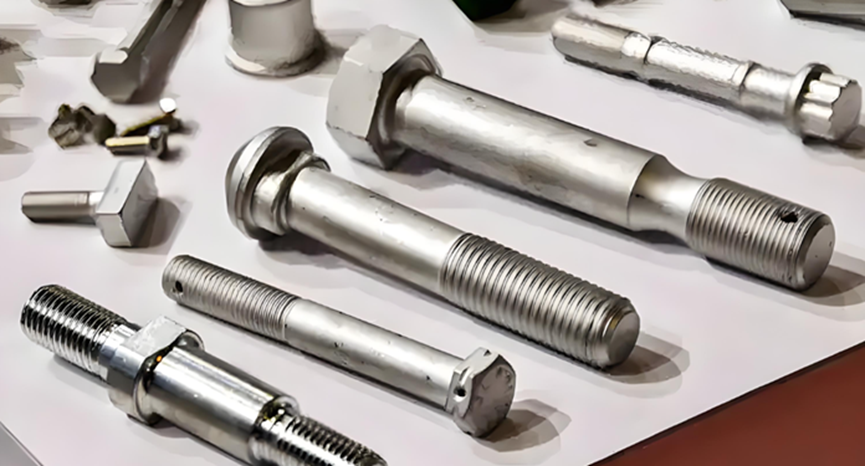
Chromium-molybdenum alloy steel series
ASTM A193 B7 bolts are typically made of chromium-molybdenum alloy steel, with material composition and mechanical properties roughly corresponding to AISI 4140/4142, and are quenched and tempered to achieve high strength. Their tensile strength can reach 862 MPa, and their yield strength can exceed 517 MPa, offering both high strength and good toughness. Bolts conforming to the A193 B7 standard can withstand temperatures up to approximately 450°C.

Although the chemical composition of A193 B7M is the same as that of B7, it achieves lower hardness and higher corrosion resistance through high-temperature tempering at no less than 620°C. This characteristic significantly enhances its resistance to stress corrosion cracking. After deep cryogenic treatment (-196°C) and high-temperature aging (593°C), it can withstand temperature variations from -101°C to 593°C, making it particularly suitable for extreme conditions such as in floating head heat exchangers and nuclear power plants.

A193 B16 is made of chromium-molybdenum-vanadium alloy steel and undergoes a more rigorous heat treatment process – quenching at 925-955°C and tempering at no less than 650°C. This material maintains its strength in high-temperature environments ranging from 400°C to 595°C and has excellent anti-relaxation performance.
Austenitic Stainless Steel Series

For equipment in highly corrosive conditions and with higher requirements for thermal stability, austenitic stainless steel series, namely B8 (304) and B8M (316), should be used. Both materials undergo solution treatment to dissolve carbides, significantly enhancing corrosion resistance, toughness, and resistance to intergranular corrosion. The applicable temperature range for B8 is typically from -200°C to approximately 425°C, while B8M can operate long-term within the range of -200°C to approximately 450-475°C, making it particularly suitable for corrosive environments such as seawater, chloride-containing, and weak acid and alkali media.
Depending on the processing technology, they are divided into two grades: Class 1 (solution treatment) and Class 2 (solution treatment + strain hardening). It should be particularly noted that the tensile strength of Class 2 is not fixed at a specific value but varies with the diameter of the bolt.
For instance, within the small diameter range, the tensile strength of B8 Class 2 can reach approximately 860 MPa, but as the diameter increases, the standard allowable strength decreases proportionally to prevent large fasteners from becoming brittle due to excessive processing.
Similarly, the strength of B8M Class 2 also follows the diameter classification regulations and is not fixed at a single 760 MPa, but is implemented according to the segmented values of ASTM A193. This is the most commonly misunderstood part in engineering applications. Correctly understanding the strength range of Class 2 is crucial for flange design, bolt selection, and torque calculation.

How to correctly select bolt materials?
Selecting bolt materials requires considering multiple factors:
1) Working temperature range: B7/B7M is suitable for medium and low temperatures, while B16 is recommended for medium and high temperatures.
2) Corrosion of the medium: In corrosive environments, B8/B8M stainless steel series should be given priority.
3) Strength requirements: Class 2 has higher strength than Class 1.
4) Risk of stress corrosion: In situations with stress corrosion, materials such as B7M that resist stress corrosion should be chosen.
TONGLIN offers a full range of ASTM A193/A193M standard fastener products, including various grades such as B7, B7M, B8, B8M, and B16. All products come with material certificates to ensure traceability.
If you have high-temperature and high-pressure fastening needs, please visit our website to search for specific products. Professional engineers will provide you with selection guidance and technical support. https://hktl-fastener.com/bolts-and-nuts/.

High temperature is not the only challenge; low-temperature and high-pressure working conditions also impose strict requirements on bolt materials. In LNG, cryogenic equipment, and liquid nitrogen systems, metals are prone to brittle fracture at low temperatures, and the selection logic is completely different from that in high-temperature environments.
We will continue to interpret standards such as ASTM A320, analyze the toughness control and application fields of low-temperature materials, and help you systematically master the selection principles of fasteners for cryogenic equipment.
If you are looking for suitable bolts and nuts, please visit us here https://hktl-fastener.com/bolts-and-nuts/.