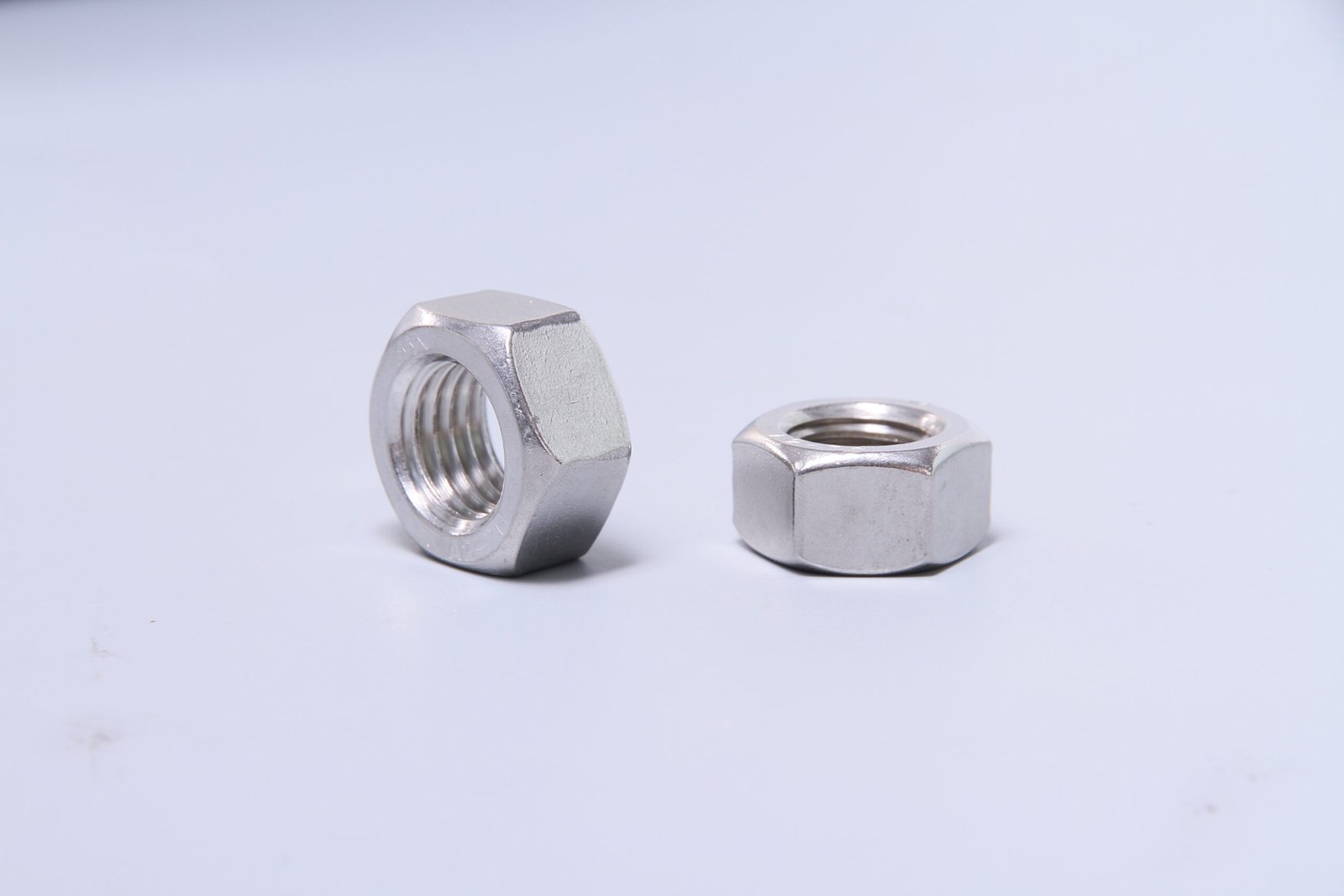
Key Findings
Nut selection relies on five key dimensions: material‑environment compatibility, precise dimensional‑thread matching, protective surface finishing, valid quality certification, and reasonable cost‑efficiency. Avoid low‑price inferior alternatives; always match nut performance to load, corrosion conditions and installation space to prevent loosening, thread failure and safety hazards.
| Key Selection Step | Core Requirements | Common Remarks |
|---|---|---|
| Material | Match corrosion, temperature and load | Carbon‑steel for general use; 316 stainless‑steel for marine settings |
| Size & Spec | Thread standard, nut thickness, wrench fit | Distinguish metric / imperial; 6g grade for regular equipment |
| Surface Treatment | Anti‑rust & anti‑seize lifespan | Galvanizing for general use; Dacromet for coastal high‑corrosion sites |
| Quality Certification | National & industry standards | GB/T, IATF16949, GL for wind‑power applications |
| Cost Evaluation | Total‑cost thinking instead of rock‑bottom price | Beware cheap counterfeit “stainless iron” products |
Carbon‑steel nuts deliver cost‑efficiency for dry indoor conditions. 304 stainless steel suits food‑grade equipment, while molybdenum‑containing 316 works for seawater‑exposed marine projects. Brass fits electrical terminals, and titanium alloy serves high‑end aerospace hardware. Confirm metric or imperial thread specs, nut thickness and wrench‑engaging width; pick precision grades 6g or 4h according to equipment accuracy.
Select galvanizing, nickel‑plating or Dacromet for anti‑corrosion protection. Check formal certifications and brand reputation rather than chasing the lowest unit price, since cheap defective nuts trigger extra downtime and replacement expenses. Clarify working‑condition demands first, then make balanced choices among material, specification, surface finish and budget for secure long‑term connections.
5 Steps to Find Your Perfect Match
In the world of mechanical connections, nuts, though small, play a crucial role akin to a joint. Choosing the right nut can ensure the stable operation of equipment for years without worry; choosing the wrong one may lead to loosening, breakage, or even safety incidents.
Here, we present a practical selection guide covering five core dimensions: material, size and specification, surface treatment, quality certification, and price, to help you avoid pitfalls and precisely match your usage requirements.
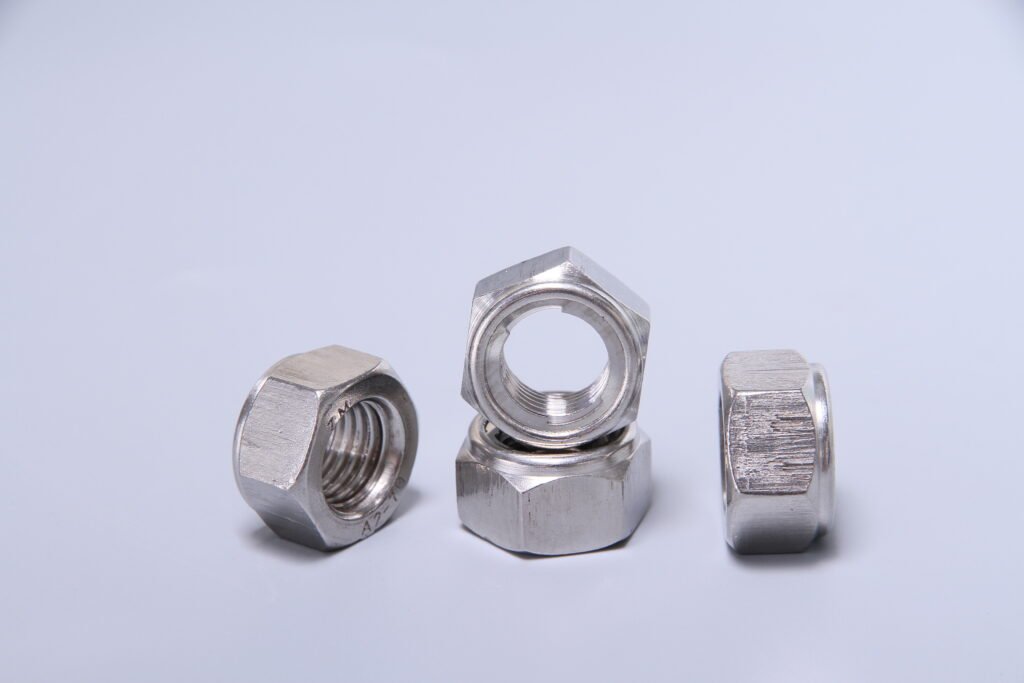
I. Material Selection: Compatibility with the Environment is Key
The material of a nut directly determines its core properties such as temperature resistance, corrosion resistance, and load-bearing capacity. Selecting the wrong material is equivalent to planting a hidden danger in your equipment.
- Carbon Steel: The king of cost-effectiveness, suitable for dry indoor environments or non-load-bearing scenarios. High-strength carbon steel above grade 8.8 can be used in medium-load machinery, but note that long-term exposure to humid environments can cause rust. It is recommended to use anti-rust coatings in such cases (such as galvanizing, Dacromet, hot-dip galvanizing, zinc-nickel coating, etc.).
- Stainless Steel: Available in types such as 304 and 316. 304 stainless steel has strong resistance to acids and alkalis and is suitable for food processing and water treatment equipment. 316 contains molybdenum and has excellent resistance to seawater corrosion, making it the first choice for ships and marine engineering. However, its price is 3-5 times higher than that of carbon steel.
- Brass: With excellent electrical conductivity, it is often used in electrical equipment terminals and has certain corrosion resistance, but its load-bearing capacity is relatively weak and should not be used in high-strength connections.
- Special Alloys: Such as titanium alloy nuts, which are lightweight and resistant to high temperatures, are standard in aerospace applications. However, their cost is over 20 times that of ordinary carbon steel, and they are not necessary for non-special scenarios.
II. Size and Specification: Precise Matching is Critical
Even a deviation of 0.1 mm in size can lead to connection failure. When purchasing, pay close attention to the following three parameters:
- Thread Specification: Metric threads (such as M8×1.25) are the mainstream in China, while imperial threads (such as 1/4-20UNC) are more common in imported equipment. Always check the thread type in the equipment manual to avoid size mismatches.
- Thickness and Diagonal Width: Thin nuts (such as GB/T 6172) are suitable for narrow spaces, while thickened nuts (such as GB/T 6175) can withstand greater torque. The diagonal width must match the wrench; for example, M10 nuts typically use a 17mm wrench.
- Precision Grade: For ordinary equipment, a 6g grade is sufficient, while precision instruments require a 4h grade. The higher the grade, the smaller the thread tolerance, and the less likely it is to get stuck during installation.
III. Surface Treatment: The “Protective Clothing” for Extended Lifespan
Surface treatment acts as a “protective charm” for nuts, with different processes suitable for different environments:
- Galvanizing: Available in colored zinc and white zinc, it is cost-effective with a rust prevention period of about 1-2 years, suitable for ordinary machinery in dry indoor environments.
- Nickel Plating: Offers better corrosion resistance than galvanizing, with a smooth and aesthetically pleasing surface. It is commonly used in medical devices and precision instruments, with a rust prevention period of 3-5 years.
- Dacromet: The coating contains zinc and aluminum flakes, providing salt spray resistance five times that of galvanizing. It is suitable for high-corrosion environments such as outdoors and near the sea, but it is more expensive and has a single color (silver-gray). ,
- Phosphating: Mainly used for anti-seizing treatment of nuts and bolts, it is often applied in high-temperature working conditions. However, its rust prevention ability is relatively weak and it needs to be used in combination with other coatings.
IV. Quality Certification: The “Passport” to Avoid Risks
Formal certification is the guarantee of quality. When purchasing, pay attention to:
- National Standard Certification: Products with the GB/T mark comply with national standards. For example, GB/T 6170 is the general standard for common hexagonal nuts. ,
- Industry Certification: In the automotive industry, IATF16949 certification is recognized, while in the wind power equipment sector, GL certification is required. These certifications indicate that the products have undergone more rigorous testing.
- Brand Reputation: Prioritize brands with extensive production experience. Products from small factories may have issues such as insufficient thread precision and impurities in the material. Although they may seem cheaper, they can increase maintenance costs in the long run.
V. Price Consideration: Cost-effectiveness is more important than low price.
The prices of nuts vary. Blindly pursuing low prices often leads to losses:
- Bulk Purchasing: Try to negotiate discounts with the manufacturer based on the annual purchase volume and whether they offer free sample services.
- Beware of “Low Price Traps”: For instance, a low-quality M10 stainless steel nut may cost only one-third of a qualified product, but its material might be “stainless iron” (with chromium content less than 10%), and it will rust within half a year.
- Comprehensive Cost Calculation: Considering replacement labor hours and downtime losses, high-quality nuts may have a lower overall cost. For example, in chemical equipment, using 316 stainless steel nuts, despite their higher unit price, can reduce the replacement frequency by 2-3 times annually.
The core principle for purchasing nuts is “matching needs”: Clearly define the working environment of the equipment (temperature, humidity, corrosiveness), load strength, and installation space, and then select suitable products based on the budget. Remember, a qualified nut is not just a fastener but also an “invisible guardian” for the safe operation of the equipment.
FAQ
Q: Which nut material should I choose for my application?
A: Match the material to your environment. Carbon steel is the most cost-effective choice for dry indoor use, with high-strength grades above 8.8 suited to medium-load machinery. Stainless steel 304 resists acids and alkalis, ideal for food processing and water treatment. Stainless steel 316 contains molybdenum and offers excellent seawater corrosion resistance — the first choice for ships and marine engineering, though at 3–5 times the price of carbon steel. Brass suits electrical terminals but is not for high-strength connections; titanium alloy is aerospace-grade but over 20 times the cost.
Q: How do I make sure the nut matches my bolt and wrench?
A: Check three parameters. First, thread specification: metric threads (e.g., M8×1.25) are standard in China, while imperial threads (e.g., 1/4-20UNC) are common in imported equipment — always verify the thread type in the equipment manual. Second, thickness and diagonal width: thin nuts suit narrow spaces, thickened nuts withstand greater torque, and the diagonal width must match your wrench (e.g., M10 nuts typically use a 17mm wrench). Third, precision grade: 6g is enough for ordinary equipment, while precision instruments require 4h.
Q: What surface treatment should I choose to prevent rust?
A: It depends on the environment. Galvanizing (colored or white zinc) is cost-effective with about 1–2 years of rust prevention, suitable for dry indoor machinery. Nickel plating offers 3–5 years of protection with a smooth finish, commonly used in medical devices and precision instruments. Dacromet provides five times the salt spray resistance of galvanizing, making it ideal for outdoor and coastal high-corrosion environments. Phosphating is mainly for anti-seizing under high-temperature conditions but has weak rust prevention and needs to be combined with other coatings.
HKTL Fastener supplies quality bolts and nuts matched to your environment, load and budget — from material and size to surface treatment and certification, the invisible guardian for your equipment.
If you are looking for quality bolts and nuts, please visit us here https://hktl-fastener.com/bolts-and-nuts/.