Main Conclusion
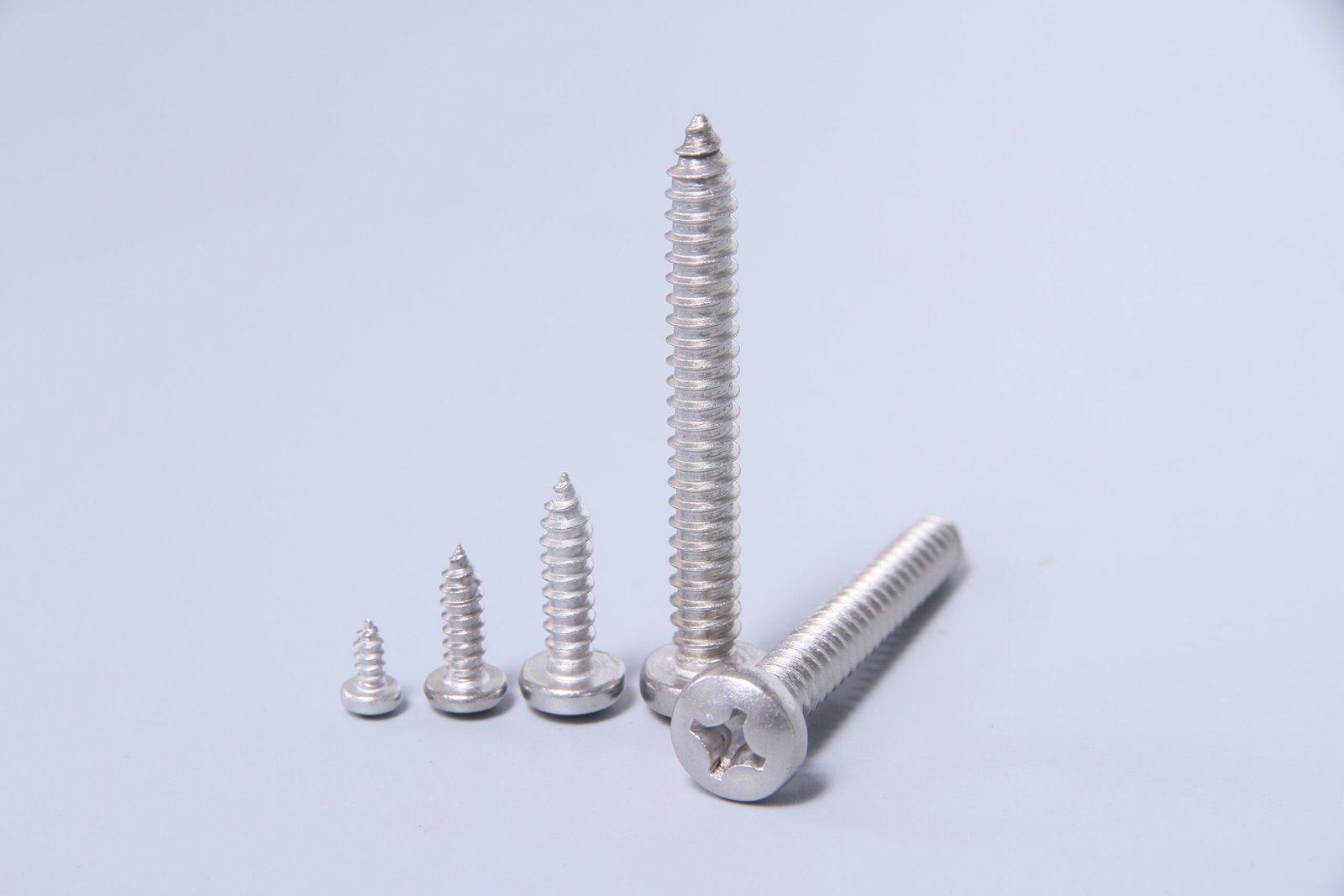
Self‑drilling screws complete drilling, tapping and fastening without pre‑drilling holes. For reliable performance, match screw material, head style and ST‑size to your substrate thickness, industry application and corrosion conditions. Avoid common failures like rust, jamming and breakage by picking suitable grades, following correct drill settings, and applying surface treatment for coastal or corrosive environments.
Compliant with DIN7504, ISO1548 and GB15856 standards, these fasteners come in hex flange, pan, countersunk and wafer head types for different industrial projects.
| Industry | Preferred Head Type | Typical ST Size |
|---|---|---|
| Curtain wall | Pan, Countersunk, Hex flange | ST4.2, ST4.8, ST5.5 |
| Steel structure | Hex flange | ST5.5, ST6.3 |
| Door & window | Pan, Countersunk | ST4.2, ST4.8 |
| Photovoltaic | Hex flange | ST6.3 |
| Guardrail | Wafer head | ST5.5 |
Available materials cover carbon steel (1022,435), martensitic 410 stainless steel, 304/316 stainless steel and bi‑metal composites. Note that bare 410 may rust in seaside areas without passivation. Pure 304/316 is poor for drilling steel sheets; bi‑metal options balance corrosion resistance and drilling hardness.
Most field issues arise from wrong material selection, oversized substrates, non‑vertical installation or using drill impact mode. Operators should run drills at 1000‑1500 rpm without impact function. Before purchasing, assess plate thickness, corrosion demands and strength requirements. Turn to supplier customisation for special coatings or composite‑material screws for extreme working conditions.
Self-drilling screws: Industrial power tools for efficient self-tapping fastening
Self-Drilling Screws, also known as self-tapping and self-drilling screws, are special fasteners with a built-in drilling function at the front end. They do not require pre-drilling and can complete drilling, tapping, and fastening in one operation on steel plates, steel parts, or other plates, greatly improving assembly efficiency. They are widely used in construction steel structures, color steel roofs, mechanical equipment, and shelf installation, among other fields.
The main standards for self-drilling screws include GB15856, DIN7504, ISO1548, JIS1124, and American standards, etc. The head types commonly involved include hex flange heads, pan heads, countersunk heads, semi-countersunk heads, etc. In addition to the standards, there are also commonly used head types such as wafer heads and waffle heads.
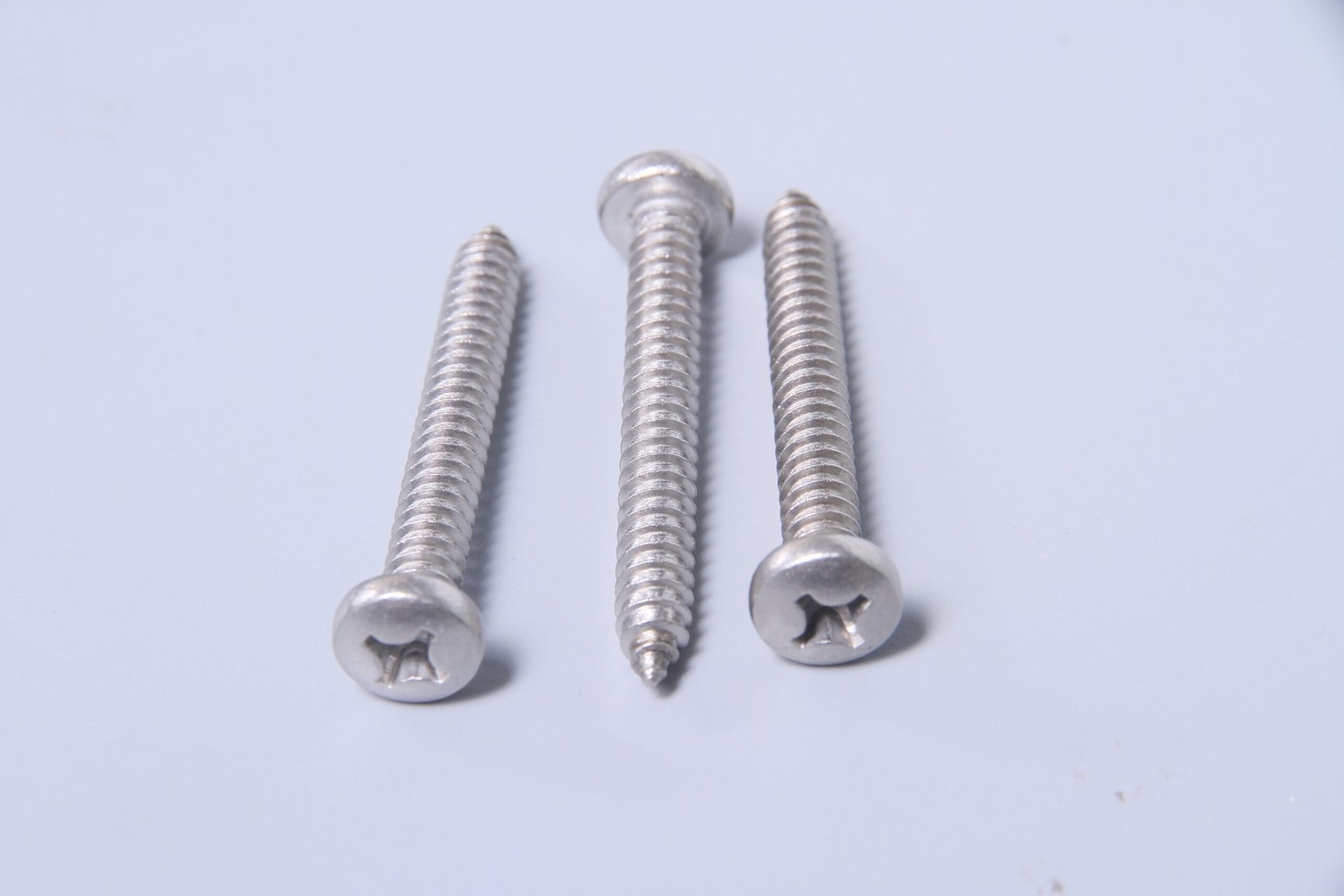
I. Materials for self-drilling screws:
1. Carbon steel: 1022, 435, etc.
2. Martensitic stainless steel: 410, 420, 550, etc.
3. Stainless steel: 304, 316, etc.
4. Composite materials: 304/316 + 410/1022/435
II. Which industries commonly use self-drilling screws?
The curtain wall industry mainly uses ST4.2 and ST4.8 pan heads and countersunk heads, and ST5.5 hex flange heads.
The steel structure industry mainly uses ST5.5 and ST6.3 hex flange heads.
The door and window industry mainly uses ST4.2 and ST4.8 pan heads and countersunk heads.
The photovoltaic industry mainly uses ST6.3 hex flange heads.
The guardrail industry mainly uses ST5.5 wafer heads.
III. Problems encountered during the use of self-drilling screws and their causes:
1. 410 rusts in high-corrosion environments such as the seaside?
410 is a martensitic stainless steel with poor corrosion resistance in its natural state. It needs to be passivated or undergo other surface treatments to achieve better corrosion resistance.
2. Self-drilling screws cannot be driven into the plate?
a. The wrong material of self-drilling screws was selected, such as using 304/316 self-drilling screws to drill and tap iron plates or stainless steel plates.
b. The plate is too thick, exceeding the drilling and tapping range of the self-drilling screw.
c. Drilling and tapping a stainless steel plate.
3. Self-drilling screws break?
a. The wrong hand drill was selected (a hand drill with a power of 350-500W should not be used in impact mode).
b. The installation was not vertical (perpendicular to the surface of the profiled steel plate and apply force to create a center point, speed: 1000-1500 rpm).
c. The drill did not slow down when reaching the bottom.
d. The selected self-drilling screw size is unreasonable.
e. The self-drilling screw has quality issues.
Summary
Self-drilling screws, with their integrated advantages of self-drilling, self-tapping, and self-locking, have become an indispensable efficient fastening solution in modern industrial assembly. When choosing, the following points should be focused on:
1. Type and thickness of the target plate – determine the required material and tail number.
2. Corrosion resistance requirements – choose stainless steel or appropriate surface treatment.
3. Strength and efficiency requirements – pay attention to specification parameters (ST number, flange size) and product performance (such as drilling and tapping speed).
4. Special applications – fully utilize the customization capabilities of suppliers (material composites, ultra-thick plates, special head types/coatings).
With the advancement of materials science and manufacturing processes, self-drilling screws are evolving towards higher strength, better corrosion resistance, greater intelligence (such as optimizing with electric tools), and greater environmental friendliness, continuously providing more reliable and efficient fastening solutions for various industries.
FAQ
Q: What materials are available for self‑drilling screws and their key differences?
A: Common materials include carbon steel(1022,435), martensitic 410/420 stainless steel, 304/316 austenitic stainless steel, and bi‑metal composite types. 410 offers good drilling performance yet weak native corrosion resistance; 304/316 excel at anti‑corrosion but have poorer drilling capacity.
Q: Why can’t my self‑drilling screw drive into the target workpiece plate?
A: It may be caused by improper material selection such as 304/316 for steel plate drilling. Or the plate thickness exceeds the screw’s drilling capacity. Drilling into solid stainless‑steel sheets will also lead to difficult penetration.
Q: What main reasons cause self‑drilling screws to break during installation?
A: Using impact‑mode power drills, non‑vertical installation angle, failing to reduce speed at penetration, improper screw sizing, or inherent product defects will result in screw fracture. Use 1000‑1500 rpm without impact function for correct assembly.
HKTL Fastener supplies standard and bi‑metal self‑drilling screws covering multiple head styles and materials for construction, PV, curtain‑wall and guardrail projects.
If you are looking for self-drilling screws, please visit us here https://hktl-fastener.com/screws/.