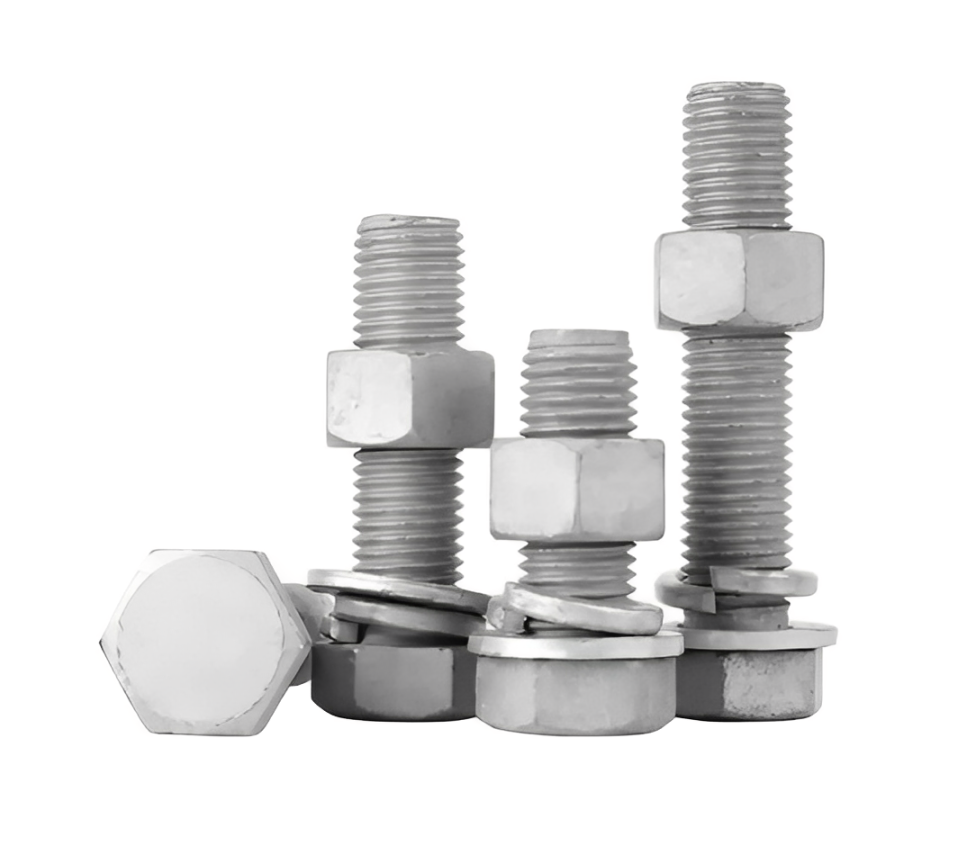
In the field of fastener protection, such as bolts, the galvanizing process is widely used due to its excellent anti-rust performance. Among them, hot-dip galvanizing and mechanical galvanizing are two common surface treatment processes.
Hot-dip Galvanizing vs. Mechanical Galvanizing
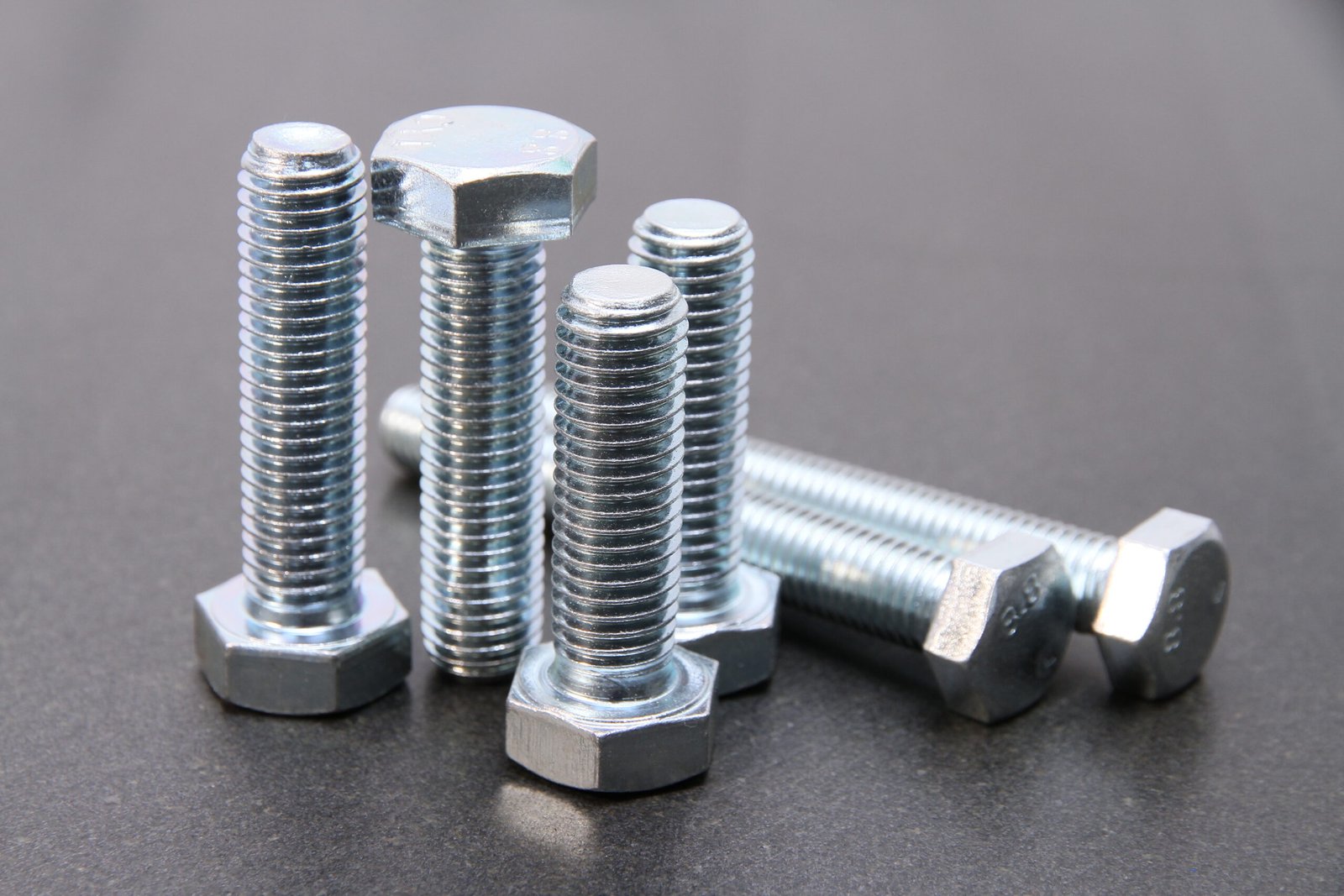
There are certain differences between them in terms of process principles, coating characteristics, and application scenarios, as follows:
1. Process Principle
- Hot-dip galvanizing: After pretreatment, the bolt fasteners are immersed in molten zinc at 440-465℃. Through high-temperature metallurgical reactions, zinc reacts with the steel substrate to form a zinc-iron alloy layer and a pure zinc layer, thereby creating a coating on the surface of the bolt.
- Mechanical galvanizing: At normal temperature and pressure, in a liquid medium, relying on impact loads, zinc powder is deposited on the surface of the bolt through mechanical collisions with impact media such as glass beads, without the interface reaction and iron-zinc atomic diffusion that occur in the hot-dip galvanizing process.
2. Coating Characteristics
- Coating Structure: The coating structure of hot-dip galvanizing consists of a pure zinc layer and a zinc-iron alloy layer (γ, δ, ζ phases), while the coating structure of mechanical galvanizing mainly consists of a pure zinc layer without an alloy layer.
- Thickness Control: The coating thickness of hot-dip galvanizing is generally above 40μm, and can be as high as 200μm in some cases. However, it is difficult to control the coating thickness on the threaded parts of fasteners. The coating thickness of mechanical galvanizing is relatively easier to control and can be classified into low zinc layer (<20μm) and high zinc layer (>40μm).
- Surface Roughness: The surface roughness of hot-dip galvanizing is relatively high, and zinc nodules and zinc dross may exist. The surface of mechanical galvanizing is relatively uniform and dense, with better appearance quality.
- Performance Impact on Corrosion Resistance: Due to the dual protection of the zinc-iron alloy layer and the pure zinc layer, hot-dip galvanizing has excellent corrosion resistance and is particularly suitable for use in harsh environments such as marine and chemical environments. The corrosion resistance of mechanical galvanizing is also good, and it has strong resistance to atmospheric acid rain. When mechanical galvanized parts with the same coating thickness are immersed in a 10%-15% dilute sulfuric acid solution, the time for acid corrosion to expose the iron is delayed by about three times compared to hot-dip galvanized layers.
- Hydrogen Embrittlement Risk: The pickling process in hot-dip galvanizing can increase the hydrogen content in the base material of 10.9 grade high-strength bolts, increasing the risk of hydrogen embrittlement. Mechanical galvanizing is carried out at room temperature and does not cause hydrogen embrittlement in high-strength steel.
3. Cost and Environmental Protection
- Energy Consumption: Hot-dip galvanizing requires heating the zinc liquid to a high temperature, resulting in high energy consumption; mechanical galvanizing is a room-temperature process with low energy consumption. Pollution Emission: Hot-dip galvanizing generates pollutants such as acid washing wastewater (containing heavy metals) and zinc fumes (containing zinc oxide), which are difficult to treat; mechanical galvanizing mainly produces weakly acidic wastewater, which is relatively easy to treat and does not emit toxic gases.
- Equipment Investment: The equipment investment for hot-dip galvanizing is high, requiring large equipment such as zinc pots and pretreatment tanks; the equipment investment for mechanical galvanizing is low, with the main equipment being rotating drums, etc.
- Raw Material Cost: The raw material for hot-dip galvanizing is zinc ingots, and the price fluctuations of zinc ingots have a significant impact on costs; the raw material for mechanical galvanizing is zinc powder, which is relatively expensive but the usage can be controlled.
4. Application scenarios: Hot-dip Galvanizing vs. Mechanical Galvanizing
- Hot-dip galvanizing: It is suitable for large structural components such as power transmission towers and bridges, as well as bolts and fasteners that are exposed to harsh environments for a long time, such as those used in offshore platforms and chemical equipment.
- Mechanical galvanizing: It is mainly used for high-strength bolts, nuts and other fasteners, as well as small hardware products. It is also suitable for parts sensitive to hydrogen embrittlement, such as bolts in automotive chassis.
The choice between hot-dip galvanizing and mechanical galvanizing essentially lies in “demand matching”: if “strong protection and long service life” are required and the workpiece has no precision requirements, hot-dip galvanizing is a reliable choice; if “high precision and low pollution” are needed and the workpiece is small and complex, mechanical galvanizing has more advantages.
In practical applications, “process combinations” (such as mechanical galvanizing + passivation treatment to enhance corrosion resistance) can also be adopted for further optimization, but the core logic always revolves around “meeting core demands and controlling comprehensive costs”.
If you are looking for suitable galvanized bolts and nuts, please visit us here https://hktl-fastener.com/bolts-and-nuts/.