Key Findings
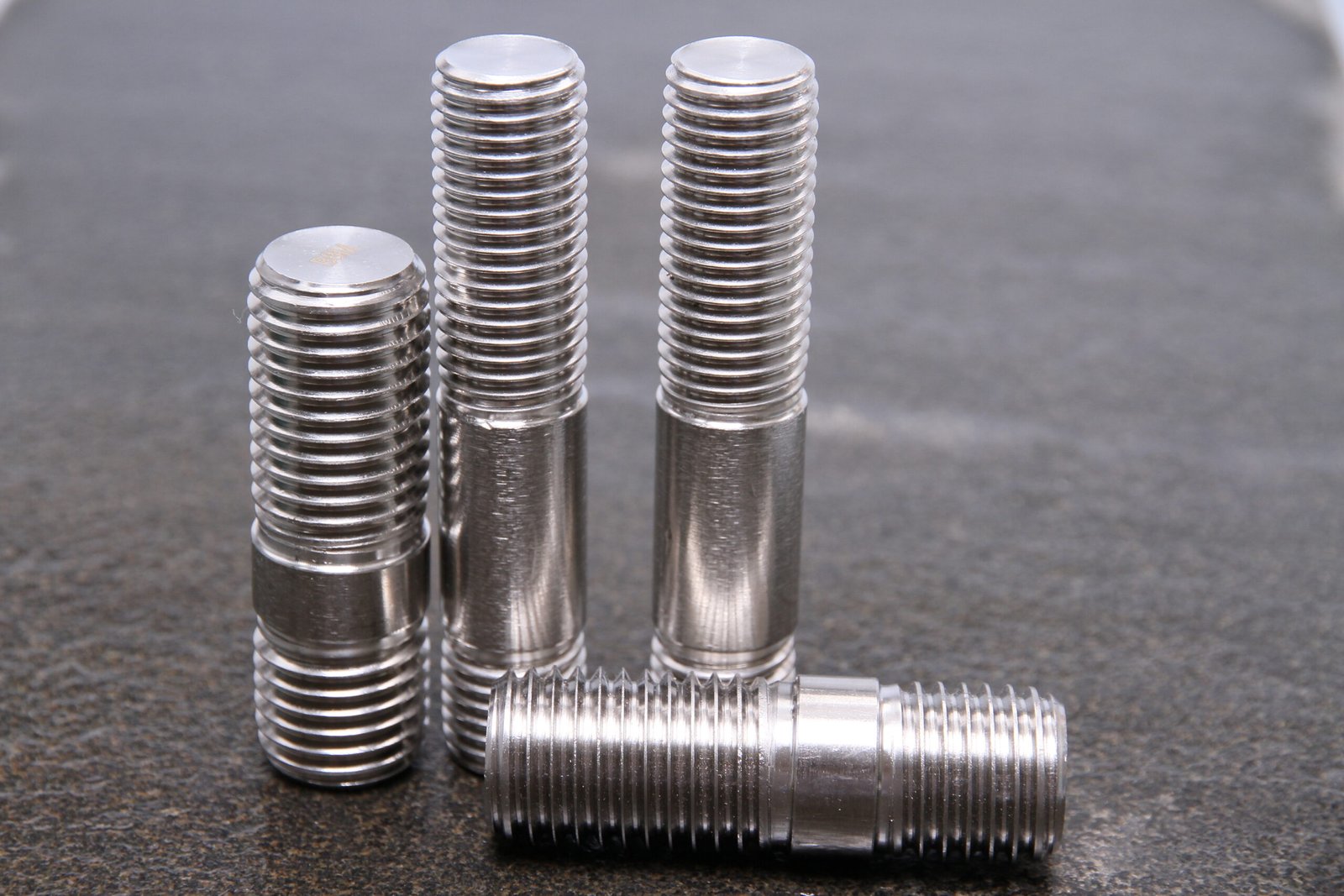
Double‑ended studs are head‑less fasteners with threads on both ends and a central shank. One end screws into tapped holes, the other fastens with nuts. Selection depends on stud type, material, applicable standard, surface‑treatment matching service environment, plus strict pre‑installation inspection and controlled‑torque step‑by‑step symmetric tightening during assembly.
| Item | Main Content |
|---|---|
| Type classification | Type‑A (thick shank); Type‑B (thin shank) |
| Common materials | Carbon‑steel, alloy‑steel, stainless‑steel(304/316/2205), special high‑temperature grades (B7, B7M, B16) |
| Major standards | Chinese GB‑series, German DIN‑series, American ASME‑series, chemical industry HG/NB‑series |
| Surface‑treatment options | Blackening, phosphating, hot‑dip galvanizing, Dacromet, PTFE‑Teflon coating |
Five surface‑treatment characteristics & application scenarios
- Blackening: Thin Fe₃O₄ oxide‑film; basic dry‑environment rust resistance, low‑cost. For indoor low‑load machine‑tool accessories.
- Phosphating: Crystalline phosphate layer; good oil‑absorption, improves paint adhesion, reduces thread friction. Used for automotive chassis and pre‑coated steel‑structure parts.
- Hot‑dip galvanizing: Thick zinc‑iron alloy sacrificial coating; long outdoor service‑life (10‑15 years). Suits wind‑tower foundations, mining‑equipment, outdoor steel‑structures.
- Dacromet (zinc‑chromium): 500‑1000 h salt‑spray performance; no hydrogen‑embrittlement risk, wide temperature tolerance (−50 ~ 300 °C). For offshore‑platform, chemical‑equipment high‑corrosion joints.
- Teflon (PTFE): Ultra‑low friction coefficient, acid‑alkali‑resistant, improves thread self‑locking. Suits engine cylinder‑head bolts, chemical‑reactor sealing, high‑frequency vibration assemblies.
Installation specifications
- Pre‑installation check: Reject deformed / thread‑damaged studs; clean threads free of oil, rust and burrs; prepare calibrated torque‑wrenches for high‑strength connections.
- Tightening rules: Adopt symmetrical step‑by‑step tightening for multi‑stud joints to avoid unilateral stress‑induced deformation. Follow design‑specified torque values, implement staged pre‑tightening plus final‑tightening. Replace studs if target torque cannot be achieved. For high‑temperature / vibration‑prone units, auxiliary heating or high‑frequency vibration‑assisted assembly can be applied.
Final selection principle
Clarify the connected‑substrates, actual load‑magnitude, service‑environment and mandatory‑standard‑requirements. Matching material, coating, plus correct installation and maintenance ensure equipment reliability and extend service‑life while lowering overall costs.
In modern industrial manufacturing and engineering construction, double-end studs, as cylindrical fasteners with threads at both ends, play a crucial role in connecting structures.
1. Definition of Double-End Studs
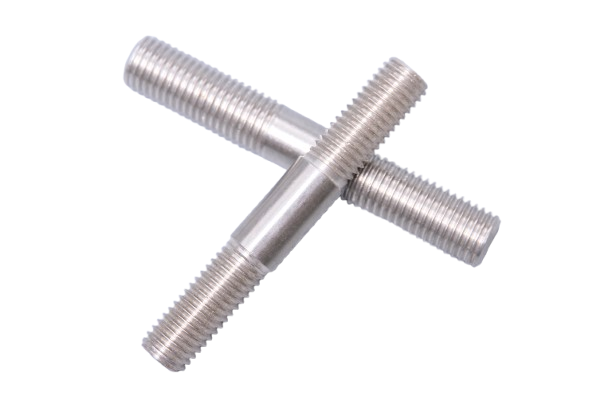
Double-end studs, also known as double-end bolts or double-head screws, are fasteners with threads at both ends and a smooth or specially structured middle section. This design enables them to connect different components from both sides. One end is typically screwed into a component with an internal thread, while the other end is fixed with a nut to a component with a through hole, forming a stable mechanical connection.
2. Classification of Double-End Studs
1) The difference between A-type studs and B-type studs
The difference between A-type and B-type studs lies in the diameter of the smooth shank and the threaded part. A-type double-ended studs are thick shank studs, while B-type double-ended studs are thin shank studs.
2) Materials of double-ended studs
- Carbon steel: Q235, 35#, 45#
- Alloy structural steel: 40Cr, 35CrMoA, 42CrMo, 25Cr2mov
- Stainless steel: 304, 316, 304L, 316L, A2-70, A4-80, 2205/2507
- Special materials: B7, B7M, B16, etc.
3) Reference standards:
- Chinese standards: GB897, GB898, GB899, GB900, GB901, GB953, GB9125, GB9125.1, etc.
- German standards: DIN797, DIN835, DIN938, DIN939, DIN940, DIN949, DIN2509, DIN2510, DIN6379, etc.
- American standards: ASME B 18.31.1M, ASME B 18.31.2, etc.
- Chemical industry standards: HG20613 (GB901), HG20634, HG21573.2 (BT), NB/T47027, SH/T3404, etc.
3. Surface treatment of double-ended studs
1) Blackening treatment: The principle is to place the studs in a high-temperature alkaline solution to form a black iron oxide (Fe₃O₄) film on the surface, with a thickness of 0.5-1.5 μm.
Functions:
- Basic rust prevention, forming a dense oxide layer in a dry environment to prevent contact with air and moisture;
- Cost reduction, simple process and no complex equipment required, suitable for mass production;
- Improve appearance consistency, the black film can cover processing marks.
Applicable scenarios: Ordinary mechanical casing connections, low-load studs in indoor dry environments, such as double-ended studs for fixing machine tool accessories.
2) Phosphating treatment: Through the reaction of phosphoric acid with metal, a crystalline phosphate film (such as zinc phosphate, manganese phosphate) is formed on the surface, with a thickness of 5-20 μm.
Functions:
- Moderate corrosion resistance, the porous structure of the film can adsorb anti-rust oil, forming a “film + oil film” dual protection;
- Enhance coating adhesion, serving as the base layer for subsequent painting and oiling, preventing coating peeling;
- Anti-friction and lubrication, reducing the wear of the threaded pair during assembly and protecting the thread accuracy.
Applicable scenarios: Ordinary bolts for automotive chassis, steel structure connection parts requiring secondary coating, often used in combination with blackening treatment.
3) Hot-dip galvanizing: The studs are immersed in molten zinc at 440-460°C, forming a composite coating of zinc-iron alloy layer (0.01-0.03mm) + pure zinc layer (0.02-0.06mm) on the surface.
Functions:
- Strong corrosion resistance, the zinc layer sacrifices itself as an anode to protect the base material, reducing the corrosion rate by more than 60% in humid and outdoor environments;
- Longer service life, with a service life of 10-15 years in normal environments, 3-5 times longer than blackening treatment;
- Resistance to impact and wear, the coating is tightly bonded to the base material and can withstand the vibration and impact of mining machinery.
Applicable scenarios: Connection bolts for mining jaw crushers, foundation bolts for wind turbine towers, outdoor steel structure connection parts, and other highly humid scenarios.
4) Dacromet (zinc-chromium coating): Using zinc powder and chromic acid as core components, an inorganic composite coating is formed on the surface through a coating-baking process, with a thickness of 5-12 μm.
Functions:
- Super corrosion resistance, passing the neutral salt spray test for 500-1000 hours, 3-5 times that of ordinary galvanizing;
- No risk of hydrogen embrittlement, the baking temperature is only around 300°C, avoiding the risk of hydrogen embrittlement fracture in high-strength bolts (such as 10.9 grade).
- Resistant to high and low temperatures, the coating does not fall off or become brittle in an environment ranging from -50℃ to 300℃.
Applicable scenarios: Intermediate casing studs of aircraft engines, connection parts of offshore platforms, and bolts in high-temperature corrosion areas of chemical equipment.
5) Teflon (PTFE coating, polytetrafluoroethylene) is applied by spraying or dipping to form a PTFE film on the surface, with a thickness of 2-5μm.
Functions:
- Ultra-low friction coefficient (0.02-0.04), significantly reducing thread wear during assembly and extending the life of repeated disassembly;
- Anti-sticking and anti-corrosion, resistant to strong corrosive media such as acids, alkalis, and organic solvents;
- Anti-loosening and anti-slip, enhancing the self-locking ability of the thread pair, suitable for vibrating environments.
Applicable scenarios: Cylinder head bolts of automotive engines, connection bolts of sealing parts of chemical reactors, and bolts of high-frequency vibrating fans.
4. The Use of Double-Headed Bolts
1) Preparation and inspection before installation
Visual inspection: Before installation, carefully check whether the double-headed bolt is deformed or the thread is damaged. If there are defects, it must be replaced.
Cleaning treatment: Ensure that the thread surface is free of oil, rust, burrs, and impurities. If necessary, use a special thread cleaner for cleaning to ensure the connection strength and the accuracy of the preload.
Tool preparation: Prepare appropriate tools according to the bolt specification, such as “TORX” star socket wrenches E8 and E10, and other special tools. For high-strength bolt connections, calibrated torque wrenches should be prepared.
2) Correct installation method and torque control
- Installation sequence: For multi-bolt connection structures, tighten them step by step in a symmetrical order to avoid excessive deformation due to single-sided force.
- Torque control: Tighten strictly according to the designed torque value. Typical torque values are as follows: Double-ended bolt A: 9.5 Nm (97 kgfcm, 84 in.*lbf) / Double-ended bolt B: 21 Nm (214 kgfcm, 15 ft.*lbf)
- Stepwise tightening: For important connections, stepwise tightening should be adopted, such as pre-tightening with 20 Nm and then final tightening with 40 Nm. If a bolt does not meet the specified torque, it must be replaced and re-tightened.
- Special techniques: In high-temperature or vibration environments, heating treatment or axial high-frequency vibration can be used to assist assembly, enhancing installation strength and stability.
Summary
When choosing double-ended bolts, the key is to clarify the application requirements: what materials are being connected, what load is being borne, what environment it is in, and what special standard requirements there are. Selecting the appropriate bolt, correct installation and maintenance can not only ensure the safe and reliable operation of the equipment but also extend the service life of the equipment and reduce overall costs.
FAQ
Q: What is the difference between Type‑A and Type‑B double‑ended studs?
A: Type‑A double‑ended studs feature a thick smooth shank, while Type‑B are thin‑shank versions. Select according to load‑bearing demands and relevant GB / DIN / ASME standards such as GB901, DIN835.
Q: How to pick suitable surface treatment for double‑ended studs in different environments?
A: Blackening for dry‑indoor low‑load. Hot‑dip galvanizing for humid outdoor steel‑structures. Dacromet avoids hydrogen embrittlement for high‑strength studs. PTFE‑Teflon suits vibration & frequent‑disassembly sealing joints.
Q: What key points should I follow when installing double‑ended studs?
A: Inspect for thread damage before mounting. Tighten symmetrically in multiple‑steps with calibrated torque wrenches. Replace defective studs. Follow specified torque values for critical connections.
HKTL Fastener supplies Type‑A / Type‑B double‑ended studs in carbon‑steel, alloy and stainless grades complying with GB, DIN and ASME for flange and industrial equipment connections.
If you are looking for suitable double-end studs, please visit us here https://hktl-fastener.com/bolts-and-nuts/.