

ENGINEERED STAINLESS STEEL FASTENING
Stainless Steel Bolts and Nuts
Stainless steel bolts and nuts for industrial assemblies, equipment and demanding service environments. Select from hexagon head bolts, socket cap bolts, studs, threaded rods, U-bolts, anchor bolts and matching nuts in a range of stainless and corrosion-resistant alloy materials. Standard-based and drawing-led requirements can be reviewed for your application.
Material selection · Standard configurations · Custom requirements
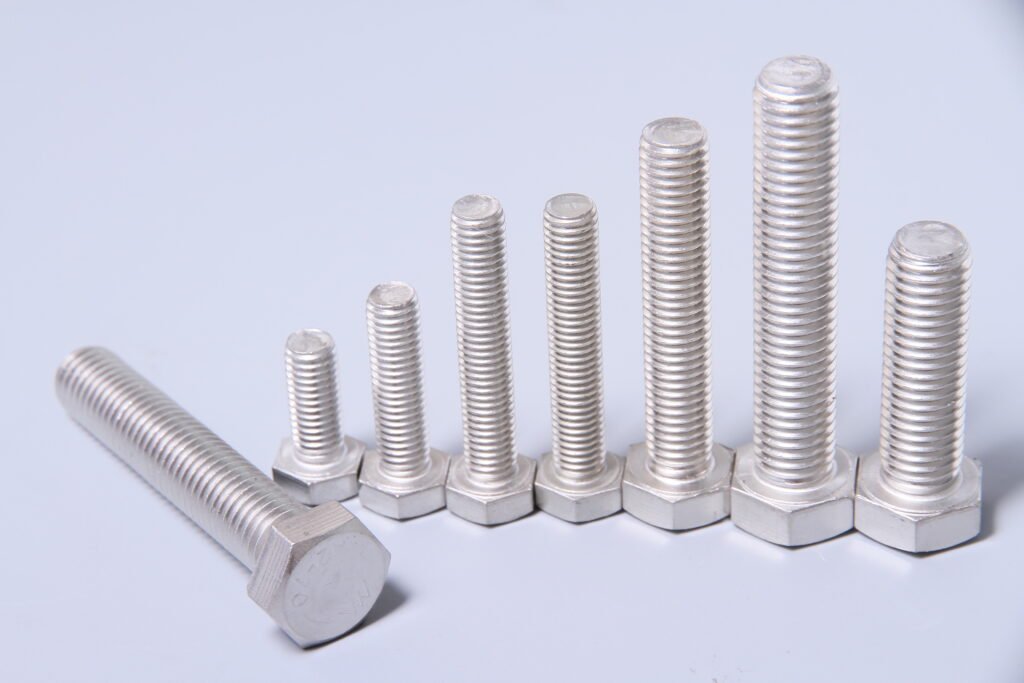
Bolting solutions specified around your application
Choosing stainless steel bolts and nuts starts with the joint design, service environment and applicable specification. Thread diameter and pitch, bolt length, thread engagement, head geometry, nut style, material grade and surface condition all affect fit and performance. Define these details together to help reduce assembly problems, corrosion risks and avoidable procurement changes.
| Specification Factor | Options / Catalogue References | What Buyers Should Confirm |
|---|---|---|
| Bolt configuration | Hexagon head bolts; hexagon socket cap bolts; threaded rods; double-ended studs; U-bolts; anchor bolts | Head or end form, full or partial thread, nominal diameter, length, grip length and installation access. |
| Nut configuration | Hexagon nuts; square nuts; other drawing-defined nut forms | Matching thread designation, pitch, nut style, height, across-flats dimension and required locking method. |
| Stainless materials | 304, 316, 316L, 321, 316Ti, 317, 410, 420, 904L, 201 | Corrosion exposure, temperature, mechanical requirements, mating materials and applicable material specification. |
| Special alloys | C276, 2520, Hastelloy, Incoloy, Inconel, Monel and other high-temperature or special stainless alloys listed in the catalogue | Confirm the exact alloy designation, product form, service conditions and documentation required for the order. |
| Standards | GB5782, GB5783, DIN933, GB70, DIN912, DIN976, GB15389, GB6170, GB6175, DIN557 and other listed standards | State the governing standard and edition; do not assume different national or international standards are interchangeable. |
| North American stainless fastener references | ASTM F593 (bolts, hex cap screws and studs); ASTM F594 (nuts) | Use these only when called for by the project specification. Confirm grade, dimensions, mechanical requirements and the applicable edition. |
| Surface condition | As supplied / specified surface treatment; catalogue references Teflon and Dacromet treatment options | Specify coating or treatment, thickness or performance criteria where relevant, and confirm compatibility with stainless material and service environment. |

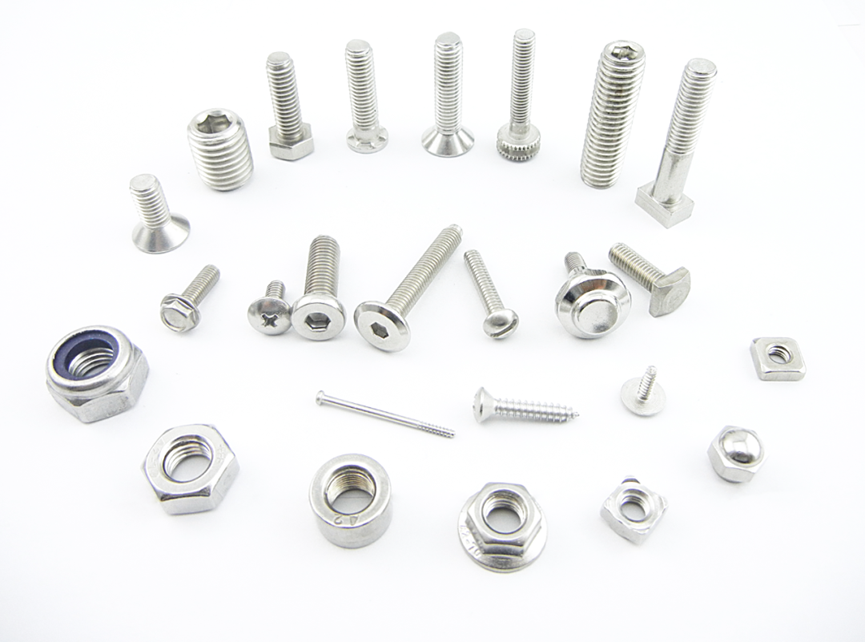
Typical product configurations include hexagon head bolts to GB5782 / GB5783 and DIN933, socket cap bolts to GB70 / DIN912, threaded rods to DIN976 and GB15389, double-ended studs, U-bolts, anchor bolts, hexagon nuts and square nuts. The catalogue also identifies a broad material selection, from common stainless grades to duplex-related and nickel-based special alloys.
For a project-specific requirement, send the drawing, standard reference or sample details for review. Include the intended application, quantity, critical dimensions, thread information and any surface-treatment or inspection requirements. Final material and specification suitability should be confirmed against the actual operating conditions.
Buyer’s Quick Specification Guide
Answers to common sourcing and engineering questions about stainless steel bolting assemblies.
A: Hexagon head bolts are tightened using an external wrench and are commonly selected where tool access around the head is available. Socket cap bolts use an internal hex drive and a cylindrical head, which can be useful in compact assemblies or recessed mounting locations. Confirm the applicable dimensional standard and clearance before selection.
A: The stainless steel grades including 304, 316, 316L, 321, 316Ti, 317, 410, 420 and 904L, as well as special alloys. Grade selection depends on chloride exposure, chemicals, temperature, mechanical loading and the mating components. Do not choose a grade based on the name alone; define the service environment and confirm the required material specification.
A: Provide the product type, drawing or standard, material grade, nominal diameter, length, thread pitch, thread length, nut style, surface condition, quantity and application. Add critical tolerances, inspection requirements and any required material or test documents so the quotation can be reviewed against the complete specification.
Engineering note:
Stainless steel threaded fasteners can be susceptible to galling or thread seizure, particularly during repeated tightening or high-speed installation. Confirm the tightening procedure, mating material and any approved lubricant or anti-seize compound with the design authority before assembly.
Stainless Steel Bolt and Nut Product Range
Explore the main bolt, stud, rod and nut configurations shown in our product series. Standard references and material options vary by product family; send your drawing or specification to confirm the required configuration.

Hexagon head bolts
For general bolted joints using an external wrench. Standard references include GB5782 and DIN933.

Hexagon socket cap bolts
Cylindrical-head bolts with an internal hex drive. Standard references include GB70 and DIN912.

Threaded rods
Continuous external threads for assemblies requiring adjustable cut lengths or multiple fastening points.

Double-ended studs
Stud configurations with threaded ends for flange, equipment and component connections.

U-bolts
U-shaped threaded fasteners for securing pipe, tube and other rounded components. Standard reference includes JB/ZQ4321.

Anchor bolts
Anchoring configurations for fixing equipment and structural components to supporting bases. Standard references include GB799.

Hexagon nuts
Internally threaded nuts for matching bolt and stud assemblies. Standard references include GB6170, GB6175 and SH3404.

Lock nuts
Locking nut configurations for assemblies where resistance to unintended loosening is required. Specify the standard for review.
Select Material for the Operating Environment
The material range includes a wide range of stainless steels and special alloys. The correct choice depends on corrosion exposure, temperature, mechanical loading, fabrication requirements and compatibility with connected components. Confirm the exact grade and material specification before placing an order.

304 / 18-8
A widely used austenitic stainless grade for general industrial and equipment applications where its corrosion and mechanical properties meet the design requirements.
316 / 316L
316 stainless steel contains molybdenum and is often evaluated for environments involving chlorides or more demanding corrosion exposure. 316L is the low-carbon variant; confirm the exact grade required by the drawing or material specification.
410 / 420 / 904L
These stainless grades have different alloy compositions and mechanical or corrosion characteristics. Confirm the required condition, properties and application limits rather than treating them as direct substitutes.
Define the Details That Control Fit and Performance
Our product scope includes products made to ISO, DIN, ANSI/ASME, ASTM, GB and other general standards, alongside non-standard fasteners. For an accurate technical review, provide the governing standard or a dimensioned drawing and identify any customer-specific requirements.

DIN 933
Stainless steel fully threaded hexagon head bolt, metric standard, threaded up to the head. It is widely used for general industrial assembly, compatible with standard wrenches, and commonly paired with DIN 934 hex nuts.

ANSI/ASME B18.2.1
Stainless steel inch-series hex cap screw / hex bolt with UNC/UNF unified thread, American standard for imperial fasteners. It fits North American machinery and equipment, available in regular and heavy hex styles.

DIN 976
Stainless steel metric fully threaded stud bolt (all-thread rod), headless, continuously threaded along the whole length. Nuts can be fitted on both ends, suitable for anchoring, piping and through-bolt connections.

DIN 934
Stainless steel metric hexagon full nut (Style 1), the matching nut for DIN 933 hex bolts. It is the most common standard hex nut for metric bolt assemblies, with coarse thread by default.
Material grade
Name the stainless grade (for example 304, 316L, 321 or 904L) and state any required material specification.
Product configuration
Identify hex head, socket cap, stud, threaded rod, U-bolt, anchor bolt, hex nut or square nut.
Thread specification
State metric or inch thread, nominal diameter, pitch, thread tolerance/class and whether the thread is full or partial.
Bolt / stud length
Specify nominal length, grip length, thread length and any end or engagement dimensions.
Nut dimensions
Confirm nut type, nominal thread, height, width across flats and any special fit requirements.
Surface treatment
Identify the required surface condition or coating, including Teflon or Dacromet where specified in the catalogue.
Applicable standard
Provide the exact GB, DIN, ISO, ASTM, ASME or customer drawing reference and revision.
Surface Treatments and Finish Requirements
Surface treatment should be specified with the base material and service conditions in mind. Confirm process availability, coating requirements, dimensional effects and suitability for the intended environment before approval.

Teflon coating
Teflon (PTFE) coating for fasteners, low friction, anti-seize, chemical resistance. Specify coating thickness, coverage and performance requirements for validation.

Dacromet coating
Zinc-aluminum Dacromet coating, excellent anti-corrosion performance. Confirm coating grade and corrosion resistance standard before order.

Passivation
Stainless steel passivation treatment to improve native corrosion resistance. Define passivation procedure and acceptance criteria for stainless hardware.

Polishing
Mechanical polishing for controlled surface smoothness and decorative appearance. Clarify target surface finish and roughness requirement.

Electropolishing
Electropolishing delivers ultra-smooth, mirror-like stainless steel surface. Verify material compatibility and surface roughness specs.

Other specified finishes
Custom coating & surface finishing available. Provide full specification, designation and performance standards for special finishes.
Choose Bolting Hardware for the Joint and Service Conditions
Application conditions determine the required fastener geometry, material, thread engagement, surface condition and inspection criteria. Evaluate the complete bolted joint rather than selecting a bolt or nut in isolation.

Industrial machinery
Specify bolt size, thread engagement, preload, vibration resistance and maintenance access for machinery frames and mechanical assemblies.

Electrical equipment & appliances
Check enclosure material, joint space, mating parts and galvanic corrosion compatibility for electrical cabinets and appliance assemblies.

Construction & infrastructure
Evaluate outdoor weather exposure, base substrate, anchoring method and project specification for building frames and support structures.

Marine & process equipment
Check chloride exposure, chemical media, working temperature and material compatibility before choosing stainless steel or special alloy fasteners.
From Drawing Review to Quotation
For standard or custom stainless steel bolts and nuts, submit the drawing or sample reference together with material, dimensions, thread details, applicable standard, surface requirements, quantity and end-use conditions.

01 / Share the specification
Send a drawing, catalogue reference, sample details or a clear description of the required fastener.
02 / Technical clarification
Review material, dimensions, thread fit, standard references, finish and acceptance requirements.
03 / Quotation and samples
Discuss quantity, sample evaluation, commercial terms and the proposed delivery schedule.
04 / Confirm order details
Confirm the approved specification, quantity, packaging and documentation requirements before order processing.
Stainless Steel Bolts and Nuts FAQs
Find answers to common purchasing questions. For project-specific requirements, share your drawing or standard reference with our team.
A: Yes. We produce and stock stainless steel bolts and nuts conforming to ISO and DIN standards. We can match equivalent dimensions, thread specs and mechanical properties between ISO and DIN for easy cross-checking. Popular items such as DIN 933, DIN 934, ISO 4014, ISO 4017 and ISO 4032 are regularly available. Material test certificates can be provided to validate compliance.
A: Our standard stainless steel bolt and nut grades include A2 (304) and A4 (316 / 316L). We also support A4-80, 310S, 2205 duplex stainless steel upon request. Each grade comes with material test certificates (MTC) for corrosion resistance and strength verification.
A: For stainless steel bolts and nuts, available surface treatments include plain finish (pickled & passivated), electropolishing, black oxide, oil coating and anti-seize coating. We can also offer zinc plating for carbon steel fasteners. Treatments are selected for corrosion protection, aesthetic needs or friction control.
A: Yes, custom non-standard bolts and nuts per your technical drawing are acceptable. Our factory supports custom machining, special thread forms, unusual lengths, head shapes and shoulder designs. Send your CAD drawing, tolerance requirements and quantity, and we will review feasibility and provide a quotation. Low MOQ is available for custom fastener projects.
A: To get an accurate, fast quotation, please include: standard or drawing, material grade, size (diameter, length, thread), quantity, surface finish, thread requirement, certificate needs, delivery destination and target lead time. If you have special tolerances or packaging requirements, add those notes as well.
A: For standard stainless steel bolts and nuts, we support low MOQ and small trial orders, mixed sizes are acceptable. Stock items can ship within 7 working days. For custom non-standard fasteners, MOQ and lead time depend on tooling and complexity; mass production normally takes 15–30 working days after deposit confirmed. Contact us for a precise schedule for your order.
LET'S DISCUSS YOUR BOLTING PROJECT
Need Stainless Steel Bolts and Nuts for Your Project?
Send your drawing, catalogue reference or purchasing specification. Include material, thread, dimensions, quantity and application details to help us review your requirement.
Technical Support for Bolts and Nuts
Discuss product configuration, material selection and drawing-based requirements with the HKTL Fastener team.
- Quick Quote Response
- Test Reports Available
- Short Lead Times
- +86 136 2219 2628
- info@hktl-fastener.com
- Mon - Fri: 9:00am - 6:00pm
- No.16 Shing Yip Street Kowloon Hong Kong
Request a Project Quote
Share the required specification and order details. Our team will review the information and respond with a tailored proposal within 24 hours.

As a leading source factory, we deliver high-efficiency industrial fastener solutions designed to optimize performance, ensure durability, and improve your supply chain.
Products
Quick Links
Contact
+86 13622192628
info@hktl-fastener.com
No.16 Shing Yip Street Kowloon Hong Kong
© 2026 TONGLIN. All Rights Reserved.

