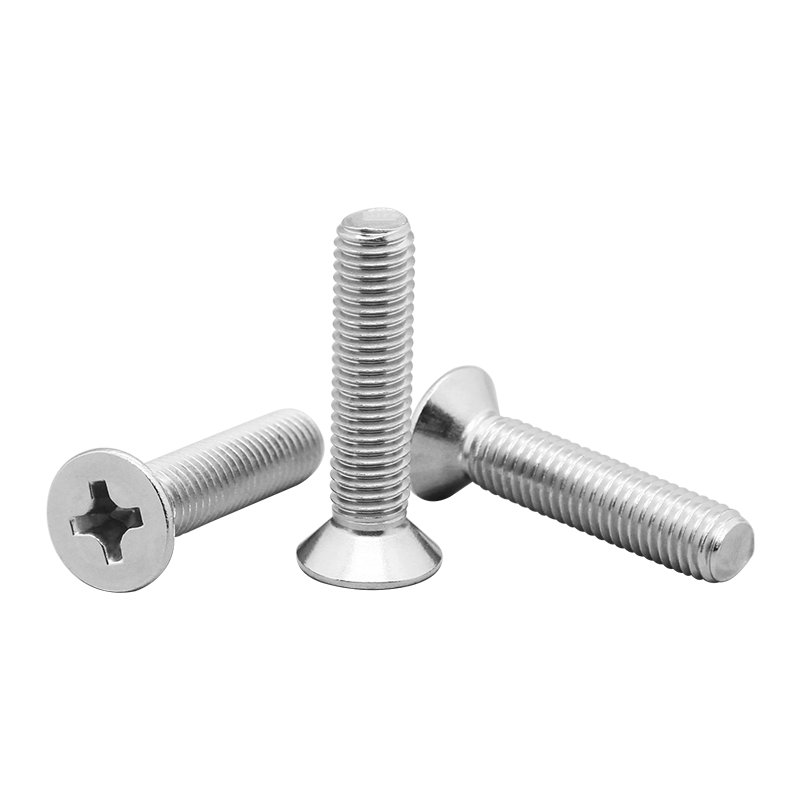
When sourcing custom fasteners, two of the first questions industrial buyers ask are: What is the minimum order quantity (MOQ), and how long will production take?
These questions directly affect purchasing budgets, inventory planning, product launches, and manufacturing schedules. However, neither MOQ nor lead time is determined by order quantity alone. Both depend on the fastener design, manufacturing process, tooling requirements, material availability, surface treatment, inspection requirements, and order conditions.
For OEM purchasing teams and engineers, understanding these factors makes it easier to compare supplier quotations, avoid unexpected costs, and plan deliveries more reliably.
This guide explains what determines MOQ and lead time for custom fasteners, how the two interact, and what information to provide when requesting a quotation from a fastener supplier.
1. What Does MOQ Mean for Custom Fasteners?
Minimum order quantity, or MOQ, is the smallest quantity a supplier is prepared to accept for a particular order under specified commercial and production conditions.
For custom fasteners, MOQ may be influenced by production economics, material purchasing requirements, tooling investment, setup time, and the need to run a process efficiently.
Unlike standard catalogue fasteners, custom screws, bolts, nuts, studs, and other special components may require dedicated tools, non-standard dimensions, special materials, or additional manufacturing operations.
A supplier may therefore quote different minimum quantities for different designs, even when the fasteners look similar.
Why does MOQ exist?
Tooling and setup costs
A custom fastener may require dedicated dies, punches, fixtures, gauges, or machine setup. These costs do not necessarily decrease when the order quantity is small.
Material purchasing requirements
Raw materials may be available in standard stock sizes, but a particular grade, diameter, or condition may require a larger purchase quantity than the project initially needs.
Manufacturing process economics
Some processes are efficient for repeat production but require substantial setup before the first acceptable part can be produced. Other processes offer more flexibility for small batches.
Secondary operations
Heat treatment, plating, coating, thread locking, special packaging, and other operations may have their own setup requirements or minimum processing quantities.
Inspection and documentation
Special testing, first-article approval, traceability, and customer-specific documentation can add fixed costs or coordination requirements to a custom order.
MOQ is therefore best understood as a project-specific commercial and manufacturing decision, rather than a universal number that applies to every fastener.
2. What Determines the MOQ for a Custom Fastener?
Several factors should be evaluated together when determining a practical order quantity.
A. Fastener design and complexity
A component based on a standard fastener design may need relatively limited customization. A fully custom component with a special head, unusual thread, multiple shoulders, or tight dimensional tolerances may require additional tooling or manufacturing steps.
The more specialized the design, the more important it becomes to evaluate setup costs and process requirements before selecting a quantity.
B. Manufacturing process
Different manufacturing processes have different cost structures.
Cold heading can be efficient for suitable fastener geometries in repeat production, but dedicated tooling and setup may make very small orders less economical.
CNC machining can offer greater flexibility for prototypes, small batches, and certain complex geometries. However, programming, workholding, machining time, and inspection still contribute to the cost.
Secondary machining or a combination of forming and machining may also be appropriate, depending on the drawing.
There is no universal quantity threshold at which one process becomes cheaper than another. The break-even point depends on the specific component, tooling investment, recurring production cost, and expected demand.
C. Tooling ownership and reuse
For custom fasteners requiring dedicated tooling, buyers should clarify:
- Whether tooling is included in the unit price or quoted separately
- Whether the tooling is new or already available
- Who owns the tooling after payment
- Whether tooling maintenance or replacement is chargeable
- How tooling changes are handled after a drawing revision
- Whether the tooling can be reused for repeat orders
Existing tooling may reduce the setup burden for a repeat order, but its condition, compatibility, and availability must be confirmed.
Tooling ownership should be stated clearly in the quotation or purchase agreement rather than assumed.
D. Material availability
A requested material grade or size may be readily available, or it may need to be sourced specifically for the order.
If the required material is available only in a larger commercial quantity, the supplier may need to account for unused stock, material minimums, or storage requirements when calculating MOQ and price.
For materials with specific mechanical, chemical, or traceability requirements, the purchasing specification should identify the required grade and documentation before the quotation is finalized.
E. Surface treatment and packaging
Surface treatments may involve minimum processing batches, rack or basket loading constraints, or additional preparation and inspection.
Similarly, special packaging, individual labeling, kitting, or customer-specific shipping configurations may affect the practical order quantity.
Buyers should confirm whether MOQ applies to the complete finished order or to individual process stages, materials, finishes, or packaging configurations.
3. How MOQ Affects Unit Price and Total Cost
MOQ and unit price are closely related because some project costs are fixed while others vary with the number of acceptable parts produced.
A simplified cost model is:
Total order cost = fixed project costs + variable production costs + other applicable costs.
Fixed project costs may include tooling design, setup, programming, or first-article activities. Variable costs may include raw material, production time, secondary operations, and per-part packaging.
When fixed costs are spread across more parts, their contribution to the cost per part generally decreases.
For example, consider a hypothetical project with a fixed setup and tooling cost of $1,000. If the entire fixed cost is allocated across the order, it contributes $10 per part for an order of 100 pieces, but $1 per part for an order of 1,000 pieces.
These figures are illustrative only and are not a quotation or an estimate of HKTL-Fastener pricing. Actual costs depend on the project.
However, ordering more parts is not automatically the best financial decision. Larger orders can increase inventory holding costs, tie up working capital, and create a risk of excess stock if demand changes.
Compare total cost, not unit price alone
When evaluating different quantity options, consider:
- Tooling and setup charges
- Unit price at each quantity
- Inspection and documentation costs
- Packaging and shipping costs
- Inventory carrying costs
- Storage and handling
- Expected demand over the product lifecycle
- Risk of engineering changes or product obsolescence
A smaller order may have a higher unit price but a lower initial cash commitment. A larger order may lower the unit price but increase total expenditure and inventory risk.
The right choice depends on both manufacturing economics and the buyer’s demand forecast.
4. What Does Lead Time Mean for Custom Fasteners?
Lead time is the time required to complete an agreed stage of an order. However, suppliers may use the term differently.
For purchasing purposes, it is important to distinguish between:
- Quotation lead time: The time needed to review the request and prepare a quotation.
- Tooling lead time: The time needed to design, manufacture, or modify dedicated tooling.
- Sample lead time: The time required to produce samples or first articles.
- Production lead time: The time needed to manufacture the agreed production quantity.
- Finishing and inspection time: The time needed for specified secondary operations, tests, and release activities.
- Shipping transit time: The time required to transport the goods to the destination.
These stages may overlap in some projects, while others must be completed sequentially.
A quoted production lead time does not necessarily include tooling development, sample approval, or international transportation. Buyers should confirm the start point and end point of every quoted timeline.
For example, a quotation may define production lead time as starting only after the drawing, samples, tooling, and purchase order requirements have been approved. If these conditions are not explicit, different suppliers may quote timelines that are not directly comparable.
5. What Factors Affect Custom Fastener Lead Time?
A. Drawing completeness and technical clarification
Incomplete specifications can delay quotation, engineering review, and production preparation.
Common missing details include:
- Material grade and required condition
- Thread designation and tolerance class
- Critical dimensions and tolerances
- Surface treatment and coating requirements
- Mechanical property requirements
- Inspection and documentation requirements
- Packaging and labeling instructions
If a supplier must repeatedly request missing information, the project may lose time before manufacturing begins.
Providing a complete, controlled drawing and clearly identifying open technical questions helps reduce avoidable clarification cycles.
B. Tooling development
New tooling can be a significant part of the schedule for certain cold-headed or otherwise formed custom fasteners.
The timeline may include design review, tooling manufacture, setup, trial production, inspection, and modifications following sample evaluation.
If existing tooling is suitable and available, this stage may be reduced. However, tooling reuse should be confirmed rather than assumed.
For projects requiring dedicated tooling, buyers should request a schedule that identifies tooling completion, sample production, approval, and production release as separate milestones.
C. Raw material procurement
Material availability can affect the start of production.
A commonly stocked material may be easier to source than a special grade, non-standard diameter, or material requiring specific documentation. Availability may also change between the quotation date and the order date.
For this reason, material assumptions should be confirmed during quotation and revisited when the purchase order is released.
Where material certification or lot traceability is required, the time needed to obtain and review the supporting documentation should also be considered.
D. Order quantity and production scheduling
A larger order may require more production time, but the relationship is not always linear.
Production time depends on the process, setup requirements, machine or line availability, batch size, yield, secondary operations, and the supplier’s production schedule.
A larger order may also be divided into several production or shipping batches if the parties agree on a phased delivery plan.
Buyers should confirm whether the quoted schedule represents completion of the entire order or the first shipment only.
E. Surface treatment and secondary operations
Custom fasteners may require several operations after the primary manufacturing stage.
Depending on the specification, these may include heat treatment, thread rolling, plating, passivation, coating, sorting, or special packaging.
Each additional operation may require scheduling, transport between process stages, inspection, or documentation.
The lead time should account for all operations necessary to deliver the specified finished product, including outsourced processing where applicable.
F. Sampling, inspection, and approval
A sample is not automatically approved simply because it has been manufactured.
The buyer and supplier may need to agree on sample quantities, dimensional checks, material evidence, mechanical tests, coating requirements, or other acceptance criteria.
If approval is required before production, the timeline also depends on how quickly the buyer reviews the sample and provides documented feedback.
Unclear acceptance criteria can lead to repeated samples and delayed production release.
G. Packaging and transportation
The manufacturing schedule and delivery schedule are not the same.
After production, the order may still require final inspection, document review, packing, export preparation where applicable, and transportation.
International transit time depends on the selected shipping method, destination, carrier schedule, customs procedures, and other logistics factors.
Always confirm whether the quoted delivery date refers to completion at the supplier, dispatch, arrival at a specified location, or another agreed milestone.
6. How MOQ and Lead Time Affect Each Other
MOQ and lead time are related, but they do not always move in the same direction.
Larger orders may improve production economics
A larger quantity may spread setup and tooling costs across more parts. For suitable processes, it may also support more efficient production planning.
However, a larger order can require a longer production run, more raw material, and additional finishing or inspection time.
Smaller orders may require more flexible processes
A small batch may be practical when existing stock, flexible machining, or an established process can be used.
However, if a custom part requires new tooling or material procurement, the project may still need substantial preparation even when the order quantity is small.
Repeat orders may be easier to plan
Once a design has been approved and suitable tooling, process settings, and inspection requirements are established, repeat orders may avoid some initial development activities.
Nevertheless, repeat-order lead time still depends on material availability, production scheduling, tooling condition, quantity, and any changes to the specification.
Rush orders may introduce additional costs
Expediting an order may require changes to production scheduling, transportation, or other project arrangements. It cannot eliminate every technical or supply constraint.
Before requesting an accelerated schedule, identify which stages are critical and ask the supplier to confirm what can realistically be shortened.
Buyer takeaway: Do not assume that a lower MOQ guarantees faster delivery, or that a higher MOQ guarantees a shorter lead time. Evaluate both against the actual process and project schedule.
7. How to Reduce MOQ Pressure Without Increasing Supply Risk
Buyers can often improve the commercial structure of a custom fastener order by planning demand and production requirements together.
Request quantity breaks
Ask suppliers to quote several quantities, such as the initial requirement and one or more higher-volume options.
A quantity-break quotation helps identify how setup costs, tooling, material purchasing, and production economics affect the unit price.
The quantities should reflect realistic demand rather than arbitrary round numbers.
Consider scheduled releases
For products with predictable demand, a buyer may explore a larger committed order with deliveries released in stages.
This approach may help balance production economics and inventory needs, but it requires clear agreement on order commitment, release dates, storage responsibility, payment terms, and how forecast changes will be handled.
Do not assume a supplier will hold inventory or accept flexible releases unless those arrangements are confirmed in writing.
Review whether a standard fastener can meet the requirement
A standard catalogue fastener may reduce the need for dedicated tooling and special production planning.
Before developing a fully custom part, consider whether a standard size, material, thread, or head configuration can meet the engineering requirement.
Any substitution must still satisfy the drawing, performance, assembly, and applicable compliance requirements. A standard product should not be selected solely to reduce cost or lead time if it does not meet the design intent.
Evaluate process alternatives
Depending on geometry and quantity, CNC machining, cold heading, or a combination of processes may be worth comparing.
The best route depends on the drawing, material, required tolerances, expected demand, and total project cost. Ask suppliers to explain their proposed manufacturing approach and any tooling implications.
Finalize the specification early
Changes to thread details, dimensions, material, or surface finish after tooling or sample approval may require additional engineering work, tooling modifications, repeat samples, or revalidation.
A controlled drawing revision and an agreed approval process help reduce the risk of late changes disrupting the schedule.
8. How to Plan Custom Fastener Lead Time More Reliably
A practical schedule should show the main project milestones rather than provide only one delivery estimate.
For a custom fastener project, discuss the following stages with the supplier:
- RFQ submission and technical clarification
- Quotation review and commercial agreement
- Drawing and specification approval
- Material sourcing and tooling preparation, where applicable
- Sample or first-article production, if required
- Buyer inspection and approval, if required
- Production release and manufacturing
- Secondary processing and surface treatment
- Final inspection and documentation
- Packaging, dispatch, and transportation
Not every project requires every stage, and some activities may run in parallel. The supplier should identify the actual sequence and dependencies for the specific order.
Agree on the lead-time start point
Confirm whether the schedule begins at purchase order acceptance, receipt of an agreed deposit, drawing approval, tooling approval, material availability, or another contractual milestone.
The start condition should be clear to both parties.
Define approval responsibilities
Identify who approves drawings, samples, deviations, and inspection reports. Establishing a clear contact and response process can prevent avoidable delays between manufacturing stages.
Separate manufacturing and shipping dates
For international orders, distinguish the planned production completion date from the expected arrival date.
If the fasteners are needed for a scheduled assembly or product launch, work backward from the required arrival date and allow for the relevant approval and logistics stages.
Build in realistic contingency
Material availability, rework, inspection findings, process changes, and transportation disruptions can affect schedules.
The appropriate contingency depends on project risk and the consequences of a delay. Critical production schedules should not rely solely on an optimistic best-case estimate.
9. What Should You Include in a Custom Fastener RFQ?
A complete request for quotation gives suppliers the information needed to evaluate MOQ, lead time, process suitability, and cost.
Include the following details where applicable:
Product definition
- Part number and current drawing revision
- Engineering drawing or complete specification
- Intended application and mating component information
- Critical dimensions and tolerances
Technical requirements
- Material grade and condition
- Thread type, diameter, pitch, and tolerance class
- Mechanical property or strength requirements
- Surface finish, coating, or heat treatment
- Applicable standards
- Required inspection, testing, and traceability documentation
Commercial requirements
- Initial order quantity
- Estimated annual demand
- Expected product lifecycle or forecast period
- Desired quantity breaks
- Tooling cost and ownership requirements
- Packaging and labeling requirements
Scheduling requirements
- Required sample quantity, if applicable
- Sample approval requirements
- Target production release date
- Required delivery date and destination
- Whether phased shipments are acceptable
- Any known launch or assembly deadlines
If some information is not yet available, identify it as an open item instead of leaving the supplier to make an unapproved assumption.
When comparing quotations, confirm that each supplier is pricing the same revision, quantity, material, finish, inspection scope, and delivery terms. Otherwise, an apparently lower price or shorter lead time may reflect a different set of assumptions.
10. Frequently Asked Questions
What determines the MOQ for custom fasteners?
MOQ depends on the fastener design, manufacturing process, tooling and setup costs, raw material purchasing requirements, secondary operations, inspection requirements, and commercial conditions. The practical minimum should be evaluated for the specific drawing and order.
Why do custom fasteners often have higher minimum quantities than standard fasteners?
Standard fasteners may already have established tooling, production processes, and available inventory. A custom fastener may require dedicated tooling, new setup, material procurement, or special processing. These fixed requirements can make a very small order less economical.
How long does it take to manufacture custom fasteners?
There is no universal lead time for all custom fasteners. The schedule depends on technical clarification, material availability, tooling, sample approval, manufacturing process, order quantity, finishing, inspection, and shipping arrangements. Request a project-specific schedule with clearly defined milestones.
Does a larger order always have a shorter lead time?
No. A larger order may improve unit-cost economics but require more production time or material. Its delivery schedule also depends on production capacity, process sequencing, finishing, inspection, and shipping. MOQ and lead time should be evaluated separately.
Can I order a small quantity of custom fasteners?
Possibly. The feasibility depends on the design, available processes, tooling requirements, material, and commercial conditions. CNC machining or modification of a suitable standard fastener may be worth evaluating for some low-volume projects, but the final decision requires review of the specification.
How can I reduce the lead time for a custom fastener order?
Submit a complete drawing, confirm material and finish requirements early, agree on inspection criteria, respond promptly to technical questions, and control drawing revisions. If samples are required, define the approval process before production begins. Expedited scheduling may be possible for some projects but must be confirmed.
Does the quoted lead time include tooling, samples, and shipping?
Not necessarily. Suppliers may quote these stages separately. Confirm whether the schedule includes tooling, sample production, buyer approval, production, finishing, final inspection, packing, and transportation.
Can I reduce MOQ by accepting a higher unit price?
Sometimes. A smaller quantity may be possible if the supplier can use flexible processes, existing tooling, or available material. However, certain material or process minimums may still apply. Ask for alternative quantities and a clear breakdown of applicable tooling or setup charges.
What is the difference between production lead time and delivery lead time?
Production lead time generally refers to the time needed to manufacture an order under the agreed start conditions. Delivery lead time may include additional finishing, inspection, packaging, dispatch, and transit time. Always confirm the exact start and end points in the quotation.
What information helps a supplier quote MOQ and lead time accurately?
Provide the current drawing, material, thread specifications, tolerances, finish, order quantity, estimated annual demand, inspection requirements, and target delivery date. Also identify whether the project requires new tooling, sample approval, or special documentation.
Conclusion
MOQ and lead time are important parts of custom fastener sourcing, but neither should be evaluated in isolation.
MOQ is influenced by tooling, setup, material purchasing, process economics, and other project requirements. Lead time depends on the sequence of technical approval, material sourcing, tooling, production, secondary operations, inspection, and logistics.
For industrial buyers, the best approach is to submit a complete RFQ, compare several realistic quantity options, define the lead-time milestones, and confirm tooling and approval responsibilities before placing the order.
Clear communication at the beginning of a project helps reduce uncertainty and supports more reliable purchasing and production planning.
Request a Quote for Your Custom Fastener Project
Planning a custom screw, bolt, nut, stud, or other fastener order?
Contact HKTL-Fastener (TONGLIN) with your engineering drawing or specification, material requirements, thread details, surface finish, initial order quantity, estimated annual demand, and target delivery date.
These details help clarify the requirements for quotation and allow the project-specific MOQ, manufacturing approach, and lead-time assumptions to be reviewed.
Request a Quote to discuss your custom fastener requirements and the information needed to evaluate your order.