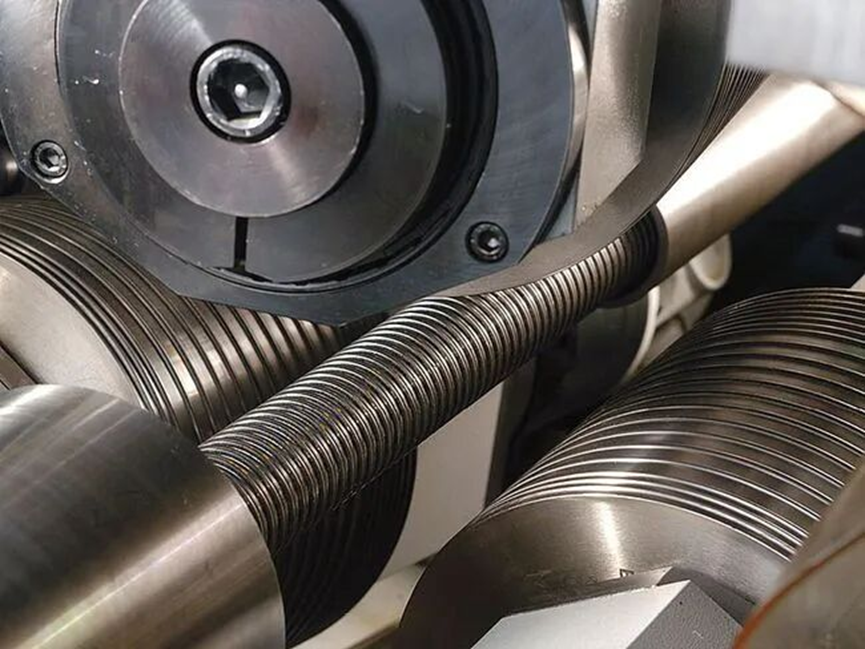
Choosing between CNC machining and cold heading is an important decision when developing custom fasteners. The manufacturing process affects tooling investment, part geometry, material utilization, dimensional control, production economics, and the way the component’s material is formed.
Neither process is universally better. Cold heading is often attractive for repeat production of fasteners with formable geometries, while CNC machining offers flexibility for complex features, prototypes, and parts requiring specific machined dimensions. Some designs benefit from a combination of forming and secondary machining.
For industrial buyers and engineers, the right choice depends on the drawing, material, required tolerances, expected order volume, performance requirements, and total project cost.
This guide compares CNC machining and cold heading to help you select a suitable manufacturing route for custom screws, bolts, pins, studs, and other threaded or unthreaded components.
1. What Is Cold Heading?
Cold heading, also called cold forming in this context, is a manufacturing process that shapes metal wire or prepared blanks by applying compressive force through punches and dies, generally at or near room temperature.
Instead of removing large amounts of material, the process displaces metal into the required geometry. Depending on the part design, several forming stages may be used to create the head, shoulders, shank, and other features.
Cold heading is commonly used for products such as:
- Screws and bolts
- Studs and pins
- Rivets
- Special-shaped fasteners
- Components with integral heads and formed features
After heading, additional operations may be needed. These can include thread rolling, machining, heat treatment, surface finishing, and inspection, depending on the product specification.
Main advantages of cold heading
Efficient production at scale
Once the tooling and process are established, cold heading can produce suitable parts at high rates. This can make it economical for repeat orders and stable demand.
Good material utilization
Because the process forms material rather than removing it extensively, it can reduce scrap compared with machining from solid bar stock for suitable geometries.
Potential benefits from material flow
The forming process changes the material’s grain flow and work-hardening condition. The resulting mechanical behavior depends on the material, part geometry, forming sequence, and subsequent processing. Cold heading does not automatically guarantee superior performance; the finished fastener must still meet its specified requirements.
Repeatable geometry in a controlled process
A properly designed and maintained forming process can produce consistent parts. Actual capability must be established for the specific component and its tolerances.
Limitations of cold heading
Cold heading requires suitable material ductility and a geometry that can be formed without unacceptable defects. It may be less suitable for parts with complex internal cavities, substantial asymmetry, deep undercuts, or isolated precision features that are difficult to create with punches and dies.
Dedicated tooling also creates an upfront investment. If a design is still changing or demand is uncertain, that investment may be difficult to justify.
2. What Is CNC Machining for Custom Fasteners?
CNC machining uses computer-controlled cutting tools to remove material from a workpiece, such as bar stock, a blank, or a preformed component.
For custom fasteners, common operations include turning, milling, drilling, boring, grooving, and machining threads. The specific process depends on the geometry and the equipment available from the selected supplier.
CNC machining is often considered for low-volume parts, prototypes, and components with features that are difficult to form directly.
Main advantages of CNC machining
Design flexibility
CNC machining can produce a wide range of external profiles, shoulders, slots, holes, grooves, and other features, subject to tool access, workholding, material, and machine capability.
Flexibility for prototypes and changing designs
When a part is still being developed, modifying a machining program may be simpler than redesigning dedicated forming dies. This can make CNC machining useful during product validation and early production.
Control of selected dimensions
CNC machining can be suitable for critical diameters, concentric features, bores, and other dimensions that require a specific machining strategy. Achievable tolerances depend on the feature, material, geometry, process stability, and inspection method. They should be agreed from the drawing rather than assumed from the word “CNC.”
Broad material flexibility
Machining can be considered for many materials, including various steels, stainless steels, aluminum alloys, brass, and selected specialty alloys. Suitability depends on material machinability, tool wear, component geometry, and the required finished properties.
Limitations of CNC machining
Machining removes material to create the required shape, which may generate significant chips for parts with large amounts of removed material. Cycle time and machining cost can also remain relatively high for repeated production of simple parts.
Machining from bar stock does not automatically provide the same material flow as a headed component. Where grain direction, fatigue performance, or other mechanical characteristics are important, the manufacturing route should be evaluated against the component’s design and performance requirements.
3. CNC Machining vs Cold Heading: Key Differences
| Decision factor | Cold heading | CNC machining |
|---|---|---|
| Basic process | Forms material using punches and dies | Removes material using cutting tools |
| Initial investment | Dedicated forming tooling may be required | Often lower dedicated tooling investment; programming and setup still cost money |
| Production economics | Often attractive for stable, repeat demand | Often attractive for prototypes, low volumes, or complex parts |
| Material utilization | Generally efficient for suitable formed geometries | Depends on how much material must be removed |
| Geometry | Best suited to formable shapes and features | Flexible for many external and internal features |
| Dimensional control | Depends on forming design, tooling, and secondary operations | Depends on machining strategy, workholding, material, and inspection |
| Design changes | May require tooling modification | May require program, fixture, or process changes |
| Material behavior | Plastic deformation changes grain flow and work-hardening condition | Material is removed from the starting stock |
| Secondary operations | May include thread rolling, machining, heat treatment, or finishing | May include additional machining, heat treatment, or finishing |
| Best starting point | Suitable repeat-production fasteners | Complex, low-volume, or precision-featured components |
This comparison is a guide, not a guarantee of capability. A specific drawing may favor one process or require several operations regardless of the chosen starting method.
4. Which Process Is More Cost-Effective?
The answer depends on the full cost of producing an acceptable part, not simply the quoted unit price.
Cold heading: higher initial tooling, potentially lower recurring cost
A cold-heading project may involve die and punch design, tooling manufacture, setup, process development, and validation. These costs must be considered alongside the cost of material, forming, secondary operations, inspection, and finishing.
For suitable parts with stable demand, the tooling cost can be spread across many components. As volume increases, cold heading may become more economical than machining each part individually.
CNC machining: more flexibility, recurring machining cost
CNC machining may require programming, fixture preparation, setup, and first-piece verification. However, it can avoid dedicated forming tooling for many designs.
For a prototype or small order, avoiding a large tooling commitment may outweigh the higher cost per machined part. CNC machining can also be attractive when the geometry would require extensive development of forming tools or several additional operations.
Calculate the break-even point
A useful first-pass comparison is:
Estimated total cost = tooling and setup + production cost + secondary operations + inspection + finishing + other applicable project costs.
For a simplified comparison, if the two routes have different fixed costs and recurring costs per acceptable part, the estimated break-even quantity can be expressed as:
[
Q_{\text{break-even}} =
\frac{F_{\text{heading}}-F_{\text{CNC}}}
{V_{\text{CNC}}-V_{\text{heading}}}
]
Here, (F) represents fixed project costs and (V) represents recurring cost per acceptable part for each route. The formula is useful only when the assumptions are consistent and the denominator is positive.
In a real RFQ, include yield, scrap, secondary machining, tooling maintenance, inspection, minimum order quantities, and likely future demand where relevant.
Buyer tip: Ask suppliers to quote the expected quantity and forecast demand, not just one unit price. If the design may change, ask how tooling modification and revalidation would affect the project.
5. Which Process Provides Better Dimensional Accuracy?
Neither process is automatically more accurate for every feature.
CNC machining can provide direct control over selected machined dimensions, but its capability depends on the feature and the manufacturing setup. Cold heading can also produce consistent dimensions for suitable designs when tooling and process conditions are controlled.
The important question is: Which dimensions are functionally critical, and how will they be verified?
Before choosing a process, identify:
- Critical diameters and lengths
- Shoulder and bearing-surface dimensions
- Concentricity, runout, or positional requirements
- Thread designation and tolerance class
- Surface finish requirements
- Features that affect assembly or sealing
- Inspection methods and acceptance criteria
Avoid specifying extremely tight tolerances on every feature when only a few dimensions control function. Unnecessary tolerances can restrict manufacturing options and increase cost.
For a formed component with one or two precision features, a hybrid route may be more practical than machining the entire part from solid stock.
6. Material Selection and Mechanical Performance
Material choice affects both process feasibility and finished-part performance.
Cold heading requires material that can withstand the specified deformation without unacceptable cracking or surface defects. Material condition, cleanliness, ductility, forming reduction, geometry, and process design all matter.
CNC machining depends on the machinability of the selected material, the required geometry, cutting conditions, and tool selection.
When evaluating either process, confirm:
- The exact material designation
- Applicable material specification
- Required mechanical properties
- Heat-treatment requirements, if any
- Corrosion and temperature requirements
- Surface treatment and dimensional effects
- Required material documentation and traceability
For cold-heading steels, ISO 4954-1:2024 covers technical delivery conditions for specified non-alloy and alloy steels intended for cold heading and cold extruding. Stainless steels for these applications are addressed separately in ISO 4954-2:2024. The applicable standard depends on the material and order specification.
Do not assume that the process alone determines strength or fatigue life. Material grade, forming or machining history, thread manufacturing method, heat treatment, surface condition, and joint design can all affect performance.
For load-bearing fasteners, the finished part must meet the specified mechanical and product requirements regardless of manufacturing route.
7. Can Cold Heading and CNC Machining Be Combined?
Yes. For suitable designs, a hybrid manufacturing route can combine the material utilization and forming efficiency of cold heading with the dimensional flexibility of machining.
For example, a component might be formed to create its main head and shank, followed by machining of a critical shoulder, bore, groove, or other feature.
This approach may be worth evaluating when:
- The main geometry is suitable for forming.
- Only selected features need additional machining.
- Repeat demand can justify forming tooling.
- The design requires a combination of formed and machined characteristics.
- The complete route meets the specified quality and performance requirements.
A hybrid process is not always cheaper. It adds handling and process coordination and may require additional inspection. The correct comparison should include all operations and the resulting part quality.
Also consider how subsequent machining affects the component. Material removal can change local geometry and surface condition, and the sequence of forming, machining, heat treatment, and finishing must be suitable for the application.
8. How to Choose the Right Process for Your Custom Fastener
Use the following questions to structure the engineering and purchasing decision.
Step 1: Review the part geometry
Is the component primarily a headed or axisymmetric shape, or does it contain complex internal features, multiple precision shoulders, or unusual profiles?
A formable main shape may favor cold heading. Difficult-to-form features may favor machining or a hybrid route.
Step 2: Define the required tolerances
Identify the dimensions that control assembly and function. Discuss whether they can be achieved in the proposed primary process or require secondary machining.
Step 3: Confirm material and performance requirements
Check whether the material is suitable for the selected forming or machining route and whether the finished part must meet particular strength, fatigue, corrosion, or temperature requirements.
Step 4: Estimate demand over the product lifecycle
Consider prototype quantity, initial production, annual demand, expected product life, and the possibility of design revisions.
A small initial order does not always mean that CNC machining is best for the entire product lifecycle. Likewise, high forecast demand does not justify cold-heading tooling if the geometry is unsuitable or demand is uncertain.
Step 5: Compare total project cost
Ask for a comparison that accounts for tooling, setup, material, production, secondary operations, finishing, inspection, and expected order quantities.
Step 6: Agree on validation and acceptance requirements
Define the approved drawing revision, inspection plan, material documentation, mechanical requirements, and any sample or first-article approval process required for the project.
The selected manufacturing route should be able to meet the specification consistently, with the required evidence of conformity.
9. What Should Buyers Include in an RFQ?
A clear request for quotation helps suppliers evaluate process options and identify missing information early.
Include the following details where applicable:
- Engineering drawing and revision
- Part description and intended function
- Material designation and mechanical requirements
- Thread type, size, pitch, and tolerance class
- Critical dimensions and geometric tolerances
- Surface finish or coating requirements
- Required standards and testing
- Prototype quantity and production quantity
- Expected annual demand and forecast period
- Packaging and identification requirements
- Required inspection reports or certificates
- Target delivery schedule and shipping destination
- Known design constraints or opportunities for process optimization
If the drawing is still under development, state which requirements are fixed and which remain open for engineering review.
Ask the supplier to explain the proposed manufacturing route and identify any features that may affect tooling cost, lead time, tolerances, or inspection. This allows purchasing teams to compare quotations on a consistent basis rather than choosing solely by unit price.
10. Frequently Asked Questions
Is cold heading cheaper than CNC machining?
Cold heading can be more economical for suitable parts with stable, repeat demand because tooling and setup costs can be spread over many components. CNC machining may be more economical for prototypes, low quantities, complex features, or designs that are still changing. The break-even point depends on the actual part and cost assumptions.
Is CNC machining more accurate than cold heading?
CNC machining offers flexibility for many precision features, but accuracy depends on the specific feature, material, process, and inspection method. Cold heading can also achieve consistent dimensions for suitable designs. Compare the required tolerances against demonstrated process capability rather than assuming one process is always more accurate.
Does cold heading produce stronger fasteners?
Cold heading changes material flow and work-hardening condition, which can influence mechanical behavior. However, finished strength and fatigue performance depend on material, design, forming conditions, thread manufacturing, heat treatment, surface condition, and other factors. Performance should be verified against the relevant requirements.
Is CNC machining suitable for custom bolts and screws?
It can be suitable for prototypes, small batches, complex geometry, or features that are difficult to form. The final choice depends on dimensions, material, tolerance requirements, quantity, and total project cost.
Can a cold-headed fastener be CNC machined afterward?
Yes, where the design and process allow it. Secondary machining can finish selected dimensions or features. The complete process route must account for material behavior, dimensional requirements, inspection, and any later heat treatment or surface finishing.
What production quantity makes cold heading worthwhile?
There is no universal quantity threshold. Tooling cost, part complexity, recurring cost, secondary operations, demand stability, and product lifetime all affect the break-even point. Request a project-specific comparison before committing to tooling.
Which materials can be used for cold heading or CNC machining?
Material suitability depends on the exact grade, material condition, geometry, and process requirements. Cold-heading applications require suitable formability; CNC machining depends on machinability and the desired finished properties. Confirm the proposed material and applicable specification with the supplier.
What information is needed to quote a custom fastener?
At minimum, provide a drawing or complete dimensional specification, material, thread details, surface finish, quantity, and applicable performance requirements. Forecast demand, inspection needs, and delivery requirements help support a more useful process and cost comparison.
Conclusion
CNC machining and cold heading serve different manufacturing needs, and neither should be selected by habit alone.
Cold heading can be a strong option for suitable, repeat-production fasteners where forming efficiency and material utilization support the business case. CNC machining can provide flexibility for complex geometry, prototypes, and selected precision features. A combination of both may be appropriate when the design benefits from forming the main shape and machining critical details.
The best route is the one that meets the engineering specification and provides the right balance of quality, manufacturability, supply risk, and total cost over the product lifecycle.
Request a Quote for Custom Fasteners
Developing a custom screw, bolt, stud, pin, or other fastener component?
Send your drawing or specification to HKTL-Fastener (TONGLIN) for a discussion of your project requirements. Include the material, critical dimensions, thread details, tolerances, surface finish, estimated quantities, and any required inspection or performance criteria.
Request a Quote to review your custom fastener requirements and determine which manufacturing options may be suitable for your design.