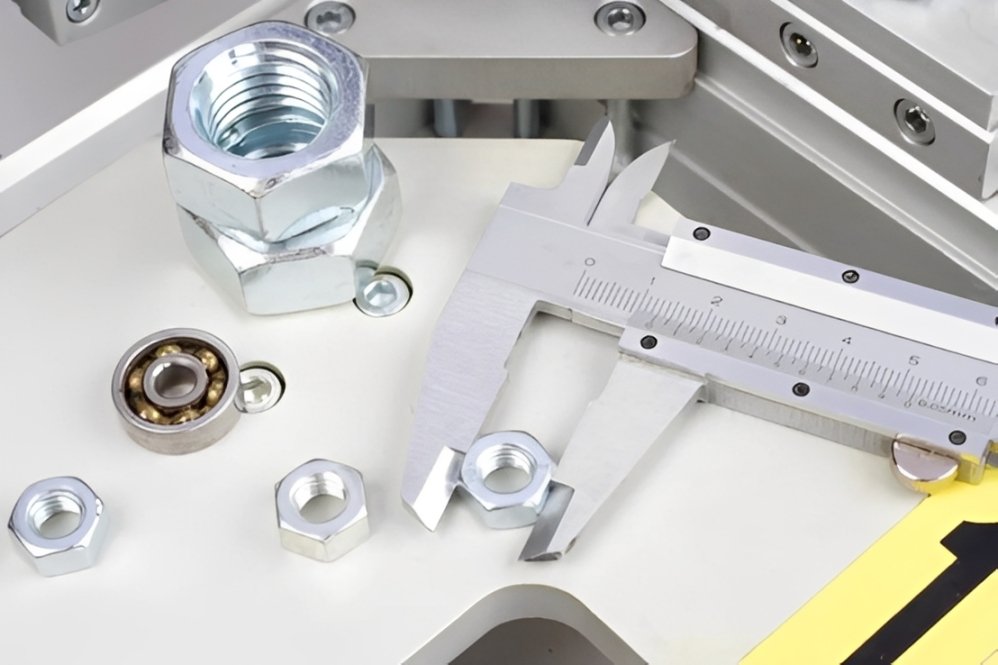
Choosing a fastener manufacturer is about more than finding a competitive unit price. Bolts, screws, nuts, washers, pins, and custom fastening components must meet defined requirements for dimensions, materials, mechanical properties, surface finish, assembly performance, and delivery.
A supplier may provide an attractive quotation and a sample that looks correct, yet still leave important questions unanswered about production consistency, material traceability, inspection, change control, or repeat-order performance.
To evaluate a fastener manufacturer effectively, assess six areas: technical understanding, manufacturing and process control, quality assurance, traceability and documentation, supply reliability, and total cost. Then verify the supplier’s claims through relevant records, sample approval, and a risk-based qualification process.
This guide provides a practical framework for purchasing teams, design engineers, and quality professionals sourcing standard or custom fasteners.
1. Start with a Clear Technical Specification
Before comparing manufacturers, define what the supplier must deliver. If multiple suppliers quote against different assumptions, their prices and lead times will not be directly comparable.
Your RFQ should include the following information where applicable:
- Part number, drawing number, and revision level
- Fastener type, nominal size, thread pitch, and tolerance requirements
- Base material and required mechanical property class or grade
- Applicable dimensional, material, and product standards
- Surface finish and corrosion-resistance requirements
- Critical dimensions and other special characteristics
- Expected order quantity and forecast demand
- Inspection, testing, certification, and documentation requirements
- Packaging, labeling, and traceability requirements
- Delivery destination and requested schedule
For custom fasteners, provide a controlled engineering drawing and explain the component’s function in the assembly. If a material, tolerance, or finish has not yet been finalized, identify it as an open requirement rather than allowing each supplier to make a different assumption.
A useful RFQ enables manufacturers to quote the same technical scope and identify any unresolved questions before production begins.
2. Evaluate Technical Understanding and Engineering Support
A qualified supplier should be able to review the specification, identify ambiguities, and explain relevant manufacturing considerations.
This does not mean every supplier must offer product redesign or engineering consulting. It means the supplier should understand the requirements it accepts and communicate technical risks before they become production problems.
Questions to ask
- Can the supplier review the drawing and confirm the quoted revision?
- Are critical dimensions, tolerances, thread requirements, and material specifications understood?
- Can the supplier identify requirements that need clarification?
- Are proposed substitutions or deviations documented for approval?
- For custom parts, can the proposed manufacturing route be explained?
- Are tooling requirements, sampling expectations, and approval stages defined?
For example, a custom screw may require a specific head geometry, drive feature, thread form, material, and surface treatment. A quotation that addresses only the nominal diameter and length is not sufficient to demonstrate that all requirements have been considered.
Evidence to review
Ask for a drawing-specific feasibility review, a list of technical questions, or a written quotation that clearly identifies the specification and any exclusions.
For custom fasteners, also clarify tooling ownership, responsibility for drawing changes, sample approval, and the process for handling engineering revisions.
3. Verify Manufacturing Scope and Process Control
The word “manufacturer” does not always mean every operation is performed at one facility. A supplier may manufacture some operations internally and use qualified external processors for heat treatment, plating, passivation, testing, or packaging.
Neither arrangement is automatically acceptable or unacceptable. The important issue is whether the supplier can clearly explain its process route and control the activities that affect product conformity.
What to evaluate
Manufacturing fit: Does the supplier’s stated production scope match the type, geometry, material, size, and volume of fastener being sourced?
Process sequence: Can the supplier explain the relevant operations, such as forming, machining, thread production, heat treatment, surface finishing, inspection, and packaging?
Special processes: Where operations are outsourced, who approves the processor, defines the requirements, reviews the results, and controls nonconforming product?
Process changes: How are changes to material sources, tooling, production location, subcontractors, or processing methods reviewed and communicated?
Production planning: What assumptions are being made about order quantity, tooling, capacity allocation, and lead time?
How to verify capability
Request evidence relevant to the specific part and its critical requirements. Depending on the project, this may include a process flow, sample inspection report, production-control records, or a discussion with the responsible technical or quality representative.
Do not assume that a factory photograph, equipment list, or general company profile proves the capability to manufacture your particular fastener.
Likewise, do not require every process to be performed in-house unless the application or purchasing specification explicitly requires it. Evaluate the supplier’s actual control over the complete supply chain.
4. Review the Quality Management System
A quality management system helps define how requirements are reviewed, production is controlled, inspection is performed, and nonconforming product is handled.
However, a quality certificate alone does not prove that a specific fastener meets its drawing or that every relevant process is under control.
Questions to ask
- How are customer drawings and specification revisions controlled?
- How are incoming materials checked against purchasing requirements?
- How are production and inspection records associated with a batch?
- How are measuring instruments calibrated or verified?
- How are nonconforming parts identified, segregated, and dispositioned?
- How are corrective actions investigated and verified?
- How are customer complaints and repeat issues tracked?
How to assess certifications
If a supplier claims certification to ISO 9001 or another management-system standard, request the current certificate and verify:
- The legal entity named on the certificate
- The certified site or sites
- The certification scope
- The issuing certification body
- Validity and current status, where independently verifiable
Check whether the certificate covers the organization and activities relevant to your order. Do not assume that certification automatically covers every subcontractor, every product, or every operation.
If a project requires a particular certification, industry approval, or customer-specific quality system, state that requirement in the RFQ and verify it before supplier approval. Do not treat a supplier’s general statement as sufficient evidence.
5. Assess Inspection and Product Verification
Inspection should be based on the product specification, identified risks, and agreed acceptance criteria.
The right inspection plan depends on the fastener type and application. A simple commercial fastener and a safety-critical component may require very different levels of verification.
Dimensional inspection
Depending on the drawing and product standard, relevant checks may include:
- Nominal dimensions and tolerances
- Thread dimensions and thread fit
- Head geometry and drive features
- Length, diameter, and bearing surfaces
- Coating thickness or other finish-related dimensions
Material and mechanical verification
Where specified, review the applicable evidence for material identity, chemical composition, hardness, tensile properties, proof load, or other mechanical requirements.
Do not assume that one test verifies every property. The applicable test method, sampling plan, specimen or finished-part requirements, and acceptance criteria depend on the governing specification.
For example, ISO 898-1 addresses mechanical and physical properties for specified carbon-steel and alloy-steel bolts, screws, and studs within its scope. It does not, by itself, establish every requirement for corrosion resistance, fatigue, or torque/clamp-force performance. The appropriate product and test standards must be identified separately.
Surface finish and corrosion verification
If a coating is required, confirm the specified coating system and applicable acceptance requirements. Depending on the project, these may include coating thickness, appearance, corrosion testing, or assembly-related friction requirements.
Salt-spray testing, where specified, is a controlled comparison or acceptance test. Its results should not automatically be converted into a guaranteed number of years in service.
What evidence should you request?
Depending on the risk and contract, request a first-article or sample inspection report, relevant material or mechanical test records, coating documentation, and other agreed inspection results.
Confirm which results apply to the actual part and production lot. A generic report from a different component or an unrelated batch does not establish conformity of your order.
6. Check Material and Lot Traceability
Traceability helps connect the supplied fastener to its material, production batch, relevant processing operations, inspection records, and shipment.
The required level of traceability depends on the product, industry, contractual requirements, and consequences of failure.
Questions to ask
- Can the supplier identify the production lot or batch on the packaging or shipment records?
- What material documentation is available for the specified material?
- Can inspection and test results be linked to the relevant lot?
- Where required, can outsourced heat treatment or surface-finishing records be linked to the supplied batch?
- How are mixed lots and incorrectly labeled products prevented?
- What records are retained, and for how long?
What documents may be relevant?
Depending on the order, documentation may include:
- Certificate of conformity
- Material test certificate or material test report
- Mechanical test results
- Inspection reports
- Surface-treatment or coating records
- Applicable certificates or declarations required by the contract
- Lot identification and shipment records
These documents are not interchangeable. A certificate of conformity may confirm that a supplier declares compliance with specified requirements, while a material test report provides particular material test information. Neither document should be assumed to contain every record required by the customer.
State the required documents, lot coverage, format, and retention expectations in the RFQ or purchase order.
7. Evaluate Samples and First-Article Approval
A sample is an important qualification step, but visual approval alone is rarely enough for a technically demanding fastener.
Before requesting samples, agree on what will be checked and how acceptance will be determined.
A practical sample-approval process
- Confirm the drawing revision and specification used to make the sample.
- Define critical dimensions and applicable acceptance criteria.
- Review the required material, strength class, and surface finish.
- Conduct the agreed dimensional and performance checks.
- Record deviations and resolve open technical questions.
- Approve the sample in writing before using it as the production reference, where required.
For custom parts, clarify whether samples are produced using representative tooling and the intended production process. A prototype made by a different method may not fully represent production parts.
For higher-risk applications, consider whether additional validation or a defined first-article inspection process is necessary.
Important: Approval of a sample should not automatically waive ongoing production inspection or other contractual quality requirements.
8. Review Communication and Change Control
Clear communication is part of supplier quality. Technical issues are easier to resolve when responsibilities, decisions, and revisions are documented.
Evaluate how the supplier handles:
- RFQ questions and technical clarifications
- Drawing and specification revisions
- Proposed material or finish substitutions
- Nonconformities and corrective actions
- Delays or changes to confirmed delivery commitments
- Changes to manufacturing locations or external processors
- Approval before implementing changes that affect product requirements
Ask who will coordinate the order, who is responsible for technical questions, and how important decisions will be recorded.
For repeat orders, confirm how the supplier ensures that the current approved drawing and specification are used rather than an obsolete revision.
A well-defined change-control process reduces the risk of receiving parts that differ from the approved sample or previous production order.
9. Compare Delivery Reliability and Supply Risk
A supplier’s quoted lead time is useful only when the assumptions behind it are understood.
Ask what the quotation includes and what could affect the schedule, such as raw-material availability, tooling, external processing, inspection, packaging, and transport.
Questions to ask
- Is the quoted lead time based on current material availability or an estimate?
- Does the schedule include tooling and sample approval?
- Are outsourced processes included in the quoted timeline?
- What order quantity and release schedule does the quote assume?
- How will schedule changes be communicated?
- What contingency or escalation process applies if a delay occurs?
Where a supplier has relevant delivery-performance records, review them in context. A past on-time delivery percentage is useful only if its period, definition, order scope, and data source are clear.
For important or recurring supply, also consider packaging protection, shipment identification, transport arrangements, and the consequences of a delayed or mixed-lot delivery.
Do not assume a supplier can guarantee a particular delivery date until the relevant order details and schedule have been confirmed.
10. Compare Total Cost, Not Just Unit Price
The lowest quoted price may not represent the lowest overall procurement cost.
A meaningful comparison should account for the complete quoted scope and the potential costs of quality problems, delays, rework, and replacement.
Review the following where relevant:
- Unit price and price breaks
- Tooling, setup, or non-recurring engineering charges
- Minimum order quantity and batch-size assumptions
- Inspection and documentation charges
- Surface finishing and other secondary operations
- Packaging and labeling
- Freight, duties, and other landed-cost components
- Payment terms and quote validity
- Expected costs of nonconformity, rework, or production interruption
Make sure all suppliers are quoting the same drawing revision, specification, quantity, finish, documentation, packaging, and delivery basis.
A higher quotation may include additional inspection or documentation that another quotation excludes. Conversely, a low price is not proof of poor quality. Ask for clarification before comparing.
The goal is to evaluate the best overall fit between technical conformity, supply risk, service requirements, and cost.
11. Use a Supplier Evaluation Scorecard
A scorecard helps purchasing, engineering, and quality teams apply consistent criteria. The weights below are an example, not an industry standard. Adjust them to match the application and the consequences of failure.
| Evaluation category | Example weight | Evidence to review |
|---|---|---|
| Technical understanding | 20% | Drawing review, clarification questions, specification alignment |
| Quality and inspection | 20% | Quality controls, relevant inspection results, nonconformity handling |
| Manufacturing and process control | 15% | Process route, capability evidence, external-process controls |
| Traceability and documentation | 15% | Lot identification, material records, agreed test documentation |
| Delivery and communication | 15% | Schedule assumptions, order communication, change control |
| Commercial fit and total cost | 15% | Comparable quotation, tooling, packaging, landed-cost assumptions |
| Total | 100% |
One simple rating scale is:
- 1 — Not demonstrated: Required information or evidence is missing.
- 2 — Partially demonstrated: Some evidence exists, but significant gaps remain.
- 3 — Acceptable: The defined requirements are addressed with relevant evidence.
- 4 — Strong: Evidence is clear, consistent, and well matched to the project.
- 5 — Verified and well controlled: Requirements are supported by appropriate records and a defined control process.
Multiply each category’s rating by its assigned weight to calculate a weighted comparison, using the same scale for all suppliers.
Do not let a high overall score compensate for a critical failure. For example, a supplier that cannot meet a mandatory material requirement, product specification, or required certification should not pass merely because its price and communication scores are high.
For safety-critical, regulated, or high-consequence applications, use formal qualification and approval criteria defined by the responsible engineering and quality teams.
12. Red Flags to Investigate Before Placing an Order
The following signs do not automatically prove that a supplier is unsuitable, but they deserve clarification:
- The quotation does not identify the drawing revision or key technical assumptions.
- The supplier offers an unapproved material, strength class, or surface finish substitution.
- Claimed certifications cannot be verified or do not cover the relevant entity or scope.
- The supplier cannot explain how lot identification and relevant records are maintained when traceability is required.
- Inspection reports are unrelated to the quoted part or production lot.
- The supplier resists documenting deviations or approval decisions.
- Tooling ownership and revision responsibilities are unclear for custom components.
- The quoted delivery schedule excludes important process steps or approval stages.
- The supplier promises performance without identifying the applicable test method or acceptance criteria.
Ask specific questions and request relevant evidence. A supplier may be able to resolve an apparent gap by providing missing documentation or clarifying the scope. If a mandatory requirement remains unmet, document the gap and apply the agreed qualification criteria.
Frequently Asked Questions
How do I know whether a fastener manufacturer is reliable?
Review the supplier’s technical understanding, process controls, quality system, inspection evidence, traceability, change management, delivery assumptions, and ability to meet the requirements of your specific part. Verify important claims using relevant documents, sample approval, and risk-based audits rather than relying only on a company profile or sales presentation.
What documents should I request from a fastener supplier?
Depending on the part and contract, request a quotation against the correct drawing revision, a certificate of conformity, relevant material and test records, inspection reports, coating documentation, and lot traceability information. Define which documents are mandatory and which production lot or shipment they must cover.
Is ISO 9001 certification enough to qualify a fastener manufacturer?
No. ISO 9001 certification, when valid and applicable to the relevant scope, provides evidence about a quality management system. It does not independently prove that a specific fastener meets its drawing, material, strength, coating, or performance requirements. Product verification and supplier qualification remain necessary.
Should I choose a fastener manufacturer or a trading supplier?
That depends on the project’s requirements and the supplier’s actual role. A manufacturer may perform some or all production operations, while a trading or sourcing supplier may coordinate production through other companies. Evaluate process transparency, quality responsibility, traceability, communication, and control of subcontractors. If direct manufacturing is mandatory, make it an explicit qualification requirement and verify it.
How should I evaluate a custom fastener manufacturer?
Start with the controlled drawing, application requirements, material, tolerances, thread details, finish, and expected quantity. Ask the supplier to review feasibility, clarify open requirements, explain tooling and process assumptions, and define sample approval and change control. Confirm how production parts will be checked against the approved specification.
Should I visit the factory before placing an order?
A site visit or independent audit can be valuable when the order risk, complexity, volume, or regulatory requirements justify it. The review should have a defined scope and examine relevant processes, records, and controls. If a visit is not practical, request appropriate evidence and consider a remote assessment or third-party audit where suitable.
How can I compare quotations from different fastener suppliers?
First confirm that every quotation covers the same drawing revision, material, strength class, surface finish, quantity, inspection requirements, documentation, packaging, and delivery basis. Then compare unit price, tooling, minimum order quantities, lead-time assumptions, landed cost, and the risk of quality or supply disruptions.
What should I include in a fastener supplier RFQ?
Include the drawing and revision, dimensions and tolerances, material and mechanical requirements, surface finish, applicable standards, quantities, expected demand, inspection and documentation requirements, packaging, delivery destination, and target schedule. Identify open questions so suppliers can clarify them before quoting.
How often should a fastener supplier be re-evaluated?
Set the review frequency according to product risk, order criticality, supplier performance, and applicable contractual or regulatory requirements. Re-evaluation may also be appropriate after significant quality issues, repeated delivery problems, changes to manufacturing processes or locations, or changes in the product specification.
Request a Quote for Your Fastener Project
Selecting a fastener supplier is a technical and commercial decision. A clear RFQ, documented evaluation criteria, relevant verification evidence, and a defined sample-approval process help reduce avoidable sourcing risk.
Contact HKTL-Fastener to discuss your fastener requirements and request a project-specific quotation.
To help define the scope of your inquiry, share the available information:
- Drawing or part number and revision
- Fastener type, dimensions, and thread details
- Required material and mechanical property class
- Surface finish and operating environment
- Estimated quantity and order frequency
- Applicable standards, inspection, and documentation requirements
- Target delivery schedule and destination
The applicable manufacturing route, technical feasibility, documentation, inspection scope, and commercial terms should be confirmed for the specific project before an order is placed.
Visit: https://hktl-fastener.com/
This guide provides general supplier-evaluation information. Qualification requirements should be adapted to the intended application, governing standards, contractual obligations, and the consequences of product failure.