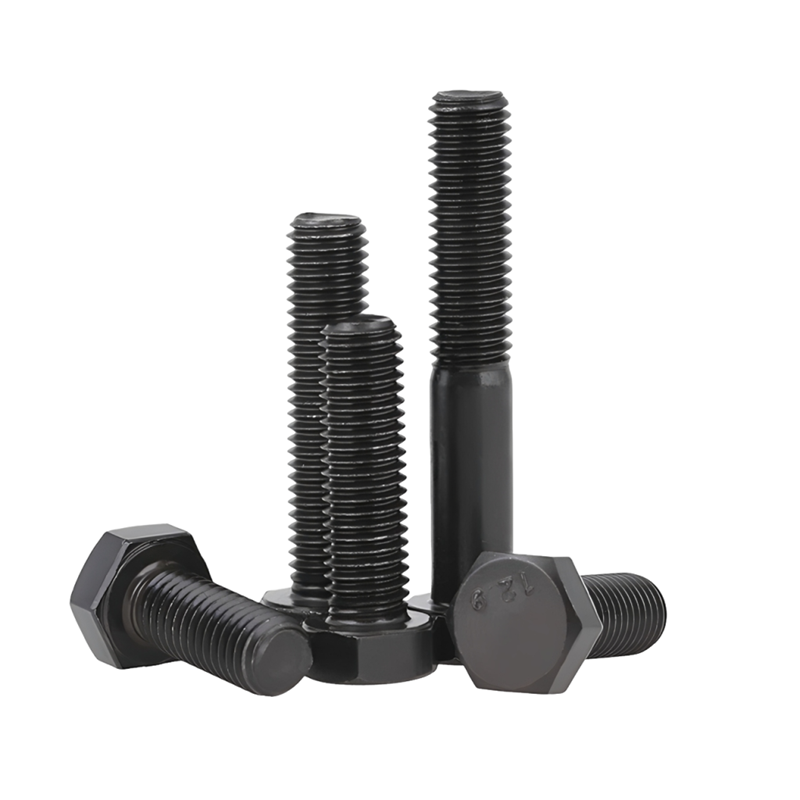
Bolt strength grades tell engineers and buyers what mechanical properties a fastener is designed to meet under a specified standard. Choosing the correct grade is important for joint reliability, load capacity, installation, and long-term performance.
However, bolt strength grades are not interchangeable labels. ISO metric property classes such as 8.8 and 10.9, stainless steel designations such as A2-70, and ASTM structural bolt grades belong to different specification systems. They define requirements in different ways and may apply to different fastener types and applications.
For industrial procurement teams, the right choice starts with the joint design, loading conditions, environment, and governing specification—not simply selecting the bolt with the highest strength number.
This guide explains common bolt strength grades, how to interpret their designations, how ISO and ASTM systems differ, and what information to include when sourcing bolts for an industrial application.
What Are Bolt Strength Grades?
A bolt strength grade identifies a defined set of mechanical requirements under an applicable fastener standard. Depending on the standard, these requirements may include tensile strength, yield-related properties, proof load, hardness, elongation, and other characteristics.
For carbon steel and alloy steel bolts, screws, and studs within its scope, ISO 898-1 defines mechanical and physical properties for specified property classes. The standard covers coarse and fine pitch threads and evaluates properties at an ambient temperature range of 10°C to 35°C.
Official reference: ISO 898-1:2013. This edition was reviewed and confirmed by ISO in 2025 and remains current according to the ISO catalogue. The applicable edition should still be checked against the purchase specification.
A strength grade does not, by itself, specify every requirement needed for a reliable joint. Corrosion resistance, fatigue performance, temperature exposure, thread engagement, installation torque, and clamp force may require additional design considerations.
1. Understanding ISO Metric Bolt Property Classes
ISO metric steel bolts commonly use property class designations such as 4.6, 8.8, 10.9, and 12.9.
The designation provides a convenient indication of nominal tensile strength and, for these conventional classes, the nominal relationship between tensile strength and yield-related strength.
For example, property class 8.8 can be interpreted as follows:
- The first number, 8, corresponds to a nominal tensile strength of (8 \times 100 = 800) MPa.
- The second number, 8, indicates a nominal ratio of 0.8 between the relevant nominal yield-related strength and nominal tensile strength.
- The resulting nominal yield-related value is (800 \times 0.8 = 640) MPa.
These are nominal designation values, not a substitute for the standard’s detailed minimum requirements. The specified minimum properties, proof loads, and other acceptance values depend on the applicable standard, thread diameter, and other conditions.
Common ISO Metric Bolt Strength Classes
| Property class | Nominal tensile strength | Nominal yield-related value | General interpretation |
|---|---|---|---|
| 4.6 | 400 MPa | 240 MPa | Lower-strength class for suitable general applications |
| 8.8 | 800 MPa | 640 MPa | Common engineering fastener class |
| 10.9 | 1,000 MPa | 900 MPa | Higher-strength class for applications designed around its properties |
| 12.9 | 1,200 MPa | 1,080 MPa | High-strength class for appropriately engineered applications |
Important: The table shows nominal values derived from the class designation. It is not a complete acceptance table and must not be used alone to calculate allowable loads or verify compliance. Actual standard requirements include size-dependent minimum values and proof-load requirements. Refer to the applicable standard and engineering design basis.
What Does Bolt Class 8.8 Mean?
Class 8.8 is widely used for steel fasteners in machinery, equipment, and general industrial assemblies where its mechanical properties meet the design requirements.
It does not automatically mean that a bolt is suitable for every highly loaded joint. The bolt diameter, thread stress area, engagement length, mating material, joint stiffness, preload, and service conditions all affect performance.
When ordering class 8.8 bolts, specify the applicable standard, dimensions, thread, finish, and any required inspection documentation.
What Does Bolt Class 10.9 Mean?
Class 10.9 identifies a higher nominal strength class than 8.8. It may be appropriate where the design requires higher fastener strength and the joint has been engineered for that class.
A higher strength class does not automatically improve the complete assembly. The mating components, thread engagement, tightening method, fatigue conditions, and risk of hydrogen embrittlement associated with certain high-strength fasteners and processes must also be considered.
Do not upgrade from 8.8 to 10.9 simply because the latter has a higher strength designation. Confirm the change with the responsible design engineer.
What Does Bolt Class 12.9 Mean?
Class 12.9 is a high-strength class used in selected engineered applications. Its use requires attention to the complete joint design, installation process, material condition, and service environment.
Higher-strength fasteners can be more sensitive to certain failure mechanisms and process-related risks. For example, applicable electroplating processes can introduce hydrogen-related concerns, so coating selection and process controls should follow the relevant specification and engineering requirements.
A 12.9 designation should not be treated as a universal solution for safety-critical or heavily loaded connections.
2. Tensile Strength, Yield Strength, and Proof Load: What Is the Difference?
These terms describe different aspects of fastener behavior and should not be used interchangeably.
Tensile strength
Tensile strength is the maximum tensile stress reached in a tensile test before the specimen’s load-carrying capacity declines toward fracture. For fasteners, the applicable test method and requirements depend on the governing standard.
Yield strength describes the stress at which a material begins to undergo specified permanent deformation. Depending on the material and standard, the relevant value may be defined using a yield point or a specified proof or non-proportional elongation method.
For fasteners, the exact property and test method should be taken from the applicable standard rather than inferred from the class number alone.
Proof load
Proof load is a specified load used to verify that a fastener meets a defined requirement without unacceptable permanent deformation under the prescribed test conditions.
Proof load is especially important in fastener specifications because a bolt must perform under its intended loading, not merely achieve a nominal tensile strength value.
For engineering calculations, use the applicable standard’s required properties and the correct tensile stress area. Do not calculate a permissible working load by multiplying a nominal strength value by the bolt’s gross shank area unless that method is justified by the applicable design procedure.
3. ISO Property Classes vs. ASTM Bolt Grades
ISO property classes and ASTM grades are different designation systems. They should not be treated as direct equivalents based only on a similar strength value.
ISO metric property classes
ISO 898-1 covers specified mechanical properties for carbon steel and alloy steel bolts, screws, and studs within its scope. Classes such as 8.8, 10.9, and 12.9 are commonly encountered in metric fastener specifications.
ASTM structural bolt specifications
ASTM F3125/F3125M covers specified chemical, physical, and mechanical requirements for quenched-and-tempered steel and alloy steel structural bolts and assemblies. It includes structural bolt grades and styles intended for structural connections covered by the relevant structural-joint specification.
Official reference: ASTM F3125/F3125M.
The ASTM specification consolidates several earlier structural bolting standards, including ASTM A325, A325M, A490, A490M, F1852, and F2280. These older designations may still appear on legacy drawings or purchase documents, so the required current specification and edition should be confirmed with the project engineer.
ASTM F3125 is a structural bolting specification, not a general conversion table for every industrial bolt.
Why ISO and ASTM grades are not automatically interchangeable
Two bolts may have similar nominal tensile strengths but differ in:
- Chemical and material requirements
- Mechanical property limits and test requirements
- Dimensions and product configurations
- Marking and traceability requirements
- Intended application and assembly requirements
- Applicable inspection and acceptance criteria
If a drawing specifies an ASTM structural bolt, do not replace it with an ISO property class based solely on strength. Any substitution must be reviewed and approved under the project’s engineering and procurement procedures.
4. Stainless Steel Bolt Grades: A2-70 and A4-70
Stainless steel fasteners use a different designation system from carbon steel property classes.
For example, designations such as A2-70 and A4-70 combine a stainless steel group designation with a mechanical property class under the applicable stainless steel fastener standard.
ISO 3506-1:2020 specifies mechanical and physical properties for corrosion-resistant stainless steel bolts, screws, and studs within its scope. It covers specified stainless steel grades and property classes, including austenitic, martensitic, ferritic, and duplex stainless steels.
Official reference: ISO 3506-1:2020.
The number in a designation such as A2-70 should not be interpreted using the same formula as carbon steel class 8.8. Under the applicable stainless steel designation system, the property class identifies a different set of defined mechanical requirements.
Stainless steel selection also requires consideration of the service environment. Corrosion resistance depends on the grade, surface condition, chemical exposure, temperature, and contact with other materials.
Stainless steel fasteners are not automatically stronger than carbon steel fasteners, nor are they immune to corrosion. Select the material and property class based on both mechanical and environmental requirements.
5. How to Choose the Right Bolt Strength Grade
The appropriate grade depends on the complete joint design. Procurement teams should confirm the following before ordering.
Step 1: Define the loads and failure risks
Identify the expected tensile, shear, cyclic, impact, and other relevant loads. Consider whether the joint is static or subject to vibration, fatigue, or repeated loading.
The fastener grade alone does not establish the allowable load of the assembly. Engineering calculations must account for the bolt dimensions, thread stress area, joint configuration, and applicable design factors.
Step 2: Check the mating components
A high-strength bolt may not be suitable if the connected components, tapped threads, washers, or bearing surfaces cannot support the required load.
Thread engagement, local bearing stress, joint stiffness, and the possibility of stripping or deformation should be considered as part of the design.
Step 3: Consider the environment
Evaluate corrosion exposure, temperature, moisture, chemicals, and contact with dissimilar metals.
For applications involving severe corrosion, unusual temperatures, or special service conditions, the material and property class may require additional review. ISO 3506-6 provides general selection information for stainless steels and nickel alloys used in fasteners.
Step 4: Define the tightening method
Installation method affects preload and joint performance. Torque alone is not a direct measurement of bolt tension, because friction at the threads and bearing surfaces influences the relationship.
Where preload or clamp force is critical, specify the appropriate tightening method and validation requirements rather than relying on the strength class alone.
Step 5: Confirm standards and documentation
State the required specification and edition, property class or grade, dimensions, thread, finish, and acceptance requirements.
If material certificates, test reports, inspection records, or traceability are required, identify them in the RFQ or purchase order and confirm availability before placing the order.
6. Common Mistakes When Specifying Bolt Strength Grades
Choosing the highest grade by default
A higher strength class does not necessarily create a safer joint. It may introduce different installation, ductility, coating, or failure-mode considerations.
Confusing stainless steel classes with carbon steel classes
A2-70 and 8.8 use different designation systems. Compare the actual requirements under their respective standards, not just the numbers.
Assuming ASTM and ISO grades are equivalent
Similar strength values do not establish full technical equivalence. Material, dimensions, testing, marking, and application requirements must also be checked.
Ignoring thread size and stress area
Bolt load capacity depends on the applicable tensile stress area, not simply the nominal diameter or gross shank area.
Omitting the standard edition
A purchase order should identify the required standard and edition where necessary. Legacy designations may require clarification before a replacement is approved.
Treating tensile strength as allowable working load
Tensile strength is a material or fastener property, not a complete design allowable. The joint must be evaluated under the applicable engineering method and safety requirements.
Frequently Asked Questions About Bolt Strength Grades
What is the difference between grade 8.8 and grade 10.9 bolts?
Class 8.8 has a nominal tensile strength of 800 MPa and a nominal yield-related value of 640 MPa. Class 10.9 has nominal values of 1,000 MPa and 900 MPa, respectively. Actual minimum requirements and proof loads depend on the applicable standard and fastener size. The appropriate class depends on the joint design, not strength values alone.
Is a 10.9 bolt always stronger than an 8.8 bolt?
Class 10.9 has higher nominal strength values than class 8.8 within the relevant ISO property-class system. However, that does not mean it is automatically the better choice for every joint. The connected materials, loading, tightening procedure, corrosion environment, and failure risks must also be evaluated.
What does class 12.9 mean?
Class 12.9 is a high-strength ISO metric property class with nominal tensile strength of 1,200 MPa and a nominal yield-related value of 1,080 MPa. These figures are designation-based nominal values, not a complete statement of all required properties. Verify the applicable standard’s size-dependent requirements before specifying or accepting the fastener.
Is A2-70 equivalent to class 8.8?
No. A2-70 belongs to the stainless steel fastener designation system, while 8.8 is a carbon steel and alloy steel property class under ISO 898-1. The standards define different material and mechanical requirements. Select the appropriate designation based on the application and governing specification.
Are ASTM A325 and A490 still used?
These designations remain common in legacy drawings and procurement language. ASTM F3125/F3125M consolidated and replaced several earlier structural bolting specifications, including A325 and A490. For a new order or replacement, verify the current applicable specification and grade with the project engineer rather than making an automatic substitution.
How do I choose between a high-strength carbon steel bolt and a stainless steel bolt?
Start with the required mechanical properties and the operating environment. Carbon or alloy steel may be suitable where the specified strength requirements are central, while stainless steel may be appropriate where corrosion resistance is important. Neither material family is universally superior. The exact grade, finish, temperature, and exposure conditions must be considered together.
What information should I provide when requesting a bolt quotation?
Provide the drawing, bolt dimensions, thread specification, required property class or ASTM grade, material, finish, quantity, applicable standard and edition, and any inspection or documentation requirements. Include the application and operating environment when they affect material or performance selection.
Can I replace a specified bolt grade with a higher grade?
Not without checking the engineering and specification requirements. A substitution can affect joint stiffness, installation, fatigue behavior, corrosion protection, and compatibility with connected parts. Obtain approval from the responsible engineer and document the change before ordering.
Request a Quote for Bolts and Custom Fasteners
Selecting the right bolt strength grade requires more than comparing numbers on a chart. The fastener must meet the applicable mechanical requirements and work with the joint design, connected materials, installation method, and operating environment.
For procurement teams sourcing standard or custom fastening components, a clear drawing and complete specification help suppliers evaluate the request and reduce ambiguity during quotation and production.
Contact HKTL-Fastener to discuss your bolt and custom fastener requirements. Share your drawing, required standard and grade, dimensions, quantity, finish, and application details so the project requirements can be reviewed.
Visit: https://hktl-fastener.com/
Manufacturing feasibility, material availability, testing, inspection, documentation, and lead time must be confirmed for the specific part and order. Any change to a specified grade or standard should be reviewed and approved by the responsible customer or design authority.