Main Conclusion
Understanding fastener‑manufacturing workflows, cold‑forming distinctions, thread‑locking options, surface‑terminology differences and washer installation rules helps avoid assembly failures. Select chemical thread adhesive for permanent high‑strength locking or nylon adhesive for easy‑to‑disassemble joints. Distinguish surface roughness from finish and strictly follow installation specifications for combined screws and grooved French gaskets.
| Key Topic | Core Takeaway | Practical Tip |
|---|---|---|
| Cold Heading & Extrusion | Cold heading is a subset of cold extrusion | Cold‑heading forms heads; extrusion reduces shank diameter |
| Thread‑locking Adhesive | Chemical vs nylon adhesive | Chemical: high‑strength permanent; Nylon: easy disassembly |
| Combined Screws | Pre‑inspect before installation | Match strength grade with mating nuts; avoid wet‑weather fitting |
| Roughness & Finish | Two distinct surface metrics | Roughness = micro‑unevenness(Ra); Finish = visual smoothness |
| French (grooved) Gasket | Special grooved conical washer | Install concave side toward clamped components |
Screws go through annealing, pickling and wire‑drawing; bolts add cold heading, thread‑rolling and heat‑treatment. Cold heading forms fastener heads while cold extrusion reshank workpieces; multi‑station parts frequently use both techniques.
Chemical thread adhesives deliver robust permanent locking yet require solvent or heat for removal. Nylon‑patch adhesive offers simpler disassembly with comparatively lower anti‑loosening capacity. Inspect combined‑screw surfaces and match strength grades before fitting, and never assemble in rainy conditions. Note that roughness describes micro‑surface irregularities, while finish refers to post‑treatment smoothness. For French grooved conical gaskets, orient the concave face against clamped parts to achieve proper elastic reaction force.
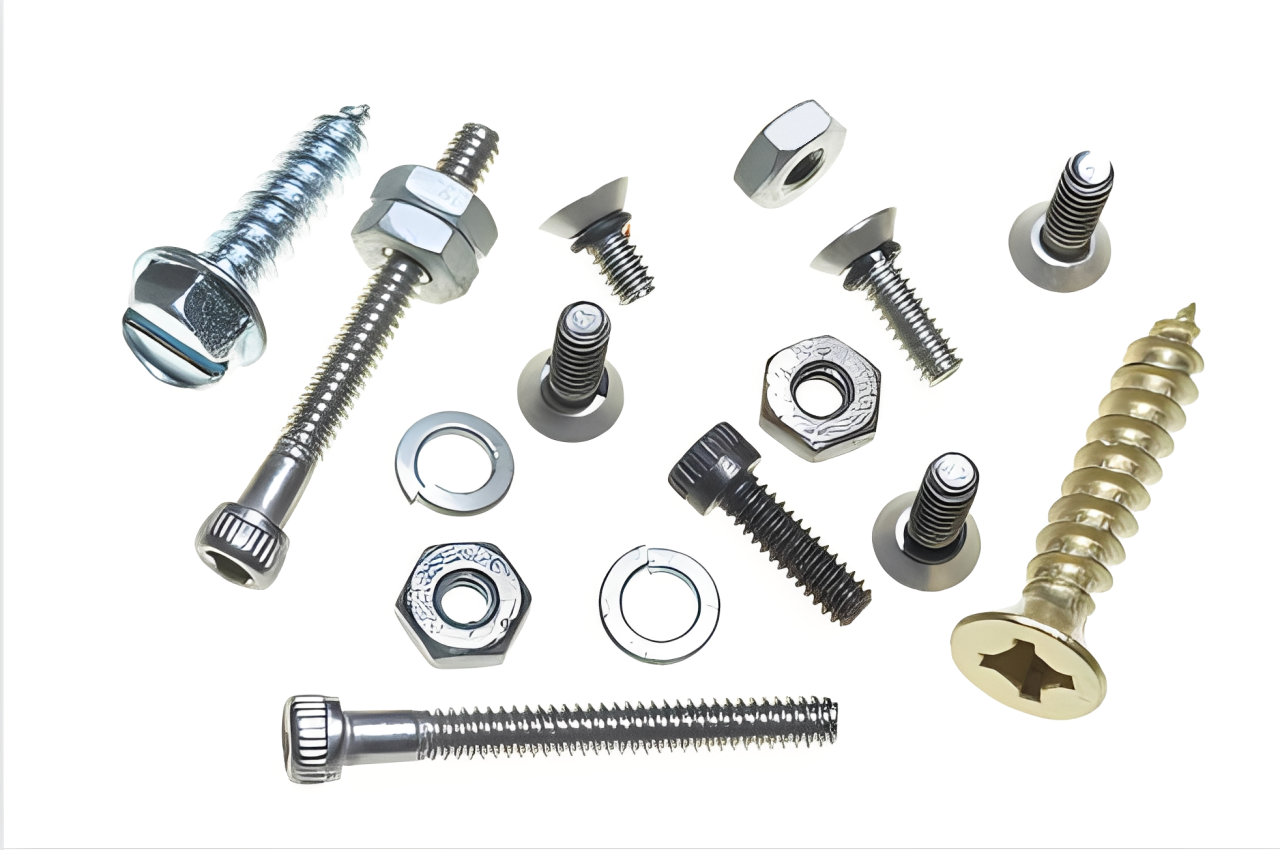
Today, let’s talk about eight basic knowledge points of fasteners, including bolt manufacturing process, cold heading process, and thread adhesive application.
1. Screw Manufacturing Process
1) Annealing: A process in metal heat treatment that controls the hardness of the wire. Generally, a high-temperature spheroidizing annealing furnace is used.
2) Pickling: This is to remove rust and impurities from the surface of the wire.
3) Wire drawing: It refers to cold drawing the wire to the diameter required for bolt production.
4) Cold heading wire: Wire that has undergone drawing, pickling or heat treatment, also known as cold heading wire or finished screw wire.
2. Bolt Manufacturing Process
1) Heading: This is the process name for cold heading and forming the head of the bolt. Generally, bolts with a diameter greater than M24 (or 1 inch) are not made using the cold extrusion process.
2) Thread rolling or thread rolling: Manufacturing threads through a thread rolling machine or thread rolling machine.
3) Heat treatment: Heating and holding in an industrial furnace and then cooling to change the metal crystal structure and achieve the corresponding performance grade of the fastener.
3. Is cold heading the same as cold extrusion?
Cold heading and cold extrusion are basically the same type of deformation processing under the same conditions, but the operation methods are different. Cold heading belongs to the forging deformation of smaller parts and is often used in the fastener industry. Cold extrusion belongs to the extrusion deformation of larger parts and has a wider range of applications.
Cold heading can be regarded as a branch of cold extrusion. Simply put, in the process of making bolts, the formation of hexagonal heads belongs to cold heading, and the reduction of the diameter of the shank belongs to cold extrusion (forward extrusion).
Non-cutting hexagonal flange bolts (multi-station forming) involve both cold heading and cold extrusion. The formation of hexagonal nuts involves cold heading in the front process and cold extrusion (forward and reverse extrusion) in the subsequent hole extrusion process.
4. Thread Adhesive Application – Chemical Adhesive
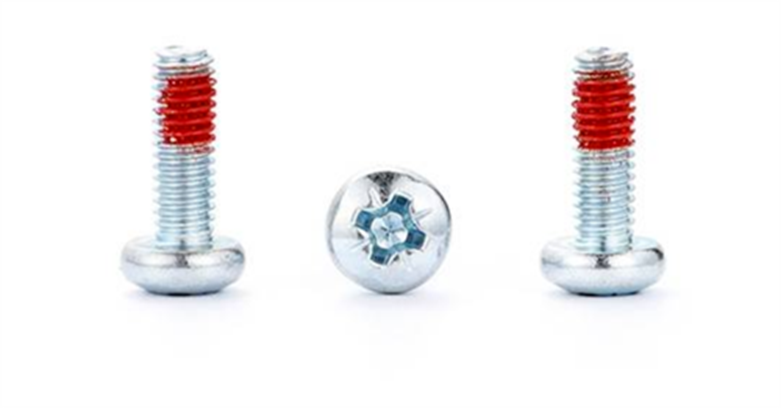
Chemical adhesives generally refer to a type of chemically reactive glue, whose main components are epoxy resin, acrylic ester or polyurethane, etc. Through chemical reactions with the surface of the thread, it forms a high-strength adhesive with good anti-loosening effect and can be applied to most screws.
The disadvantage of chemical adhesives is that they need to be stripped using chemical solvents or heat treatment during disassembly, which is rather troublesome. Nylon adhesives are a type of soluble polymer material, whose main component is nylon resin.
5. Thread Adhesive Application – Nylon Adhesive
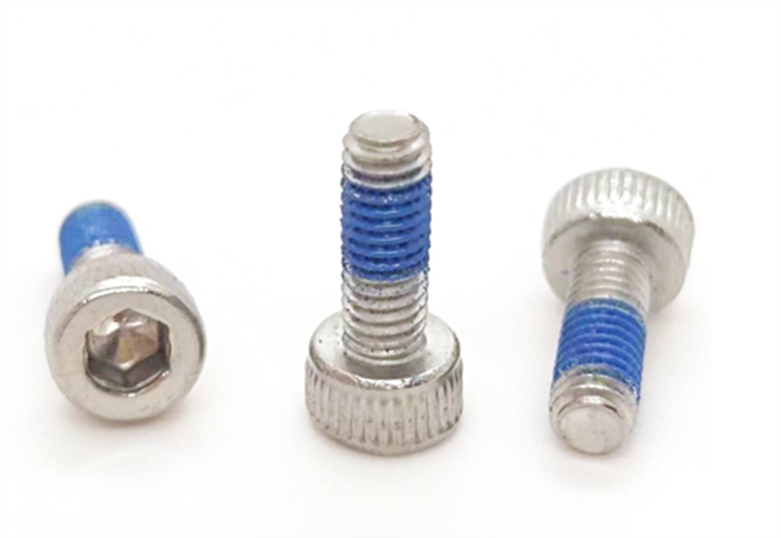
Nylon adhesive mainly works by filling the gaps between the threads, increasing the friction between the stainless steel cup head screw and the base, thereby preventing loosening. Its advantages include a wide range of applications and ease of disassembly. However, its anti-loosening effect is not as good as that of chemical adhesives.
In summary, both chemical adhesives and nylon adhesives can be used for thread adhesive application on stainless steel cup head screws, but their principles and application scopes are different. When choosing the adhesive, factors such as the screw’s usage environment, disassembly requirements, and other technical requirements should be considered, and the appropriate thread adhesive should be selected based on the actual situation.
6. Precautions for Using Combined Screws
What are the precautions when using combined screws?
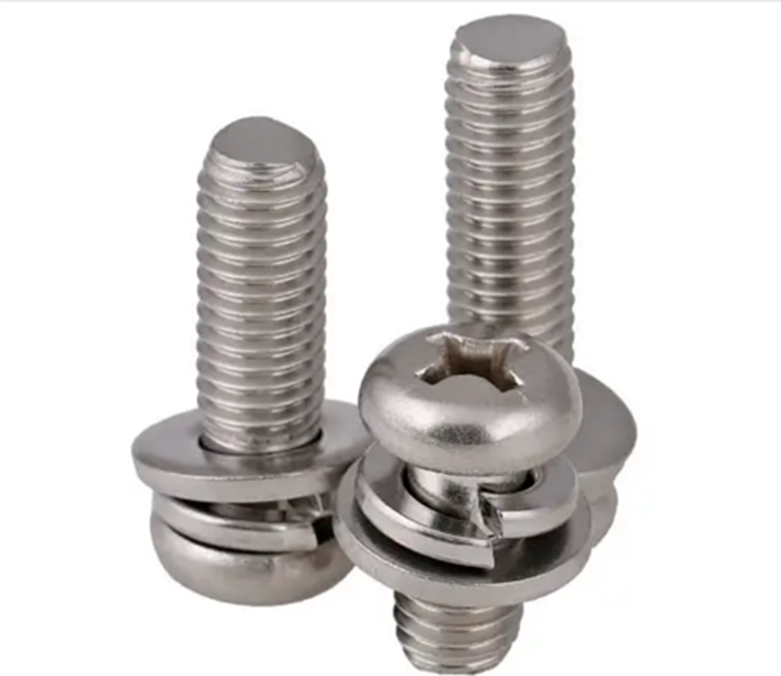
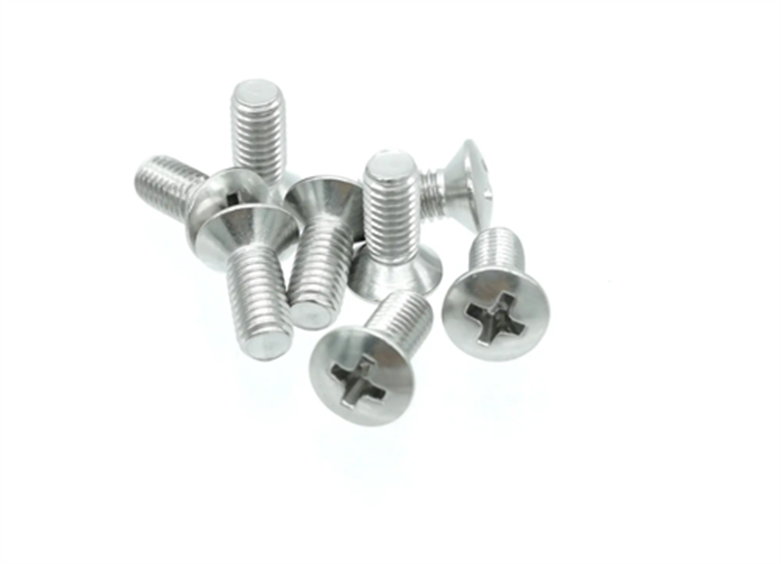
1) Check if there are burrs or scratches on the surface of the combined screws, and if there is any oil or rust.
2) Test the material of the combined screws. When combined screws are used with nuts, the strength grades of the screws and nuts should be the same.
3) Avoid installing combined screws in the rain. If excessive force is applied during installation, it may cause stripped threads or lock-up.
7. Is the roughness and finish of 7 stainless steel screws the same thing?
Roughness refers to the irregularity caused by a series of small protrusions and depressions on the surface of machined stainless steel screws. Roughness is usually used to describe the unevenness of the surface and is expressed through the surface morphology measurement unit Ra.
Finish refers to the description of the smoothness of the surface after the surface treatment of machined stainless steel screws. The higher the surface finish, the smoother the surface and the better the reflection of light. A smooth surface can usually reduce problems such as friction, rust prevention and aesthetics in the threaded part.
Although roughness and finish do not mean the same thing, they usually affect the function and performance of machined stainless steel screws simultaneously.
8. Performance Advantages of French Gaskets
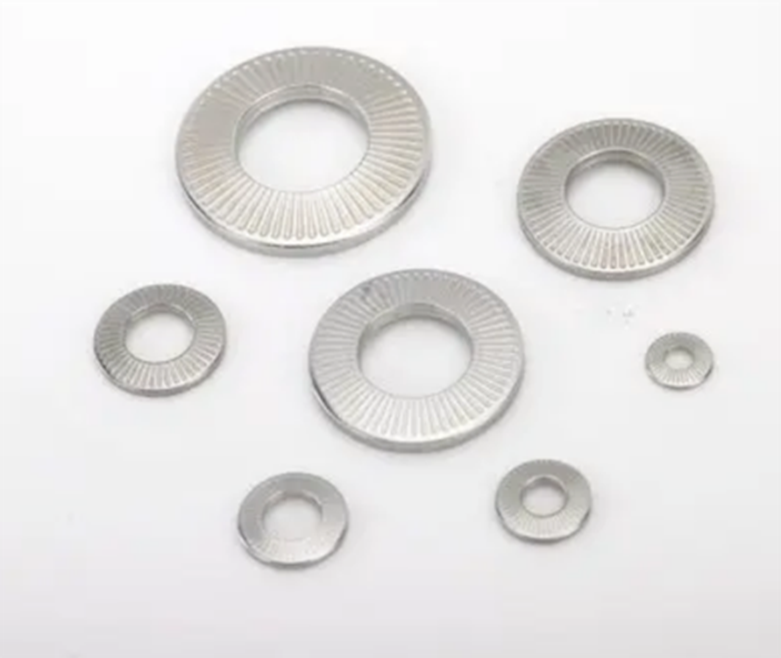
1) Considering the locking effect of this grooved gasket, its thickness is specified to make its corrected load slightly lower than that of an 8.8 grade screw.
2) Under such circumstances, there will be a slight unevenness in the pressure distribution on the parts to be tightened.
3) If it is necessary to achieve the maximum elastic reaction force of the gasket during assembly, it is best to use a suitable smooth conical gasket.
4) When installing a grooved conical gasket, the concave surface must face the side of the tightened part.
If you are looking for quality fasteners, please visit us here https://hktl-fastener.com/.