Key Takeaways
Stainless‑steel screws are widely applied, yet three frequent in‑service failures include loosening, rusting and fracture. Stainless does not equal rust‑proof; failures may stem from surface contamination, improper processing, raw‑material defects or incorrect assembly torque. Targeted anti‑loosening treatments, surface protection and torque‑control measures can mitigate these risks and prevent component‑level damage.
| Common Problem | Root‑cause Summary | Practical Solutions |
|---|---|---|
| Loosening | Vibration and dynamic load destroy thread‑pair friction, resulting in screw displacement. | 1. Apply elastic engineering‑resin coating onto threads; generate persistent friction‑resistance under vibration. 2. Dispense anaerobic thread‑locking adhesive on threads; high bonding strength after curing for reliable anti‑loosening performance. |
| Rusting | Damage to chromium‑rich passive protective‑film, triggered by four corrosion mechanisms: ① Electro‑chemical corrosion from attached foreign‑metal particles and moisture; ② Organic‑acid corrosion by organic residues; ③ Local corrosion from acid‑alkali‑salt contaminants; ④ Chemical corrosion by acidic condensate in polluted atmosphere. | Keep screw surfaces clean; implement passivation or supplementary anti‑rust coating; avoid contaminant deposition in humid / industrial‑polluted service environments. |
| Fracture | 1. Raw‑material defects with excessive impurities. 2. Manufacturing flaws: head eccentricity, improper Q‑value / R‑fillet dimension. 3. Excessive tightening torque from on‑site operation. | 1. Adopt qualified raw‑material with controlled impurities. 2. Strictly monitor cold‑heading dimensional parameters during production. 3. Conduct torque test to define safe tightening limit. 4. Where higher mechanical strength is required, select heat‑treatable grade 410 stainless steel. |
Additional Notes
- Stainless steel is corrosion‑resistant but not rust‑immune. Surface contamination is the primary trigger for rust, rather than inherent material quality defects.
- For 410 stainless‑steel screws after heat‑treatment: surface hardness HV580‑680, core hardness HV350‑450, delivers improved strength for high‑torque scenarios.
- Excessive tightening force is a major field‑cause of stainless‑steel screw breakage; calibrated torque control is strongly recommended.
Stainless steel screws are widely used in our daily life, but the common problems and solutions during their daily use are not well known. For instance, common issues such as loosening, rusting, and breaking can occur.
Once these problems arise, they may lead to minor issues like screw replacement or major damage to equipment components. So, how can we avoid these problems? Here are several common issues and their prevention methods listed for you.
Problems and Solutions in the Use of Stainless Steel Screws
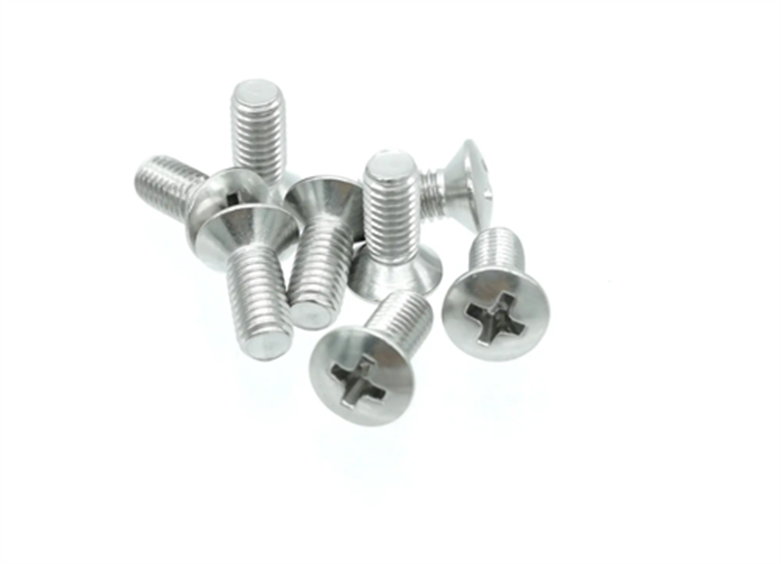
I. Problem of Loosening of Stainless Steel Screws
Simply put, it means that the stainless steel screws should be firmly fixed on the product materials and not fall off easily. To solve the problem of loosening of stainless steel screws, there are two solutions:
1. Utilize the elasticity of special materials, such as engineering resin materials, which have good elasticity. Attach them to the threads of the stainless steel screws. When they are in mechanical friction with the nuts or product materials, they generate vibrations and absolute resistance, completely solving the problem of screw loosening.
2. Apply a layer of glue on the threads of the stainless steel screws, known as point gluing. This glue is called anti-loosening glue. It has excellent properties such as high adhesion and non-toxicity. After drying, it adheres extremely strongly to the stainless steel screws. When the screw threads are combined with the nut threads or the product’s threaded holes, it provides an extremely tight connection and excellent anti-loosening effect.
II. Rusting Issues of Stainless Steel Screws
1. Dust or foreign metal particles adhering to the surface, in a humid environment, form a micro-battery with the condensation water on the stainless steel screw, triggering an electrochemical reaction and damaging the protective film, which is known as electrochemical corrosion.
2. Organic substances such as vegetable juice, noodle soup, or phlegm adhering to the surface of the stainless steel screw, in the presence of water and oxygen, form organic acids that corrode the metal surface over time.
3. Adhesion of substances containing acids, alkalis, or salts (such as splashed alkaline water or lime water during wall decoration) causes local corrosion.
4. In polluted air (such as air with high levels of sulfur compounds, carbon oxides, or nitrogen oxides), when combined with condensation water, it forms acidic liquid spots such as sulfuric acid, nitric acid, or acetic acid, leading to chemical corrosion.
All these situations can damage the protective film on the surface of stainless steel screws, causing rust. Therefore, to ensure the stainless steel screws remain bright and rust-free, it is necessary to perform cleaning, passivation, and coating treatments such as rust-proofing.
Reminder: When using stainless steel screws in daily work and life, please pay attention to the above four points to prevent rusting.
III. Fracture Issues of Stainless Steel Screws
Generally, stainless steel screws rarely break. However, under certain circumstances, they can still fracture. What are the main reasons for the fracture of stainless steel screws?
The reasons for the fracture of stainless steel screws are as follows:
1. Quality issues of the raw materials used for stainless steel screws. Poor quality of the stainless steel wire, with many impurities and impurities, resulting in insufficient hardness of the stainless steel screw.
2. Issues in the production process of stainless steel screws. For example, screws with off-center heads or eccentricity, as well as too deep Q values and too small R positions during the manufacturing process.
3. Excessive force applied by the user when using stainless steel screws. It is generally recommended to conduct a torque test to determine the minimum breaking force of the stainless steel screw and then adjust the corresponding torque.
If a higher torque is required for the screw, heat treatment should be performed. Currently, stainless steel 410 material can be heat-treated. After heat treatment, the surface hardness of the stainless steel 410 screw is HV580-680, and the core hardness is HV350-450.
If you are looking for quality screws, please visit us here https://hktl-fastener.com/screws/.